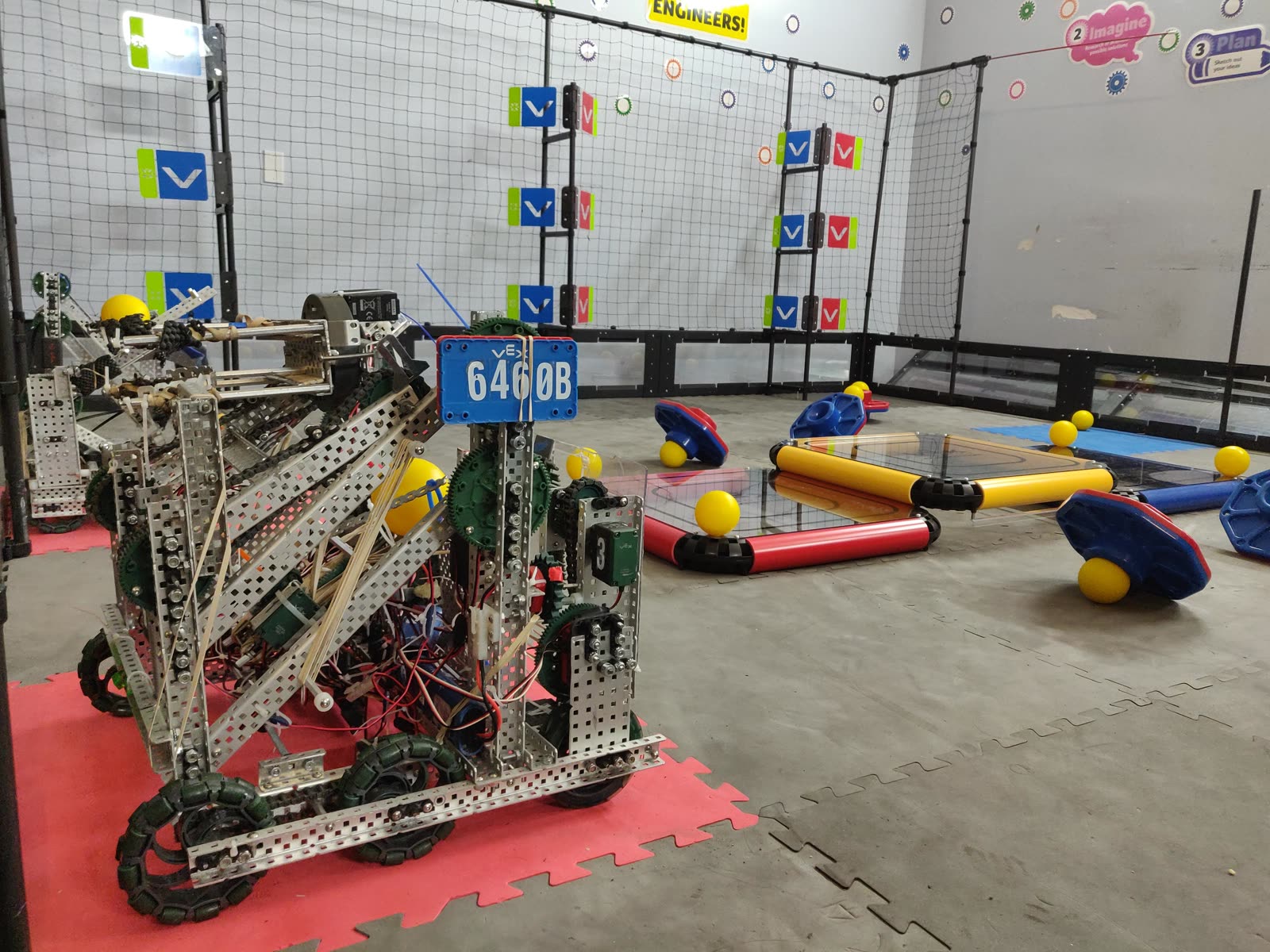
VEX Robotics Team 6460
The beginning of the robotics thread: mechanisms, iteration, repairs, and teamwork under competition pressure.
Text edition
Builder across robotics, health hardware, security engineering, and human-computer interaction. Co-founder and CTO of Pebl Health, research software engineer on CrossWeave at the Johns Hopkins Center for Language and Speech Processing, and a mentor of 5th-12th graders since 2019.
Invented a patent-pending biometrics logger and led a 3-person team from 3D design through PCB, firmware, iOS, and an AI health assistant.
In the house: Pebl + Research Lab
Automated FIPS and Common Criteria security-requirement testing and supported certification work for major technology companies.
In the house: Pebl + Research Lab
Built machine-learning, vision, and precision-motion systems to read quantum magnetic-field data (ODMR) and drive micrometer-scale fabrication.
In the house: Pebl + Research Lab
Designed a social platform that pulls people out of their filter bubble toward unfamiliar communities and perspectives. There is a live demo.
In the house: Interfaces + Learning Studio
2018-2019
Competition robotics made engineering physical: mechanisms, iteration, failure, repair, and teamwork under pressure.
2019-present
Mentored 5th-12th graders for years and coordinated the mentor team, founded a STEM academy teaching cybersecurity and programming, and organized interfaith gatherings. This is the thread that runs under everything else here.
Room: Mentoring Room
2021
Four UMBC expert interviews became a paper, presentation, video, and an early investigation of AI ethics, transparency, and capability.
2021-2022
Bridge testing, mechanisms, circuits, aerodynamics, and prototyping expanded robotics into a broader engineering practice.
Room: Technical Background
Aug 2021-Jan 2022
3D modeled, printed, and assembled a robotic prosthetic arm using Fusion 360 and Arduino.
Room: Technical Background
Sep 2022-Jan 2025
Supported FIPS certification for Samsung, Oracle, and Intel modules, automated cybersecurity requirement testing with Python3 and C, and built a tokenization tool that turns module specs into security test plans.
Room: Pebl + Research Lab
Mar-Apr 2024
Built a React and Firebase portal that let mentors set goals and follow a mentee’s personal development over time.
Jun-Sep 2024
Predicted vector magnetic fields from ODMR data with Fourier-transformed MLPs, and built a Python-driven lithography machine for micrometer-scale antenna manufacturing.
Room: Pebl + Research Lab
Sep 2024-present
Took a patent-pending handheld biometrics logger from concept through firmware, PCB design, enclosure CAD, and native iOS and web apps; it is now entering injection-molded production. Raising a $1.5M pre-seed; completed the AARP AgeTech Accelerator, NSF I-Corps, and the Johns Hopkins Pava Center Fuel accelerator.
Room: Pebl + Research Lab
Aug 2025-present
Founded and lead an eight-person hacker house: a basement robotics and electronics lab, an Embodied AI club, Biryani Wednesdays, visits from professors and deans, and shared systems for living.
Feb 2026-present
Built the interface and non-NLP product systems for a social-media experiment designed to bridge communities and broaden perspectives.
The early work taught me to think with my hands.
VEX Team 6460 (Robot Skills Champion), PLTW engineering, the Morgan State robotic prosthetic arm, Artificial Intelligence Today, and Memory-SmolVLA: the robotics thread from first build to research.
VEX 6460 · AI Today · where the building started
The beginning of the robotics thread: mechanisms, iteration, repairs, and teamwork under competition pressure.
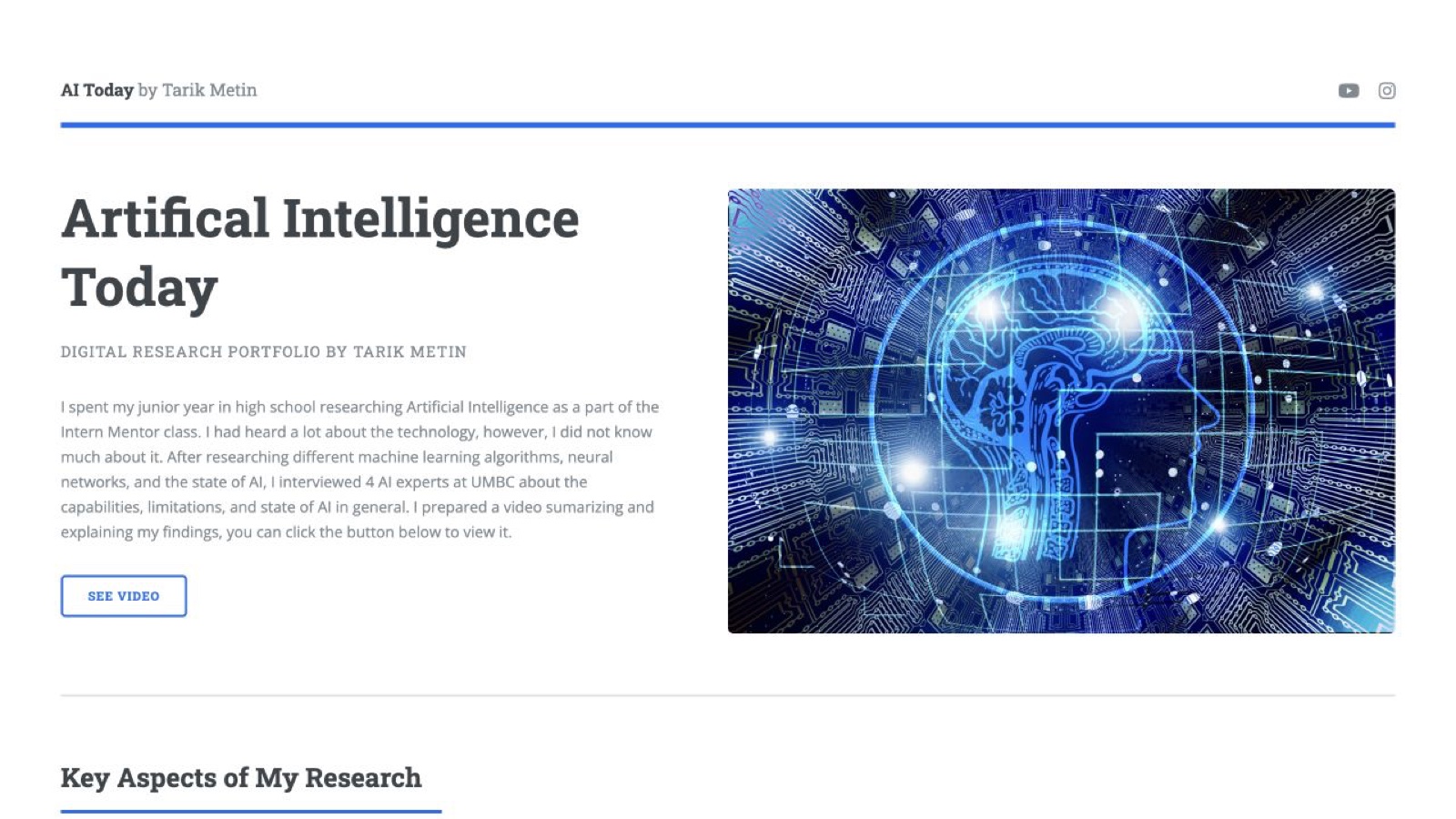
Four UMBC expert interviews became a paper, presentation, video, and hand-built research portfolio about AI capability, ethics, and access.
structure · test · iterate · eleventh and twelfth grade
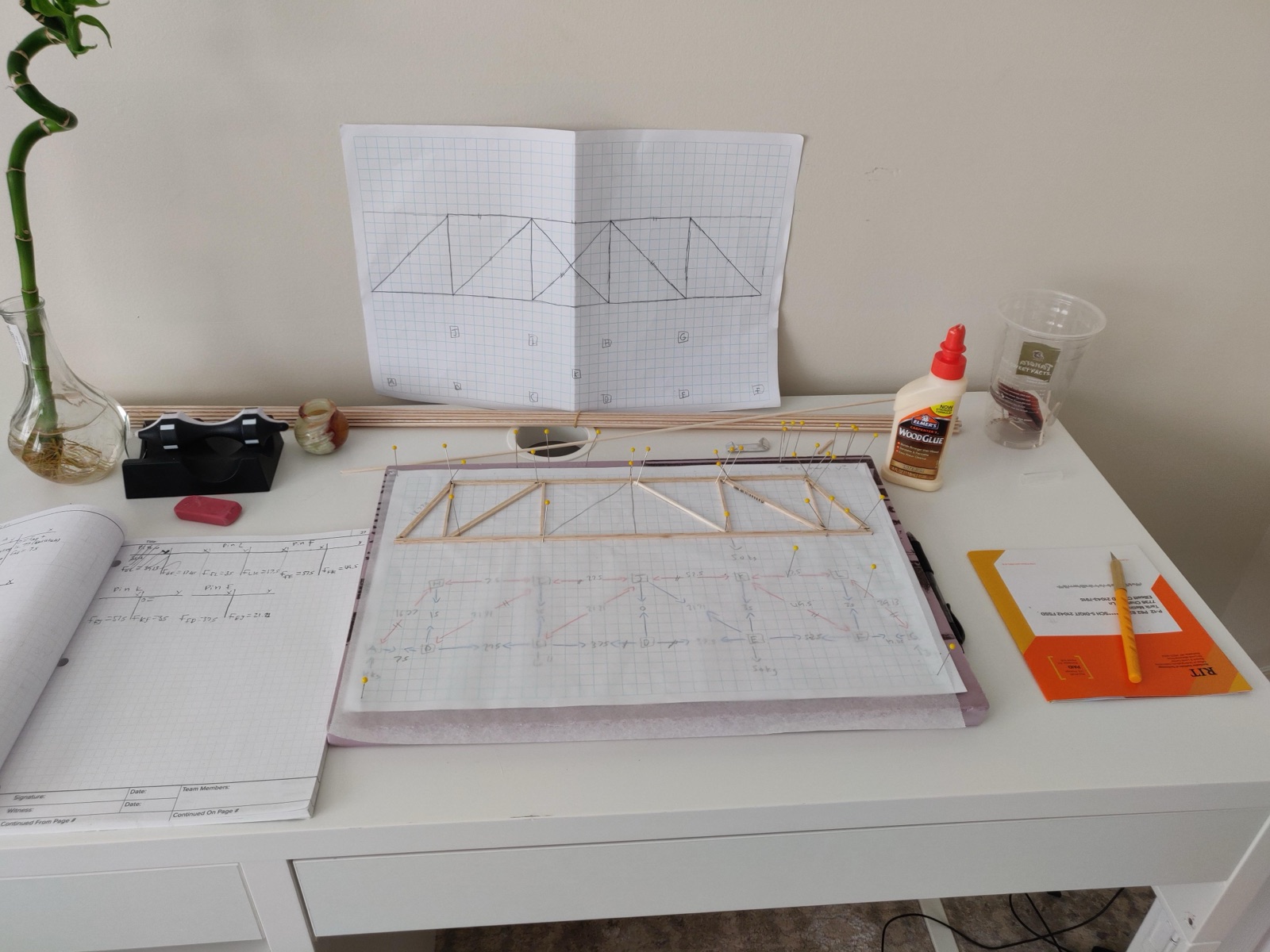
Bridge analysis, mechanisms, circuits, aerodynamics, and load testing widened robotics into a broader making practice.
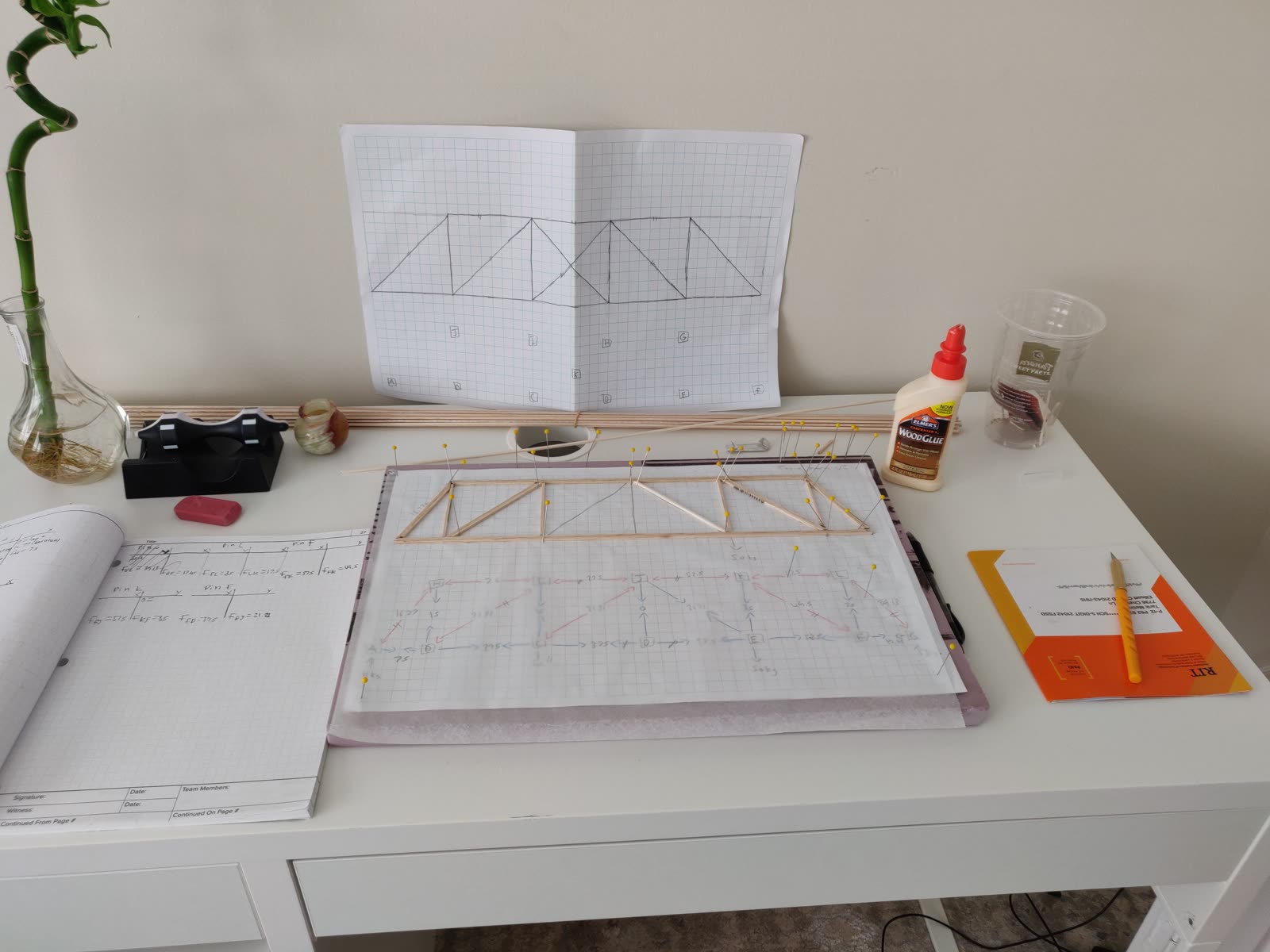
The original build photograph and test footage show the engineering loop directly: predict, fabricate, load, inspect, and revise.
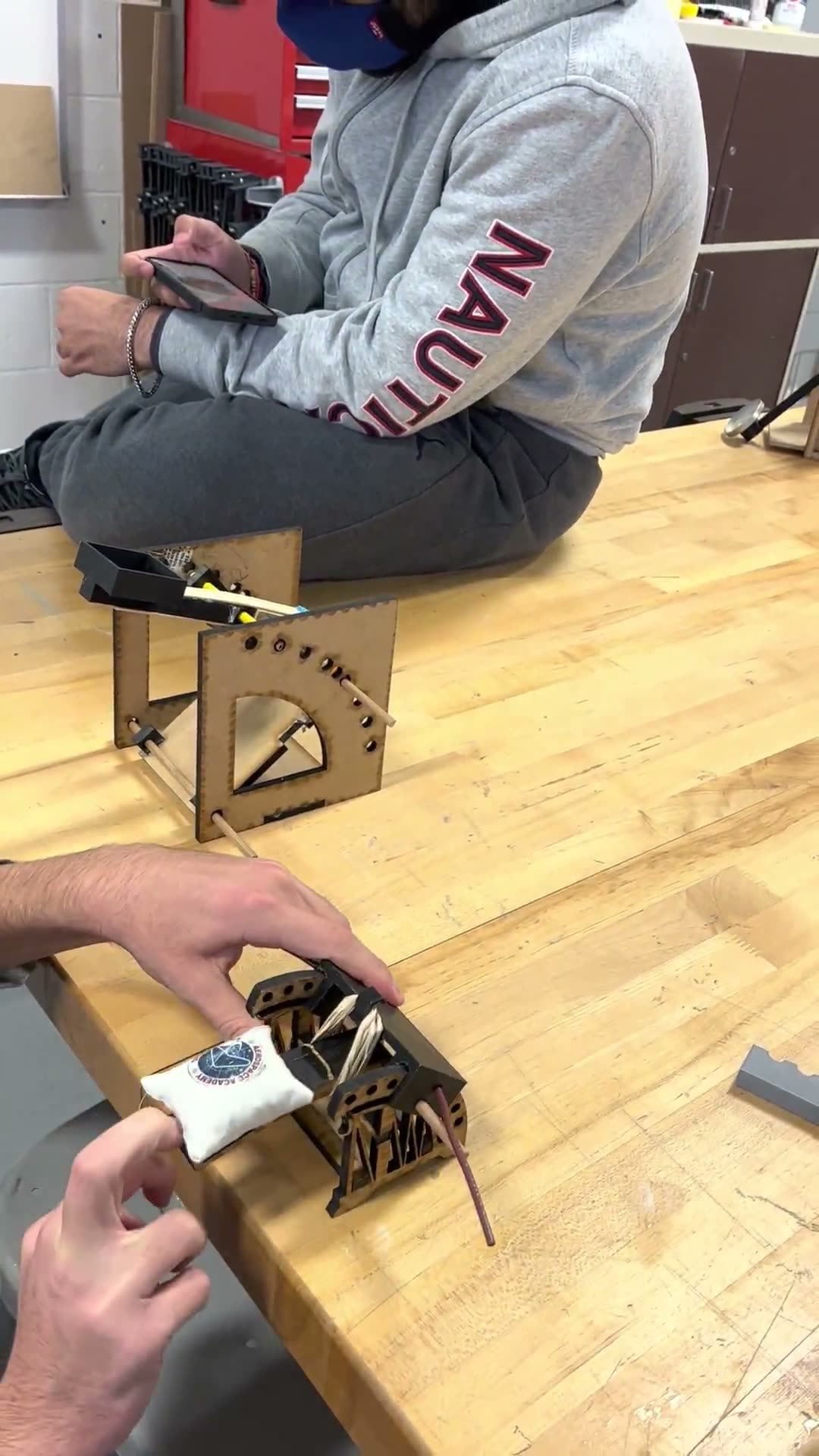
An adjustable catapult tuned for range: change the arm stop and the release angle, then measure how far each setting throws.
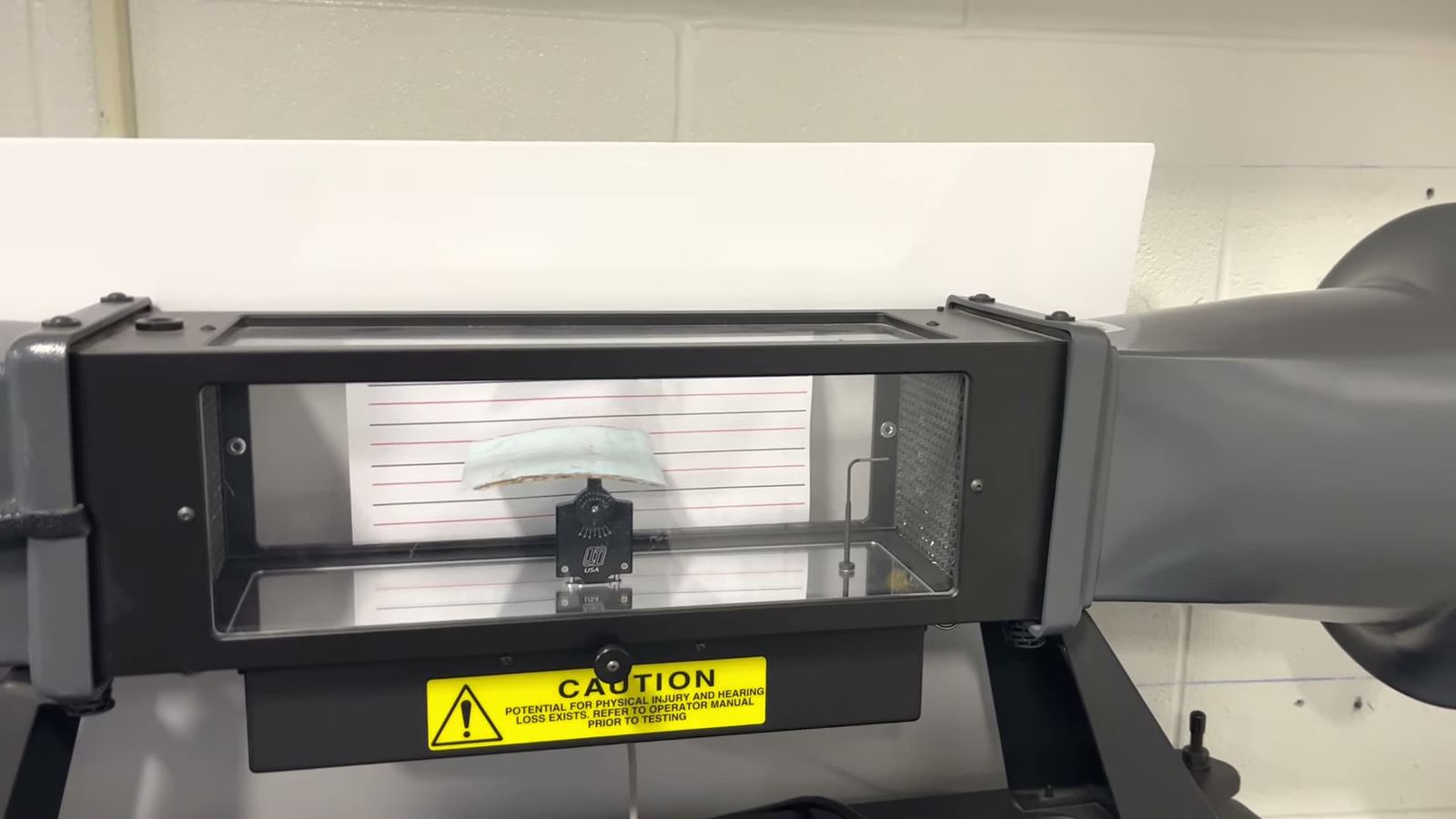
Smoke streamlines in the classroom wind tunnel, showing where the flow stays attached and where it breaks into turbulence.
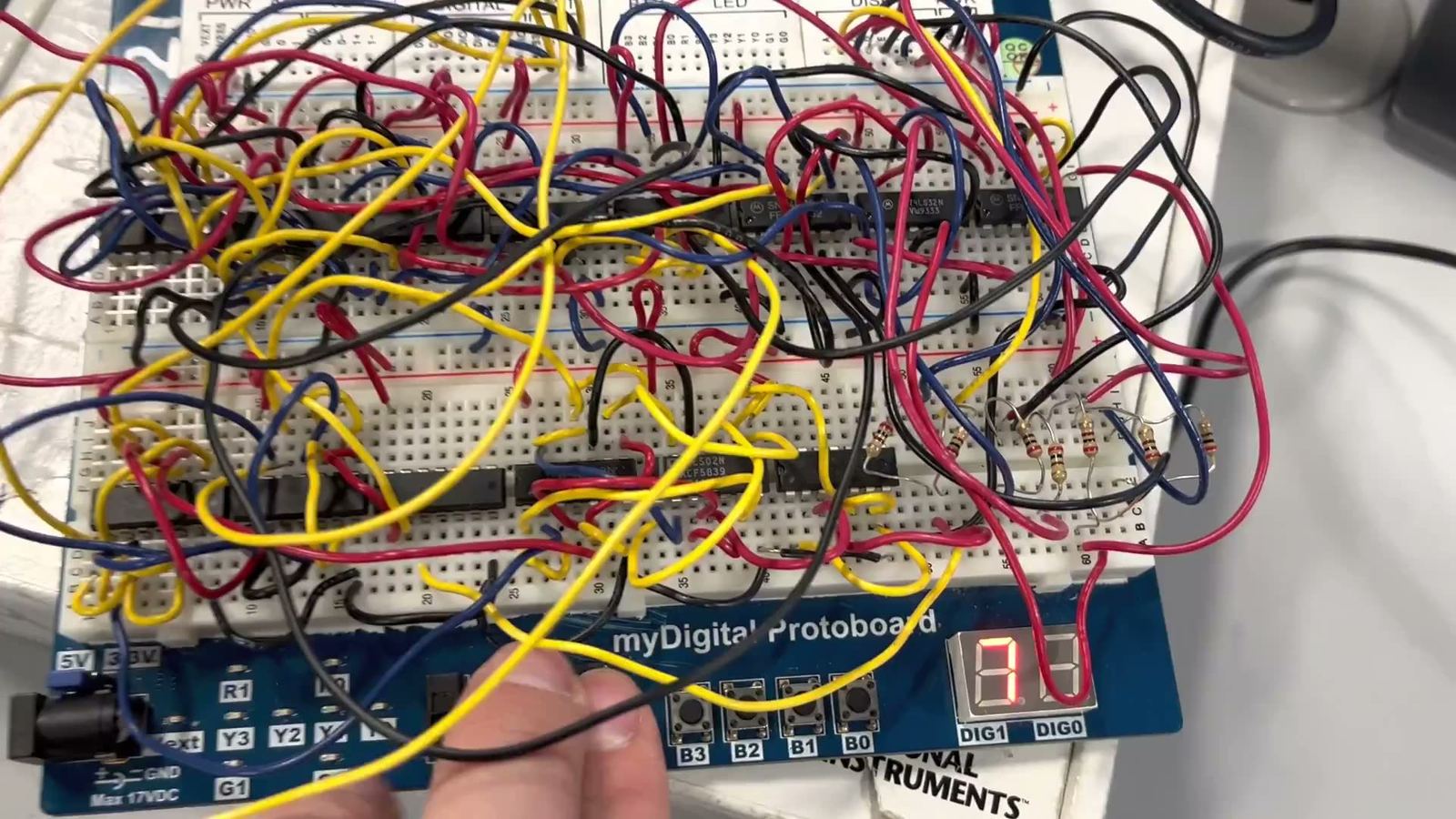
A breadboarded logic circuit: gates wired by hand, LEDs reading out the truth table one input combination at a time.
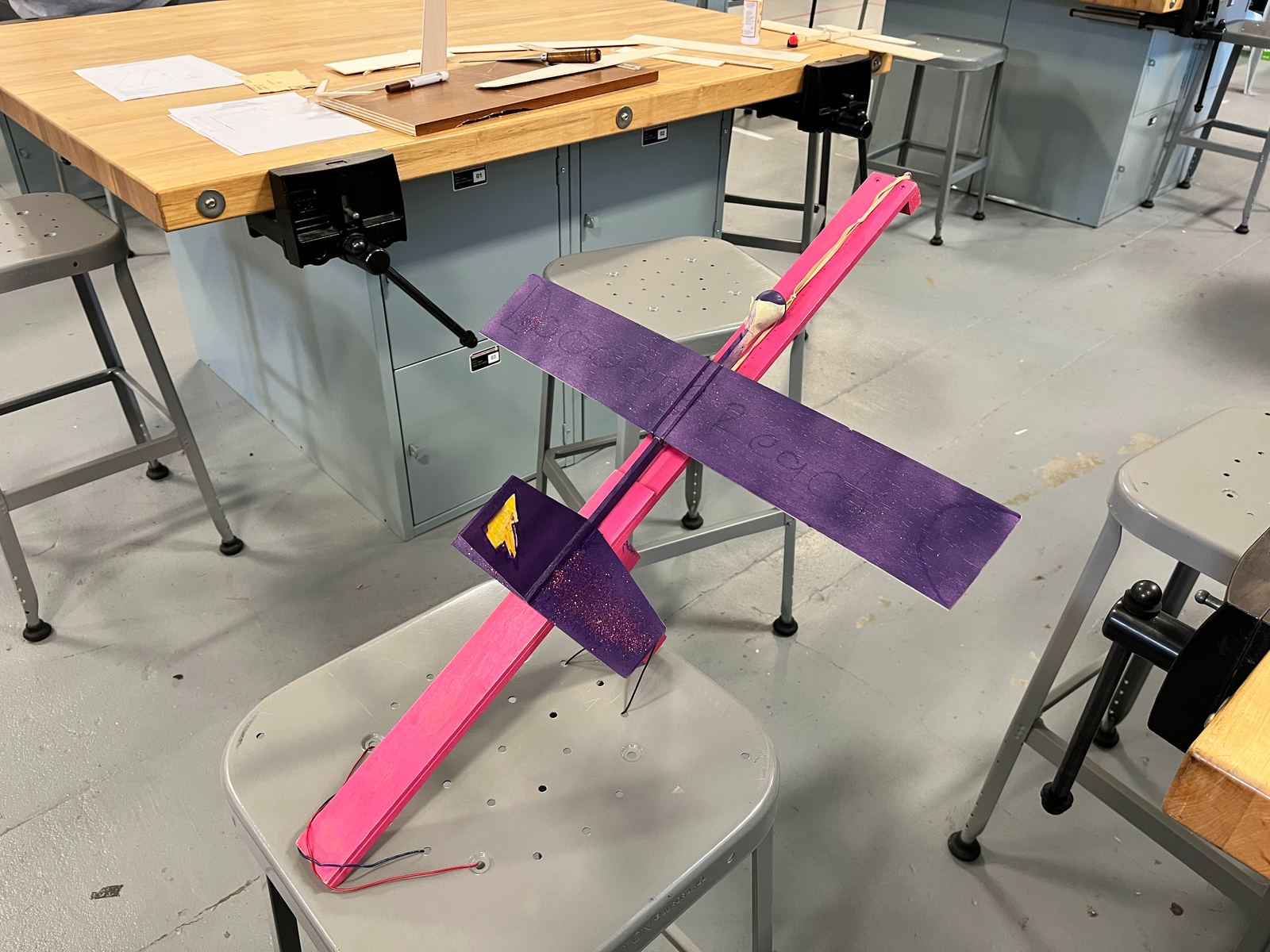
A balsa glider from the PLTW aerodynamics unit. Lift, drag, and center of gravity worked out on the bench before the throw.
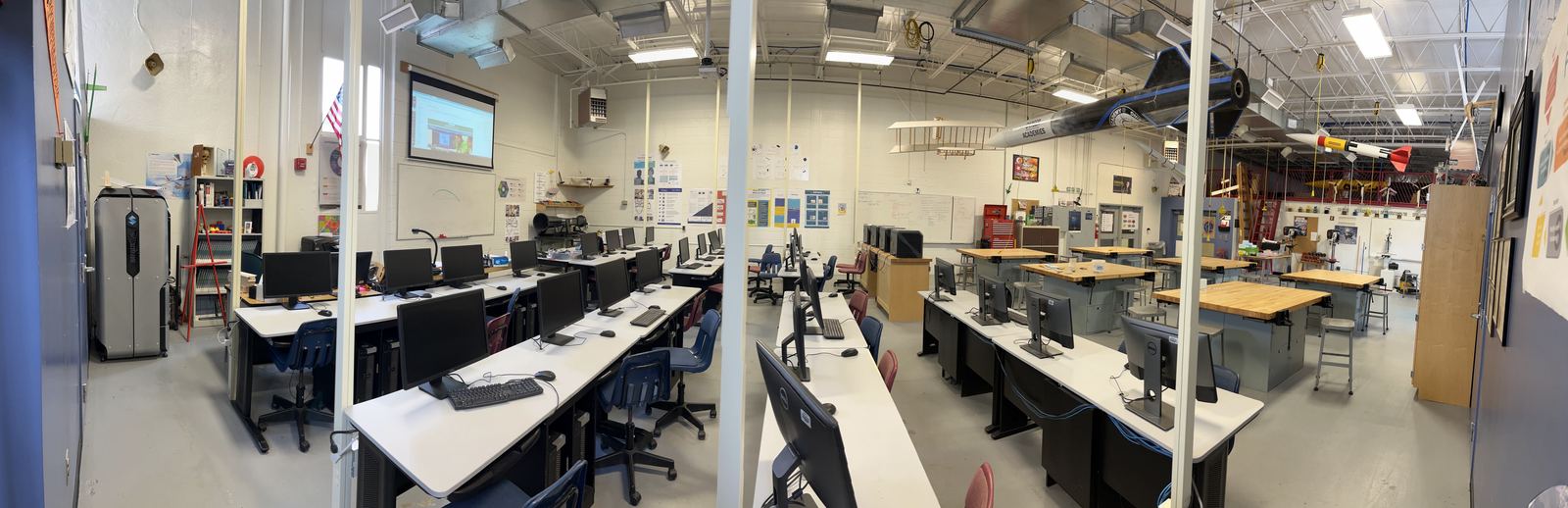
The PLTW engineering lab: benches, tools, and half-finished builds. Eleventh and twelfth grade happened in this room.
CAD · print · wire · control
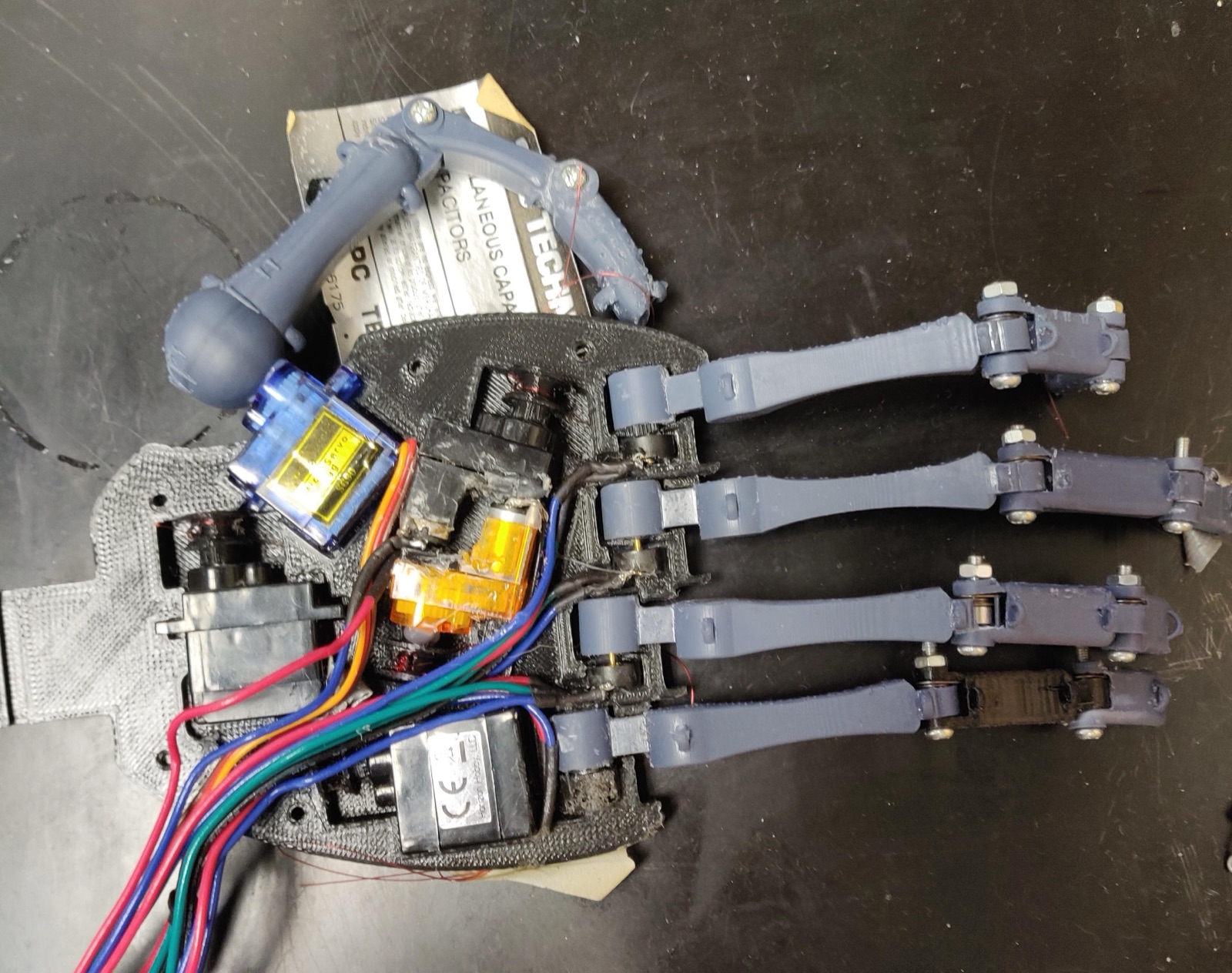
3D modeled in Fusion 360, printed, assembled, wired, and driven with Arduino. An early end-to-end robotics build from the Morgan State engineering internship.
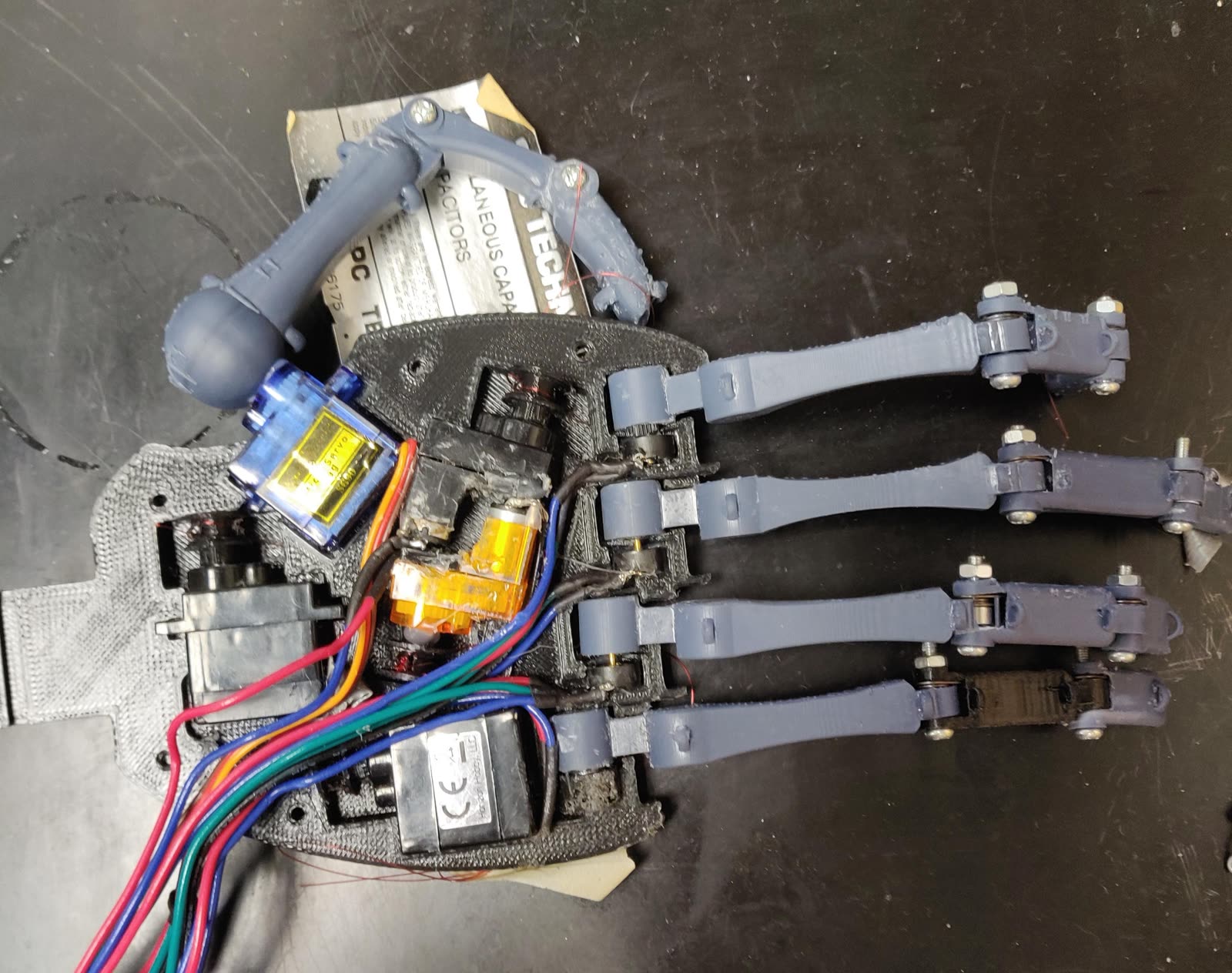
The prototype up close, and moving. CAD became printed parts, tendon routing, electronics, and Arduino control.
Measurement matters when the whole product holds together.
Pebl, a patent-pending biometrics logger taken from 3D design to PCB to testing, plus ODMR quantum sensing, a homebuilt lithography machine, SPDF medical-device security, and the Raz concept.
ODMR · optics · precision motion
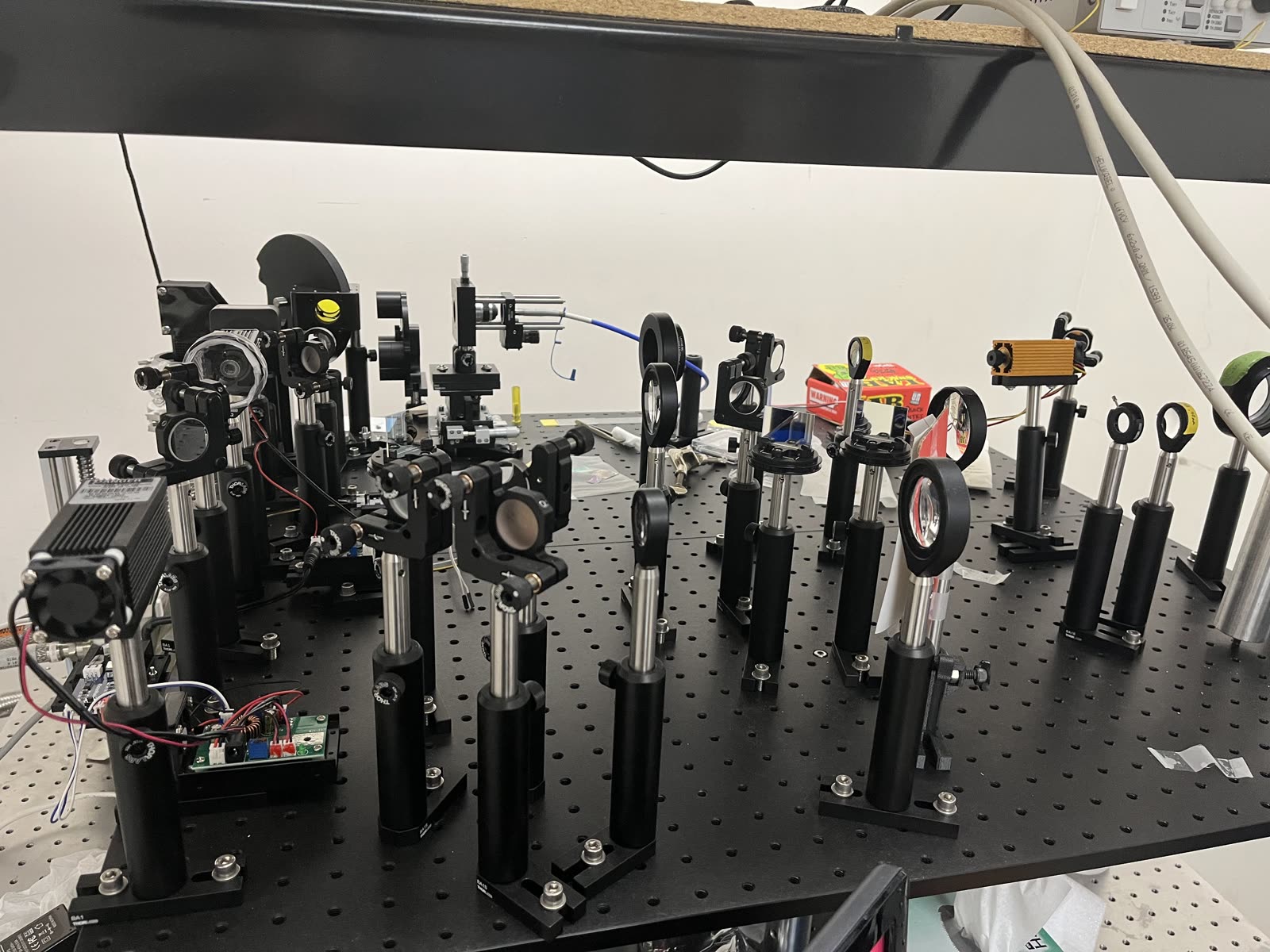
The optical bench at Quantum Sensor Technologies. Behind it sit Fourier-transformed MLPs predicting magnetic fields from ODMR data, and a Python-driven lithography machine for micrometer-scale antenna manufacturing.
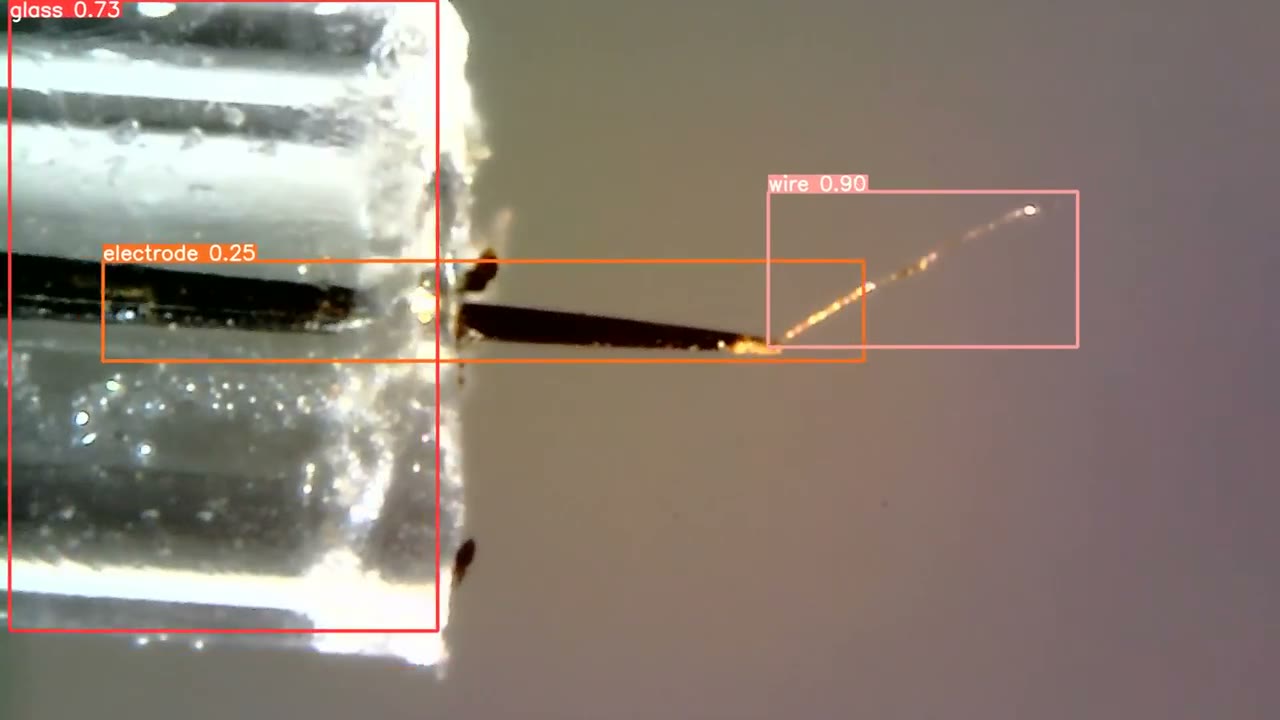
Machine vision steering micro-electrodes a tenth the size of a cell: recordings of manual nanowire control, processed with CV2 and trained into TensorFlow CNNs and YOLO models so the tracking could outpace a human hand.
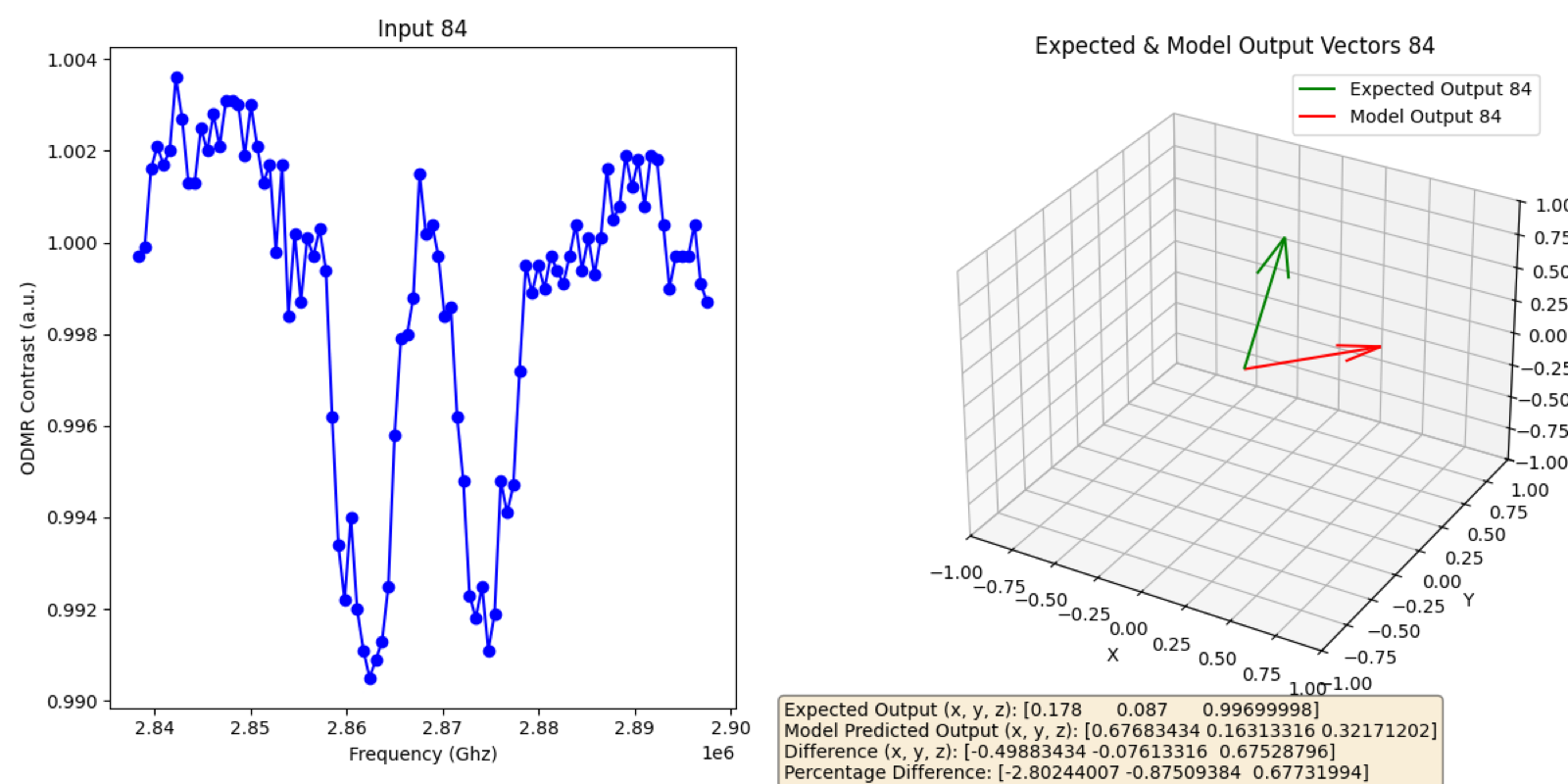
One sample from the quantum ML pipeline: an ODMR contrast sweep in, a predicted vector magnetic field out. K-nearest trees and Fourier-transformed MLPs do the predicting.
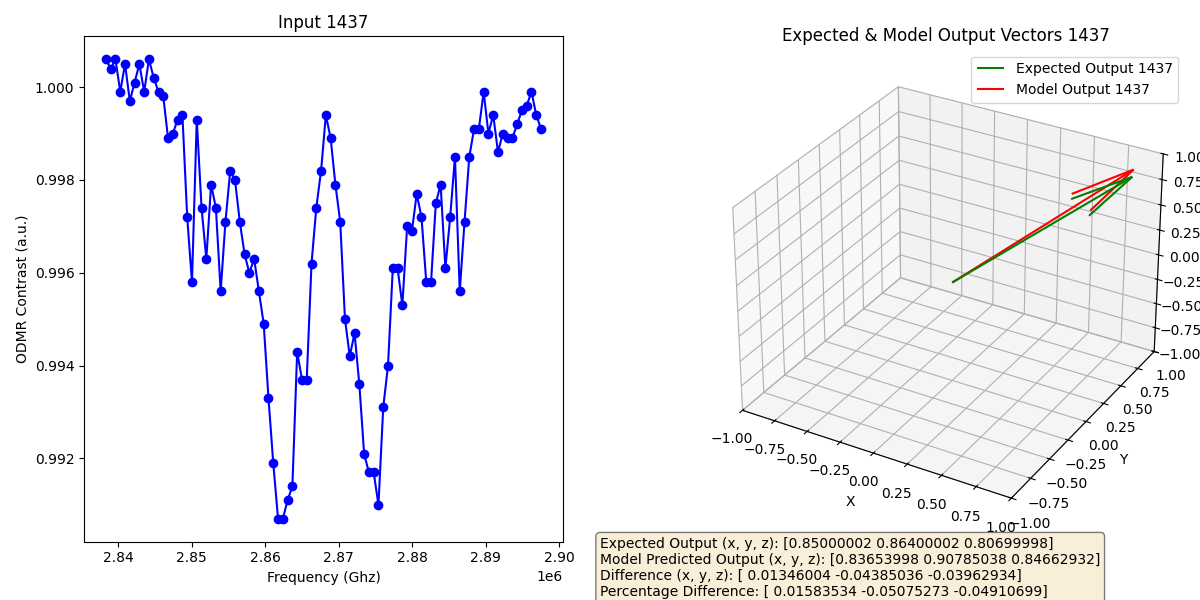
An ODMR scan reads a magnetic field off the fluorescence dip of nitrogen-vacancy centers as the microwave frequency sweeps.
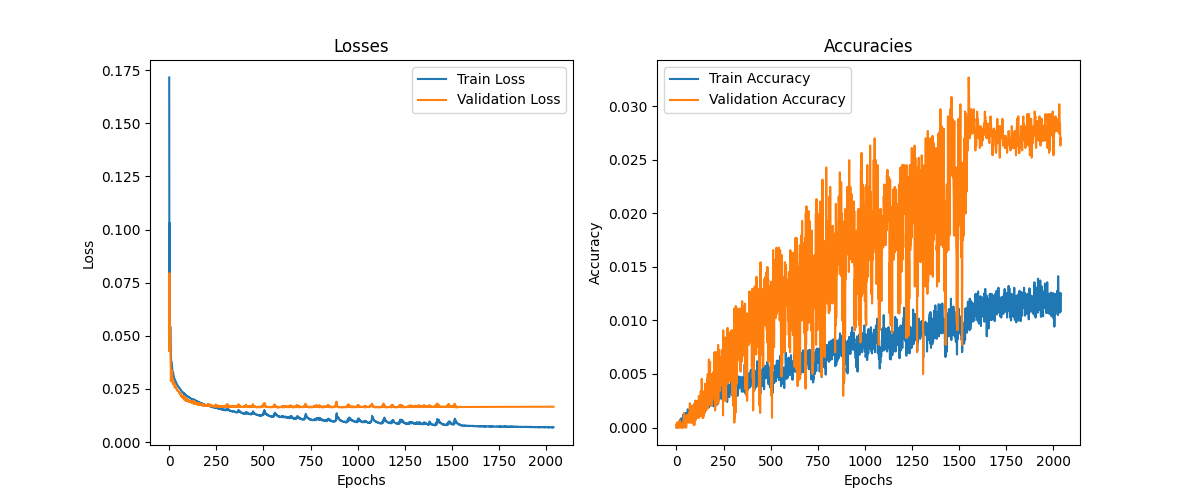
Loss and accuracy curves for the model that reads the ODMR signal: convergence over epochs, the machine-learning half of the sensing pipeline.
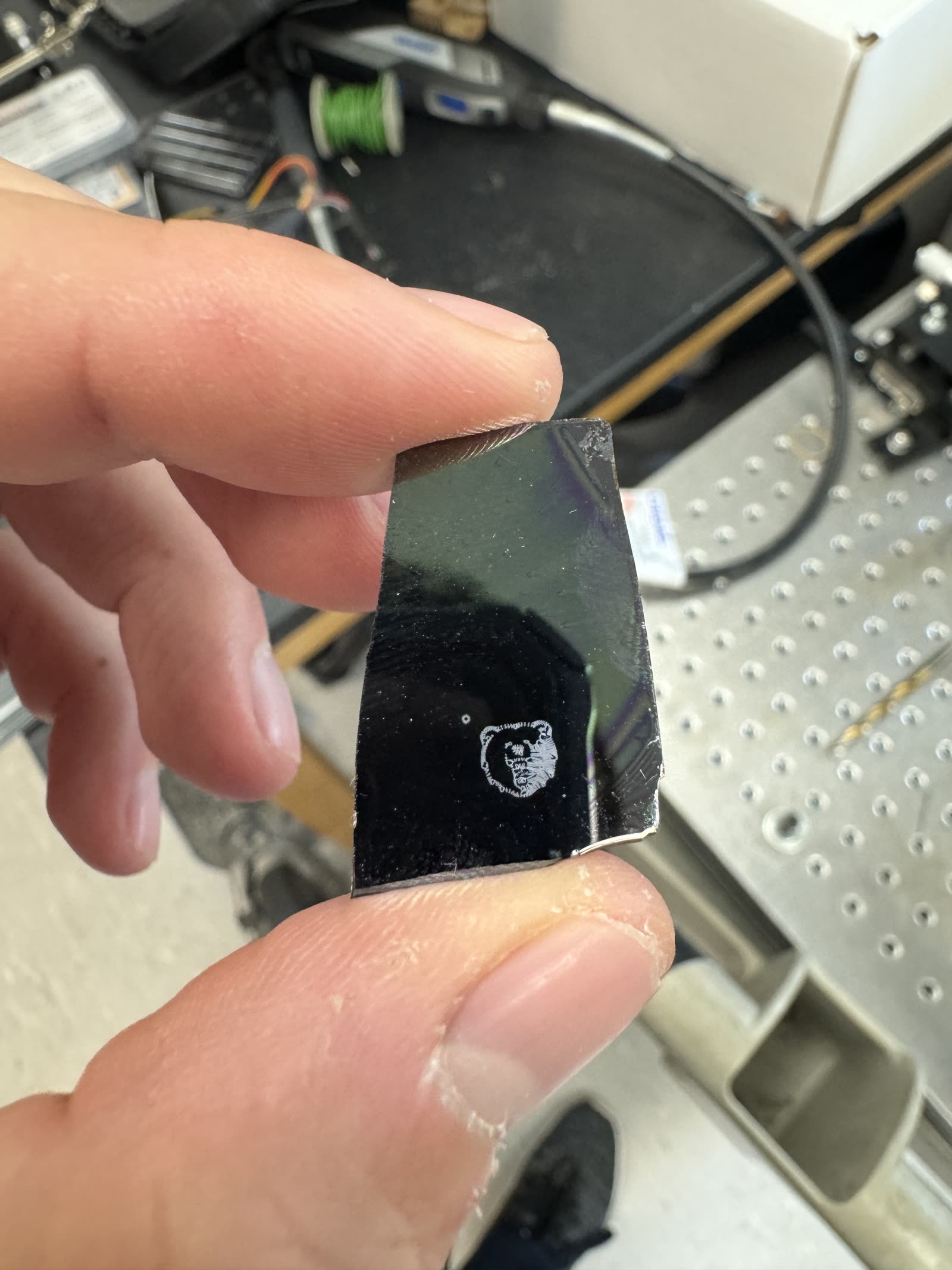
The precision mechanics behind microscope-laser lithography and machine-vision alignment.
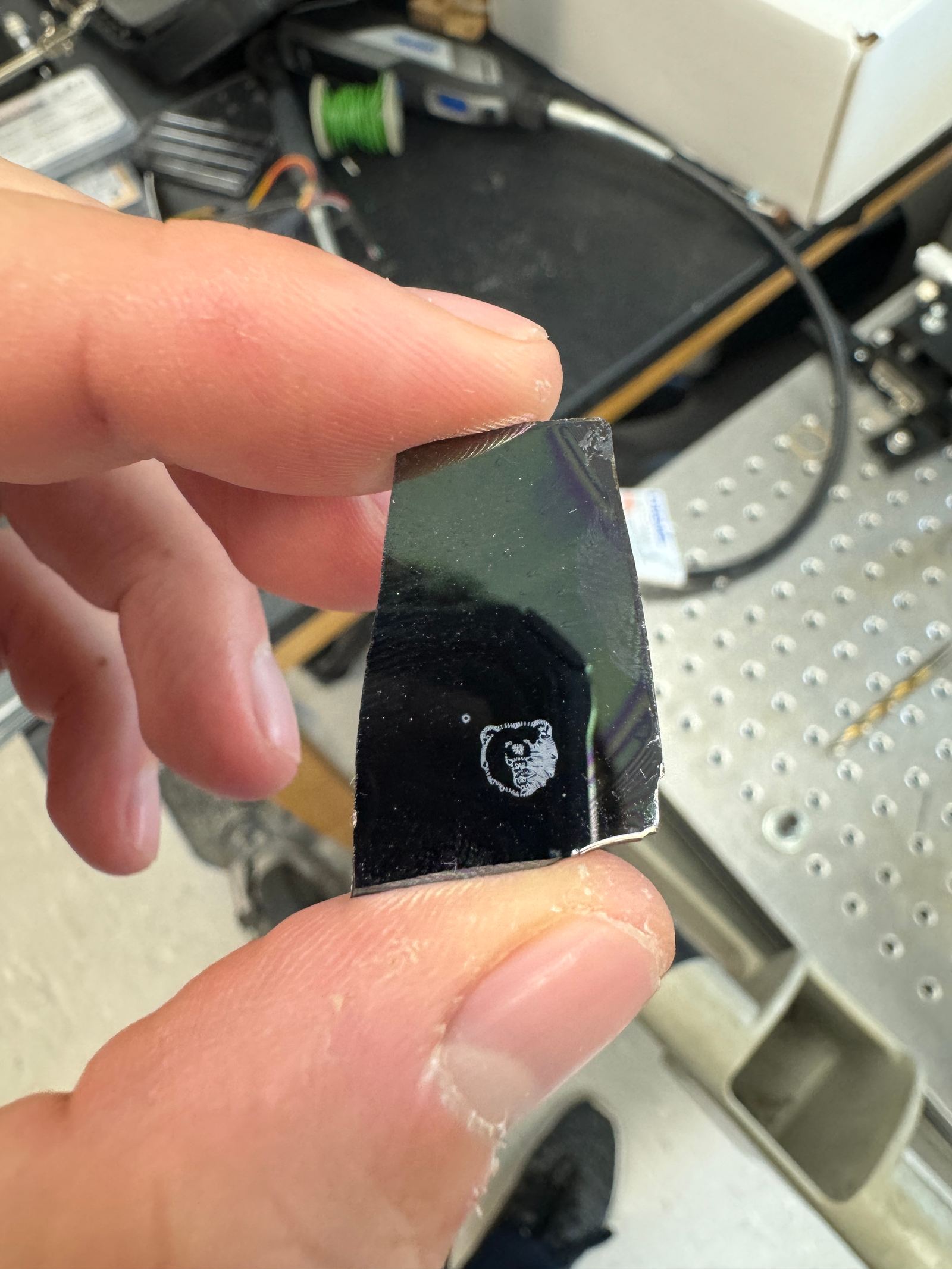
The optics of a homebuilt lithography machine, focusing a pattern down onto a coated substrate to expose micron-scale features.
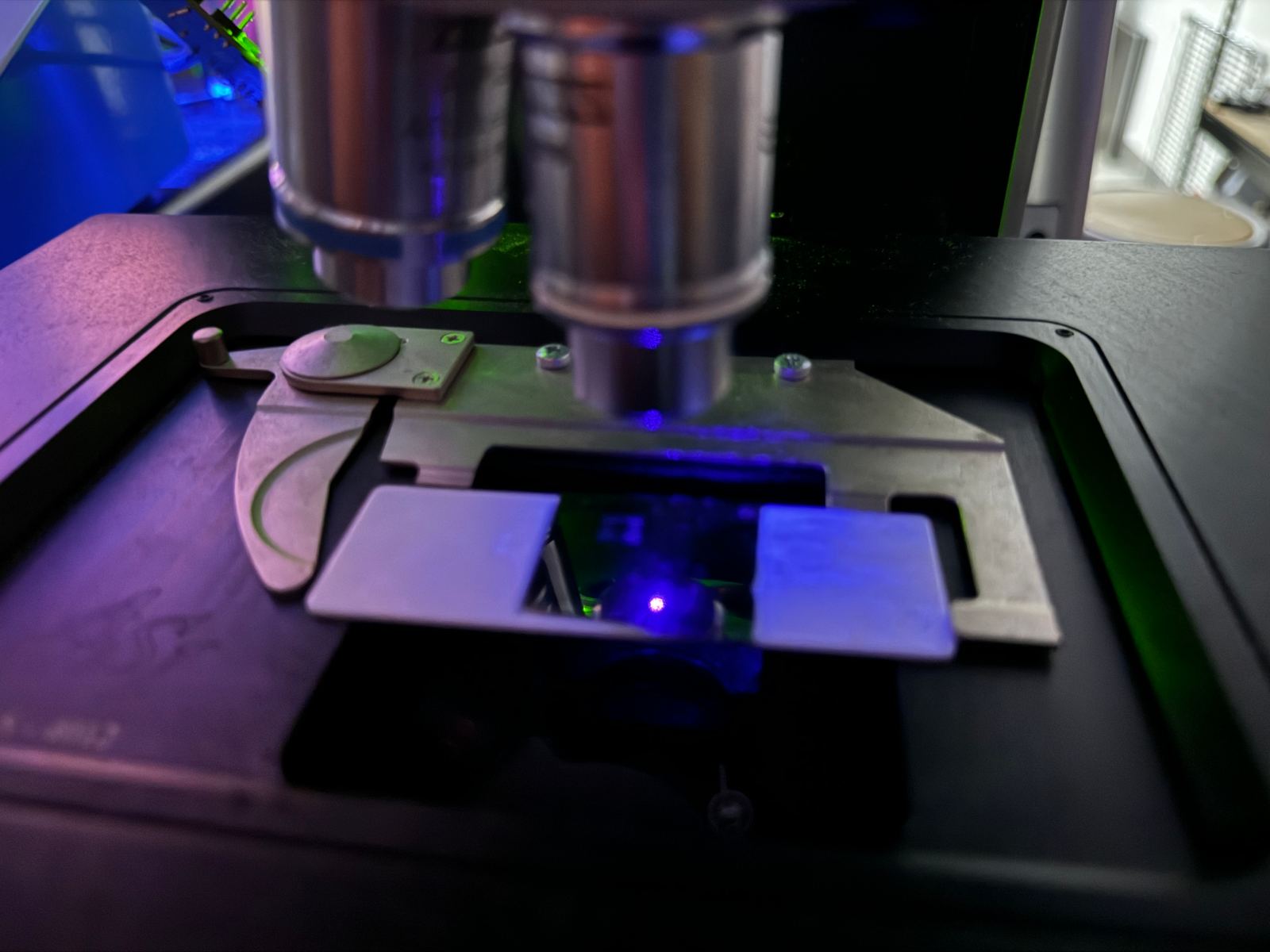
The mask stage of the same rig: the stencil that decides which parts of the substrate see light and which stay covered.
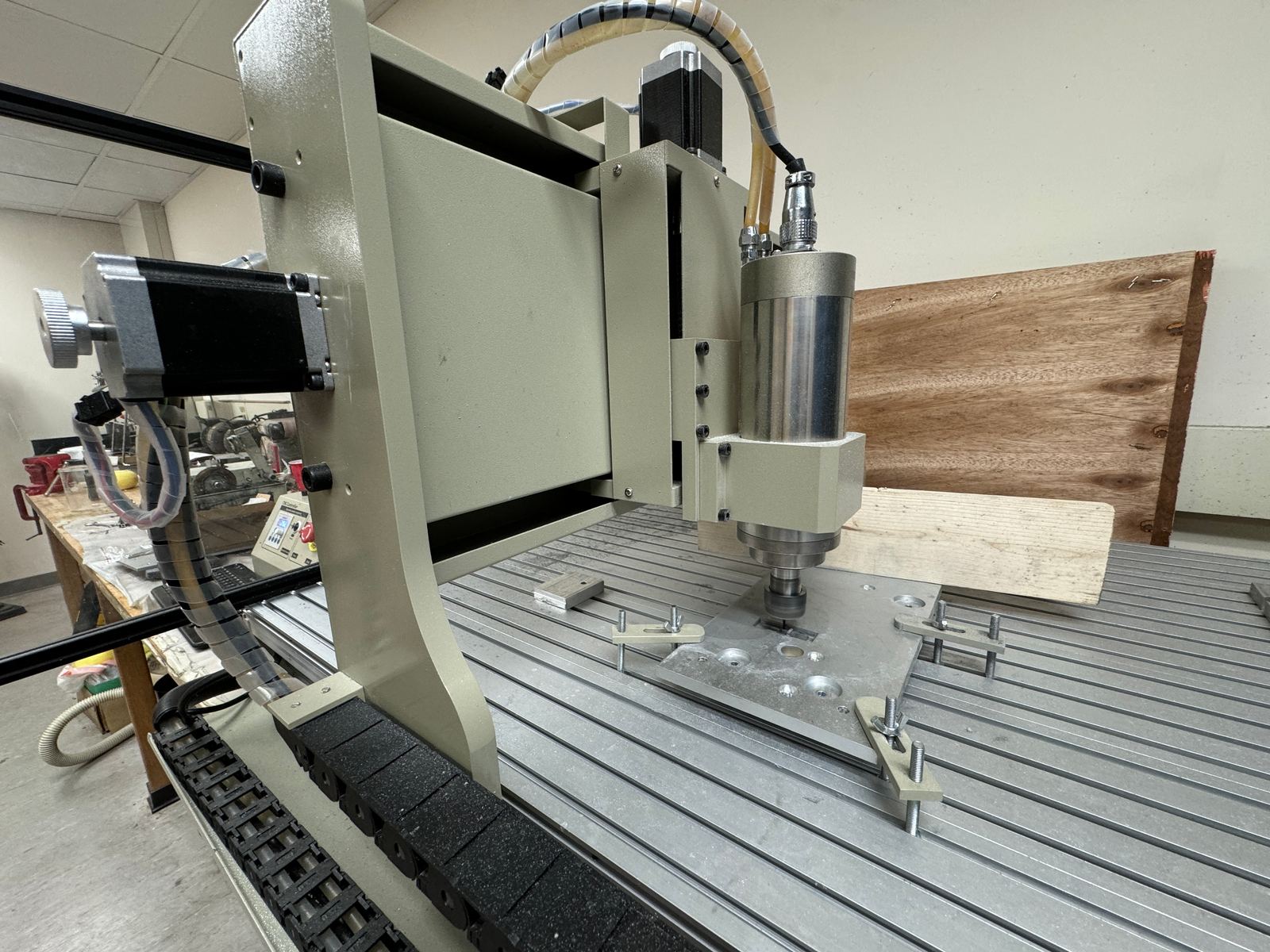
CNC-milling an antenna part. This is the fabrication side of the lab, where a design file becomes a physical component to spec.
a product, not only a prototype
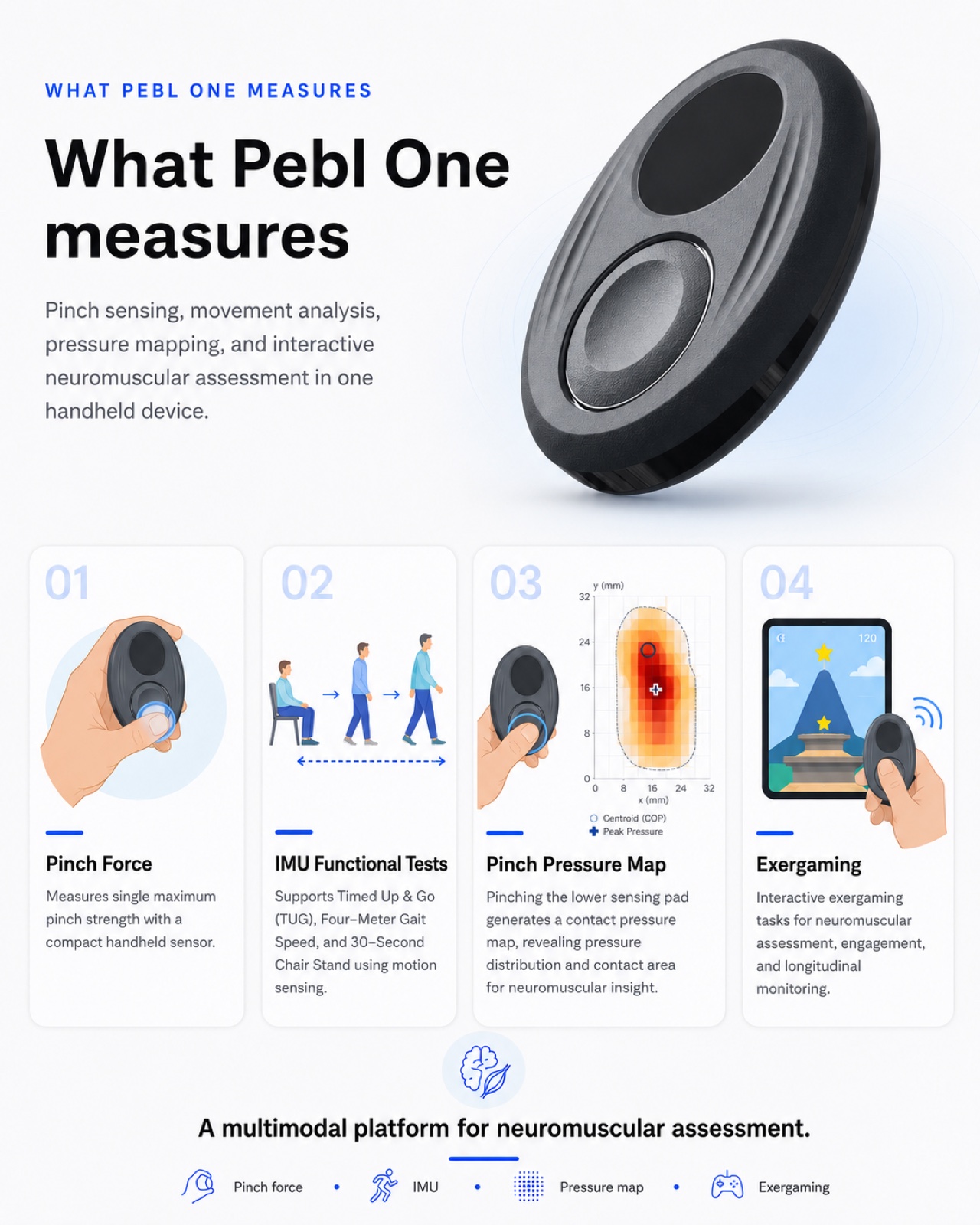
The patent-pending Personal Electronic Biometrics Logger, invented, designed, and prototyped end to end: 3D design, PCB design, embedded firmware, software, and testing, leading a team of three.
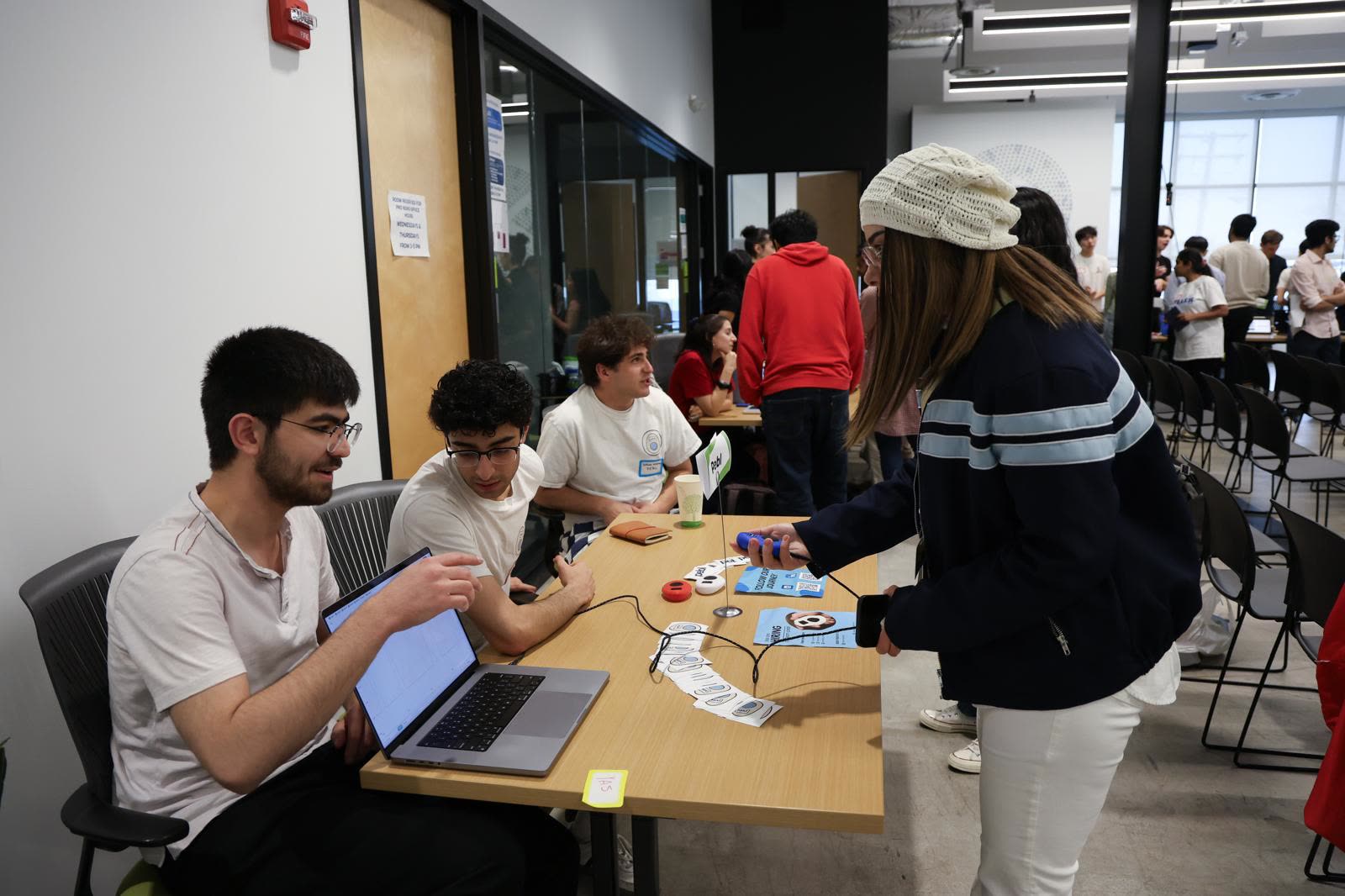
Pebl outside the lab. Handheld devices on a public event table, live measurements running, and the team standing there to explain what the numbers mean.
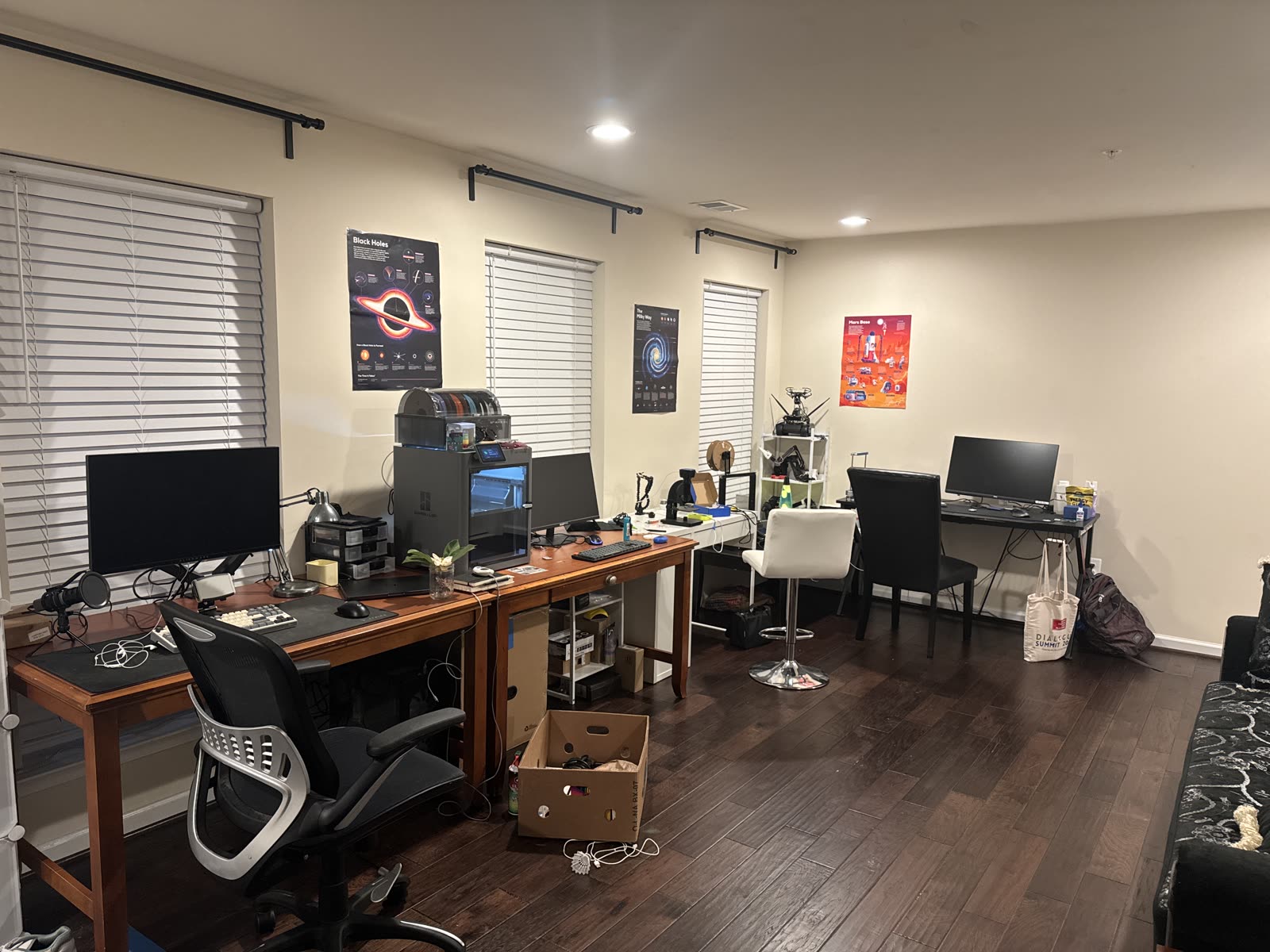
Prototypes and development equipment on the Pebl bench, which is where the device spends most of its life before it looks like a product.
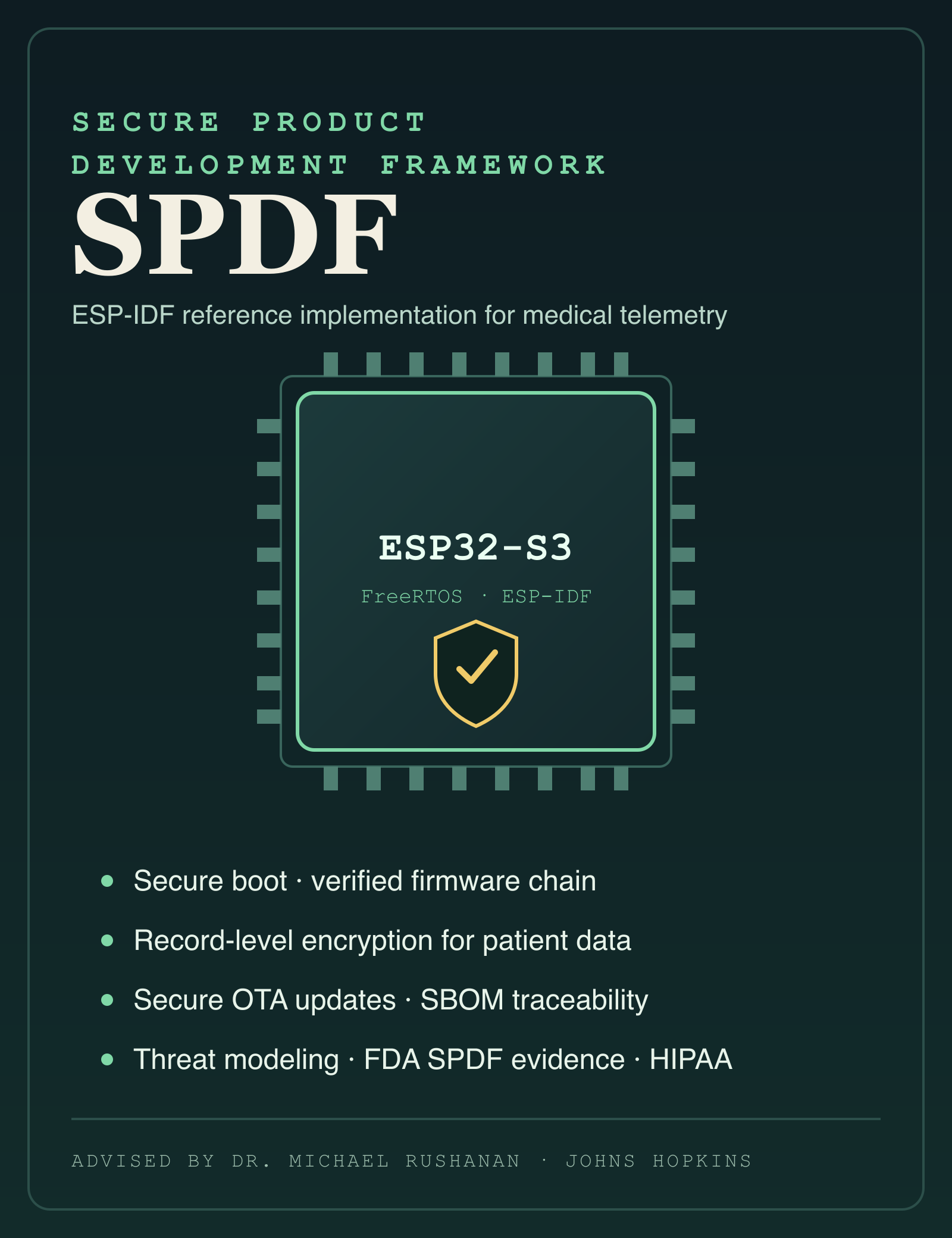
A secure firmware reference implementation for medical telemetry on the ESP32-S3 (ESP-IDF/FreeRTOS): secure boot, record-level encryption, secure OTA, SBOM traceability, threat modeling, and FDA SPDF + HIPAA evidence.
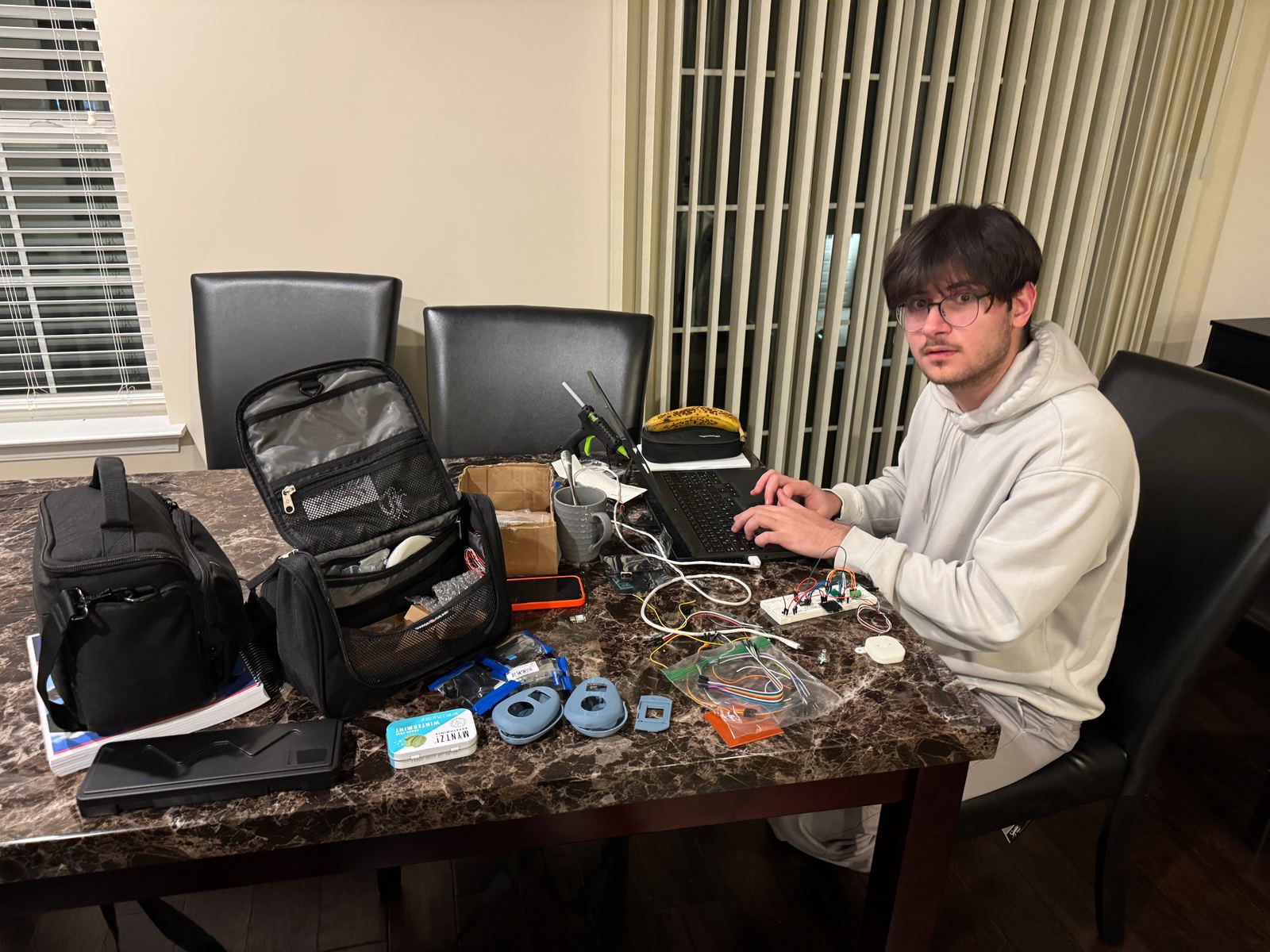
Another angle on the Pebl prototype, at hand-scale, where the industrial design has to feel right and not only measure right.
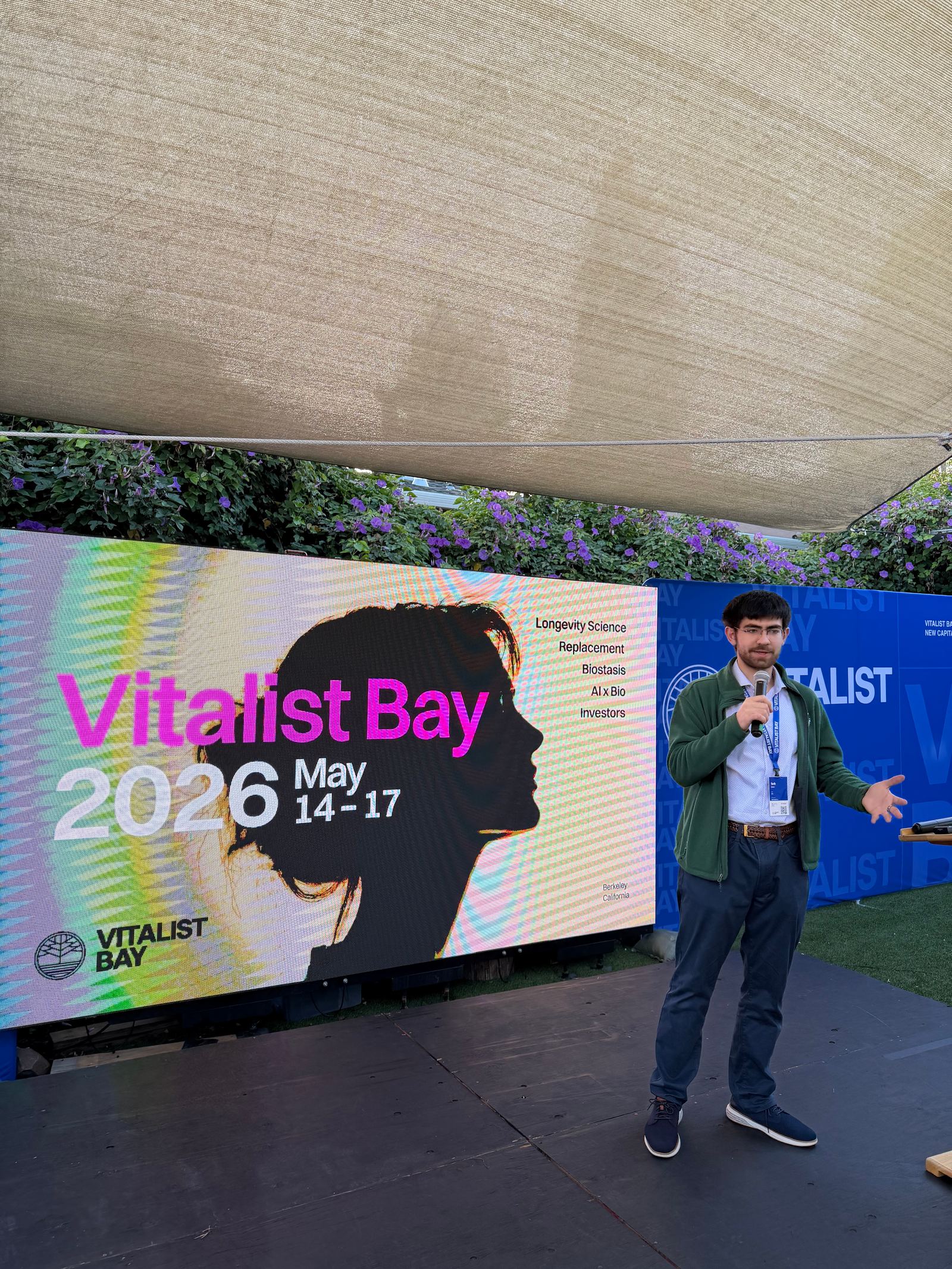
Showing Pebl at Vitalist Bay 2026, out of the lab and in front of a room of people who build health technology.
edge intelligence · motion · presence
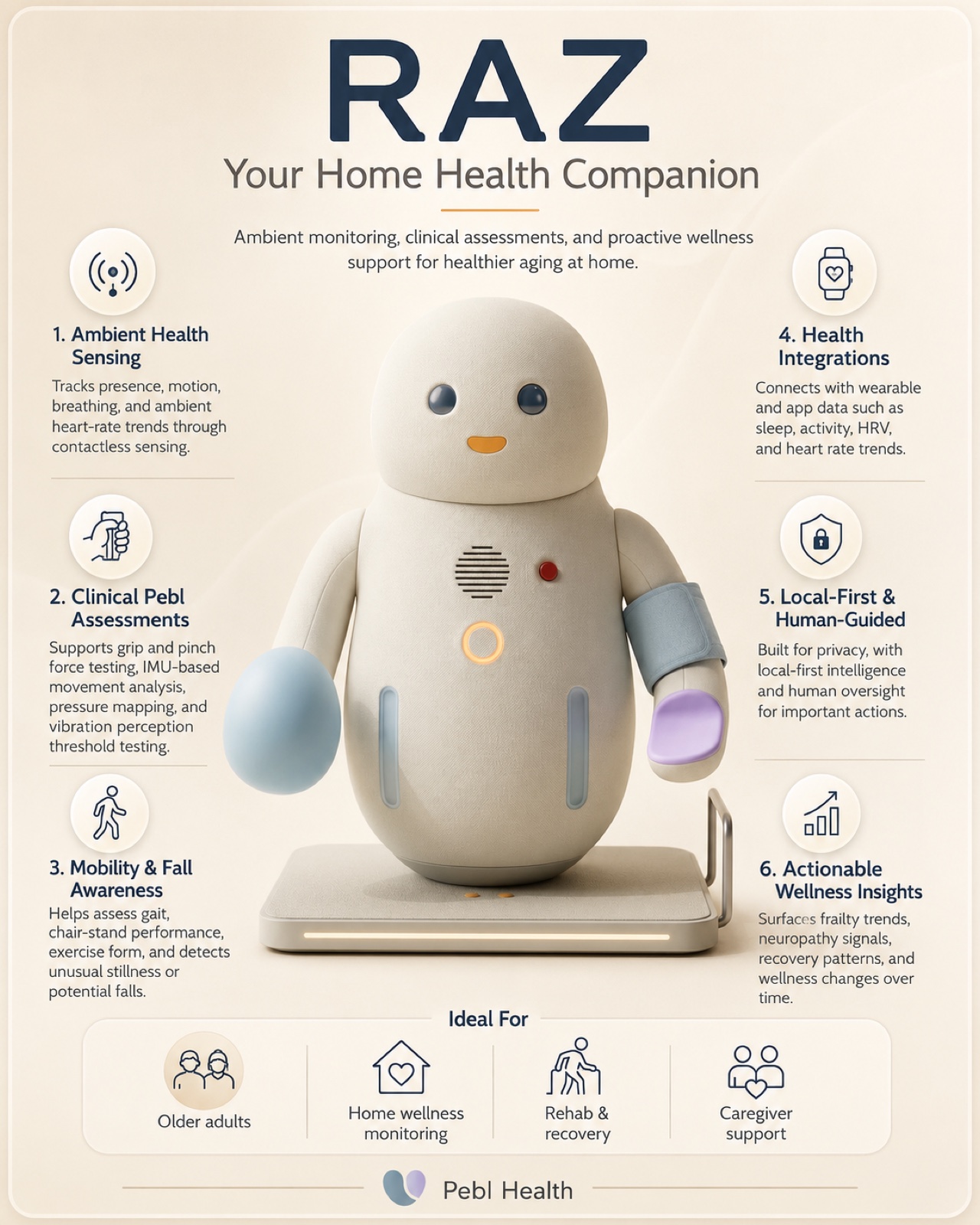
A home-health companion concept connecting ambient sensing, clinical Pebl assessments, mobility support, and local-first intelligence.
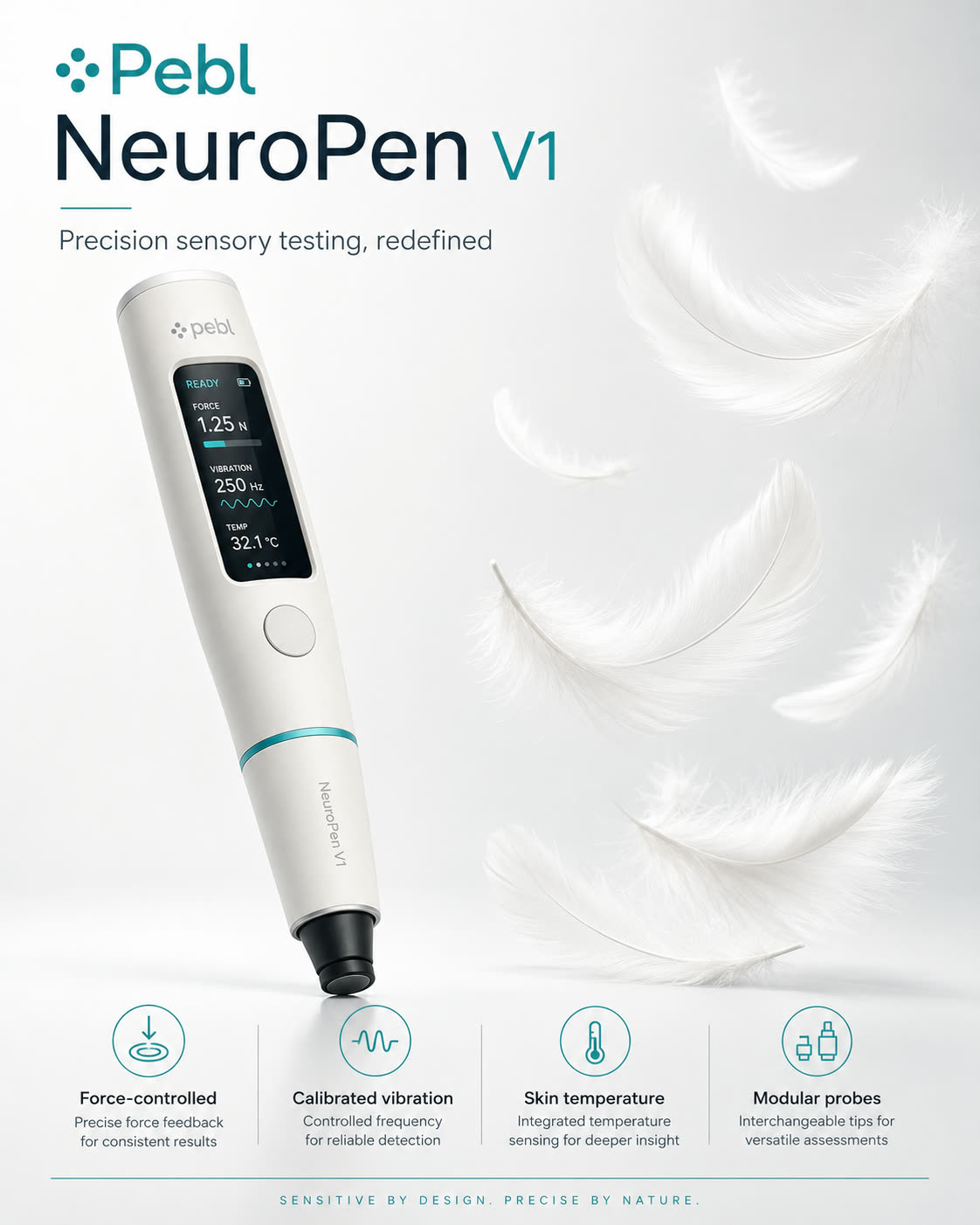
A concept for putting health sensing and guidance into the shape of a pen, an object people already know how to hold.
FIPS · Common Criteria · the Intertek years
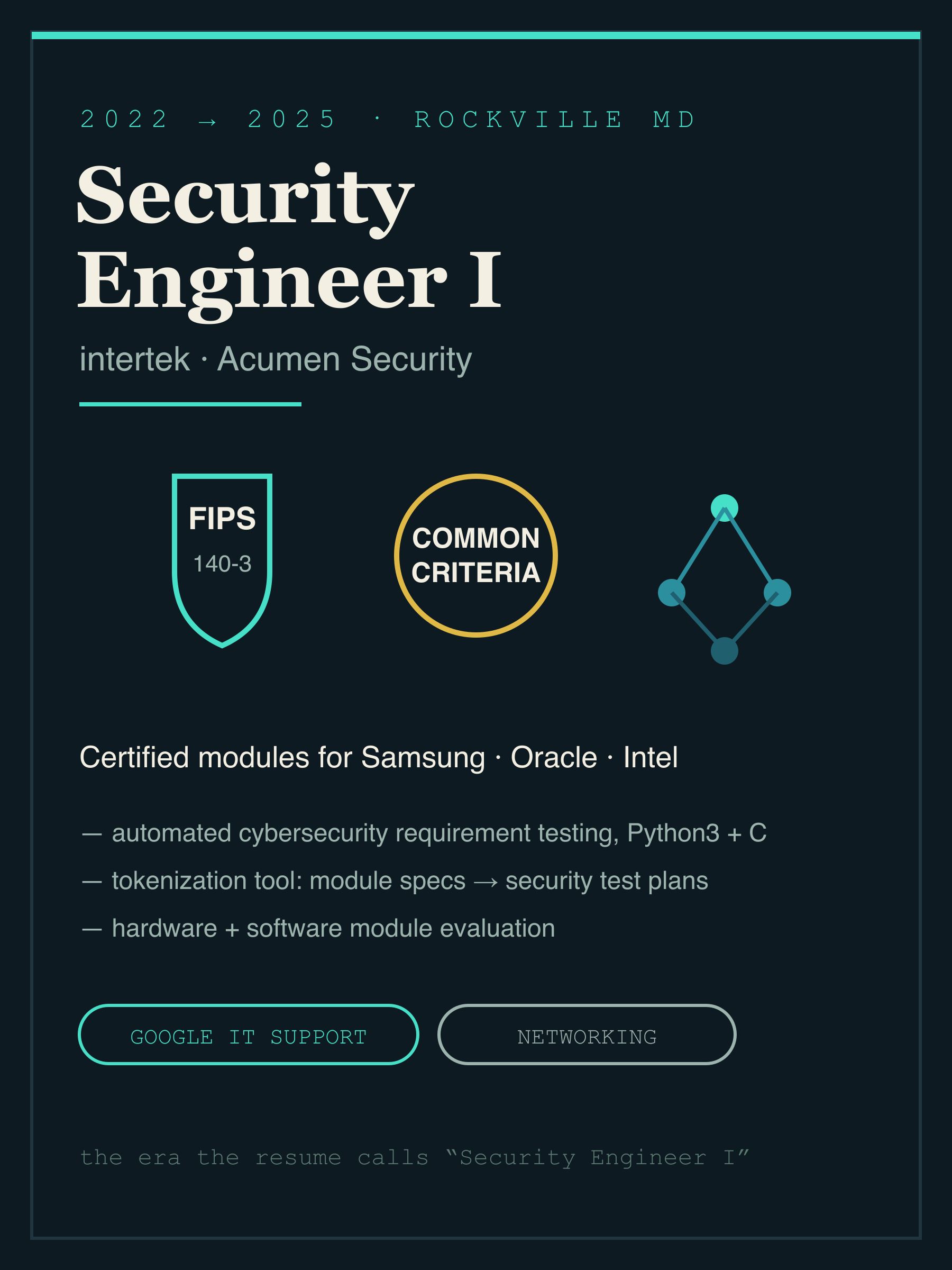
Three years at Intertek / Acumen Security in Rockville: FIPS certification for Samsung, Oracle, and Intel modules, automated cybersecurity requirement testing in Python3 and C, and a tokenization tool that turns a module's specs and claims into security test plans. Networking fundamentals and a Google IT Support certificate sit underneath all of it.
Interfaces shape what people can understand, practice, and encounter.
CrossWeave (CSCW '26) built at the JHU Center for Language and Speech Processing, LinguaLeap, MentorTracker, PersonaPlay, and a semester assisting the HCI course.
language practice · realtime conversation
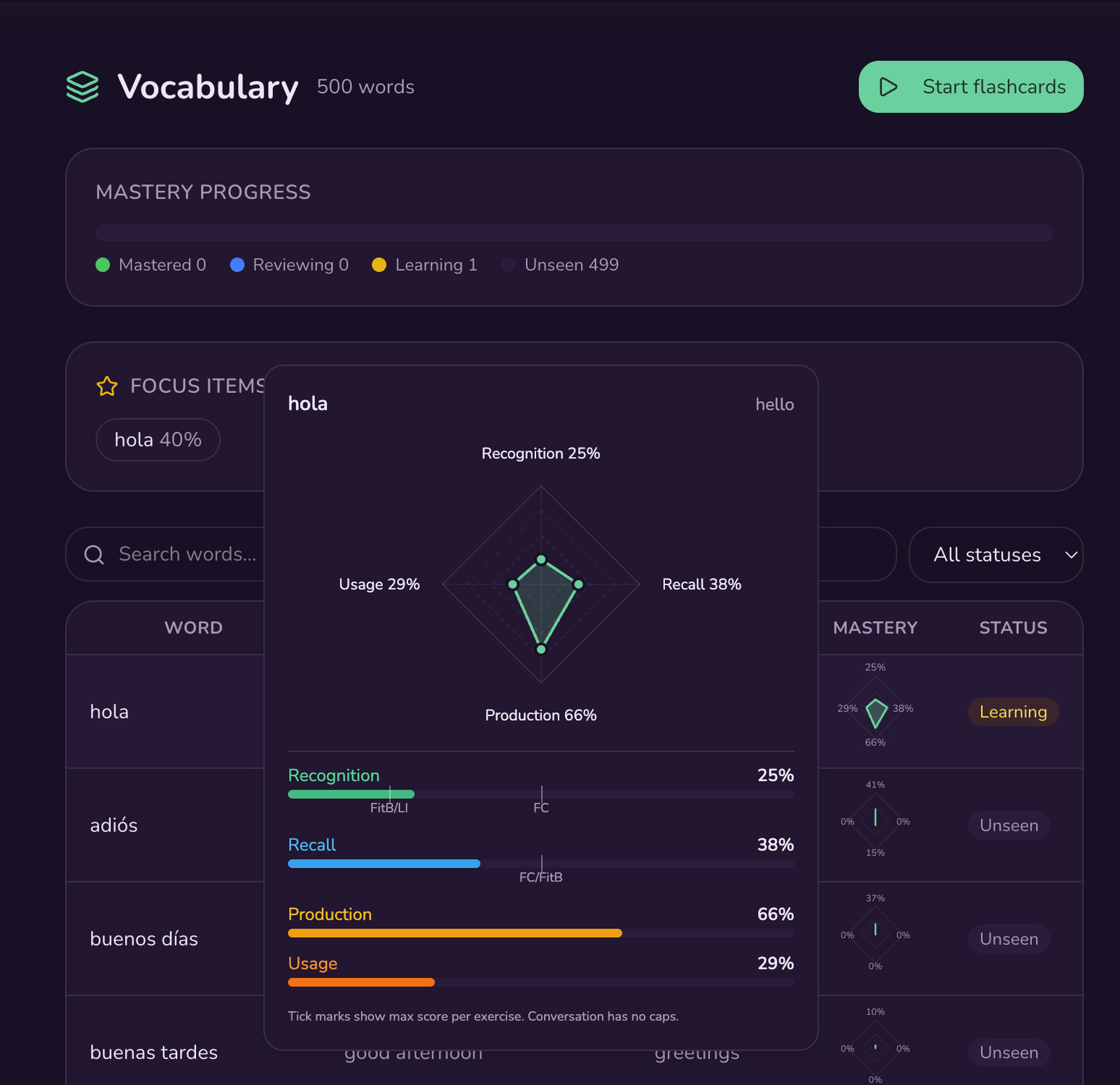
Mastery is four numbers, not one. Opening a word breaks it into recognition, recall, production, and usage, each earned by a different kind of exercise, so the AI can tell "knows it when she sees it" apart from "can say it unprompted" and pick what to practise next across all 500 words.
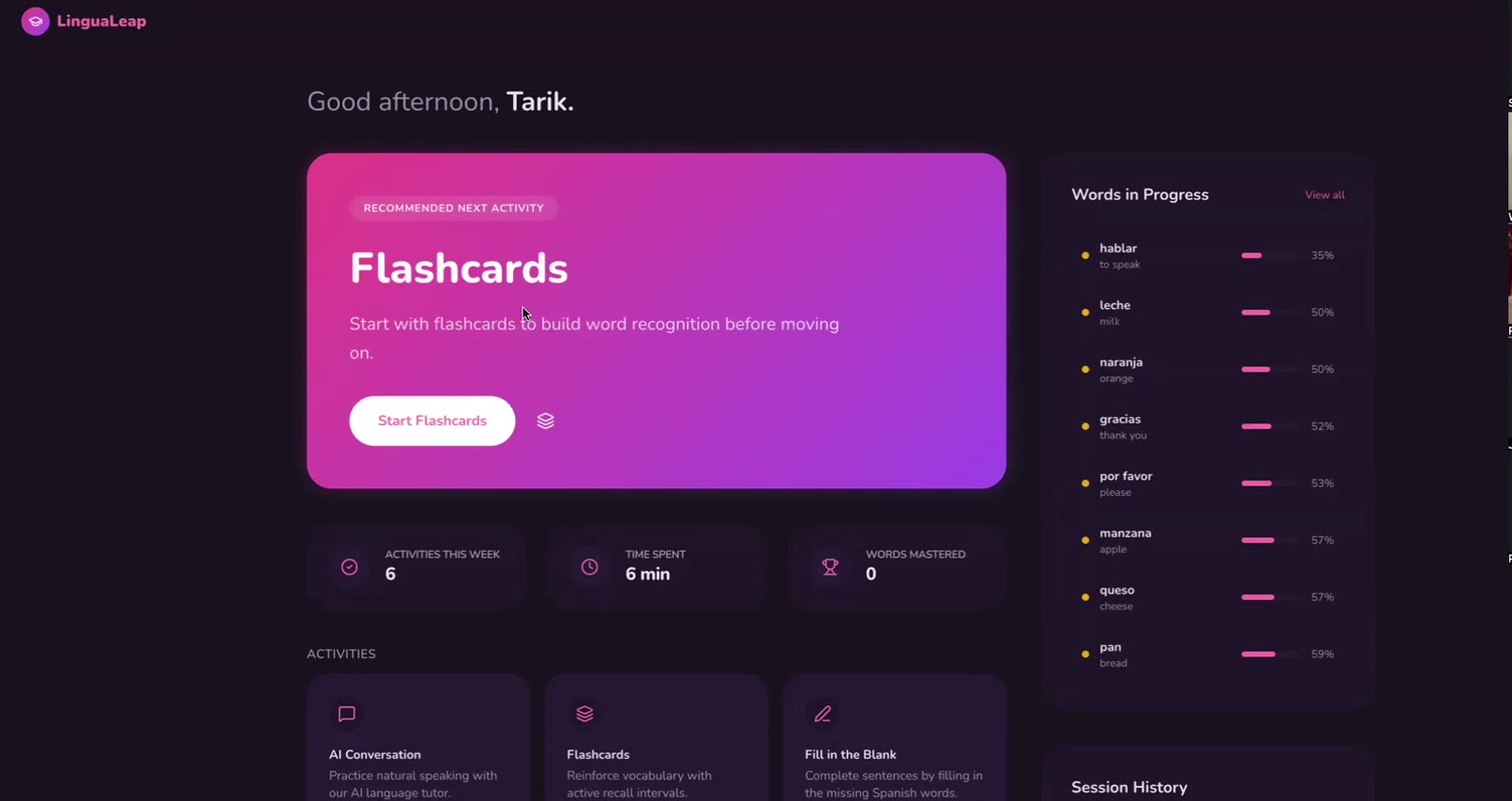
Team 07's learning dashboard, which is where progress and the next thing to practise wait between sessions.
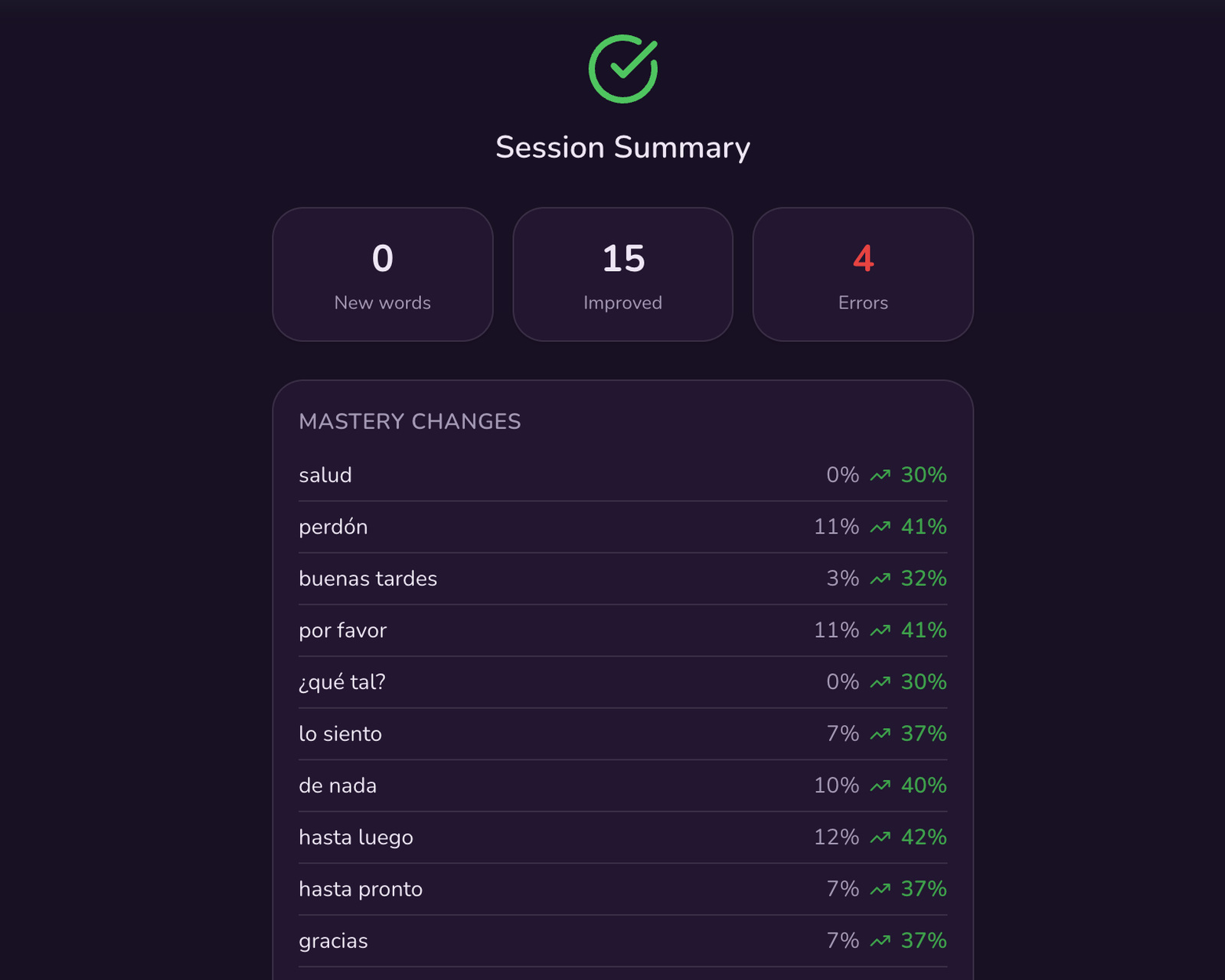
What a practice session actually moved: fifteen words improved, four errors, and the before-and-after mastery for each one. Progress is reported per word rather than as a streak, so the next session has something to aim at.
perspective · communities · reflection
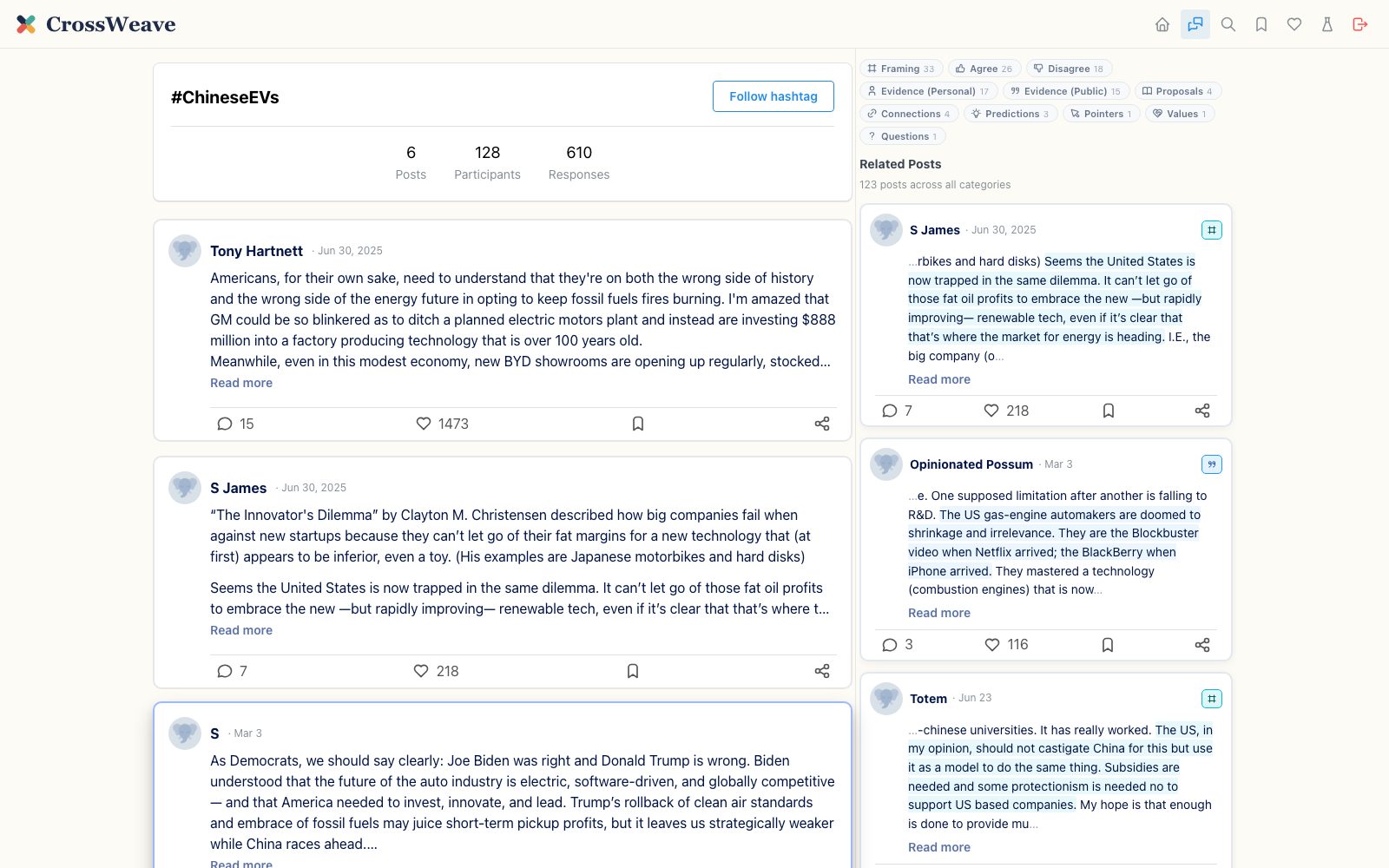
The live #ChineseEVs discussion in CrossWeave. The whole front-end was built at the JHU Center for Language and Speech Processing with Professors Xiao, Eisner, and Piccardi, and published at CSCW '26.
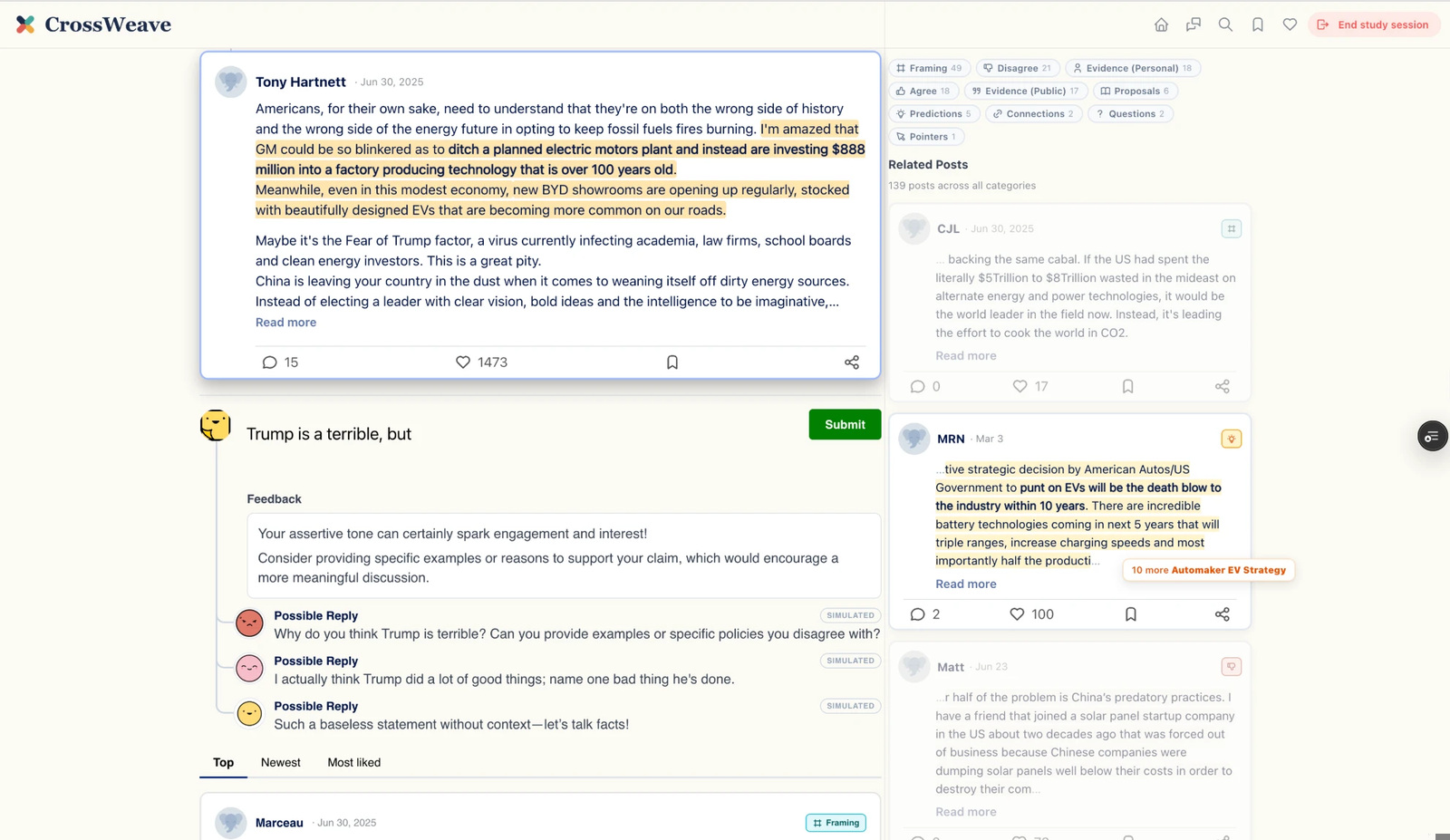
Drafting a reply: the interface answers with feedback in the voice of a patient moderator and three simulated reactions to the draft, while the perspective panel keeps labelled contributions (framing, evidence, proposals) in view. Submission stays disabled for a few seconds so the reactions are read rather than skipped.
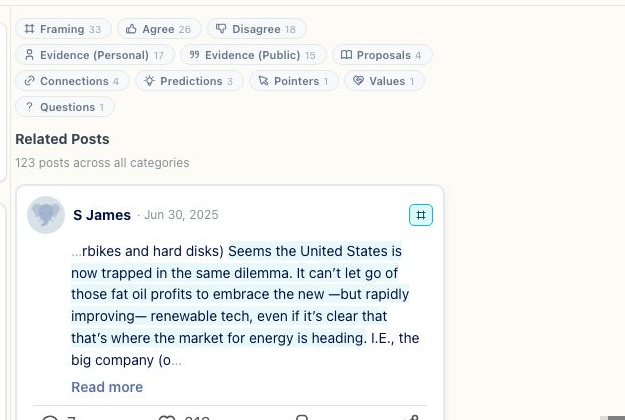
The response column runs beside the feed so other perspectives stay in view while you read, which makes comparing them part of reading rather than a separate trip.
critique · facilitation · making
Course-assistant work: running critique, unblocking teams, and helping students get from a concept to something that actually responds.
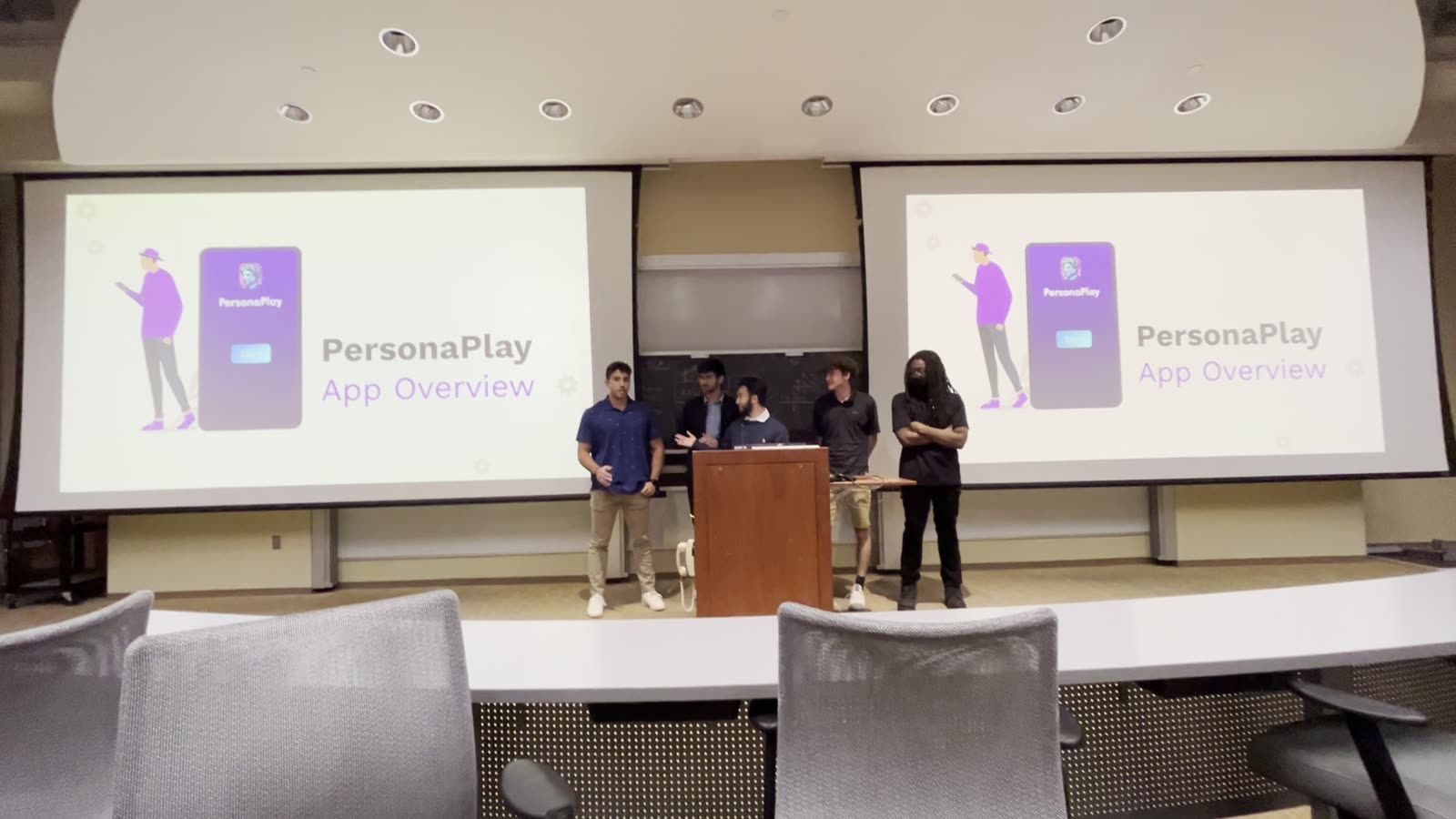
A team HCI project, presented in the same lecture hall where it was built and critiqued.
mentortracker.org · hizmetsearch.com
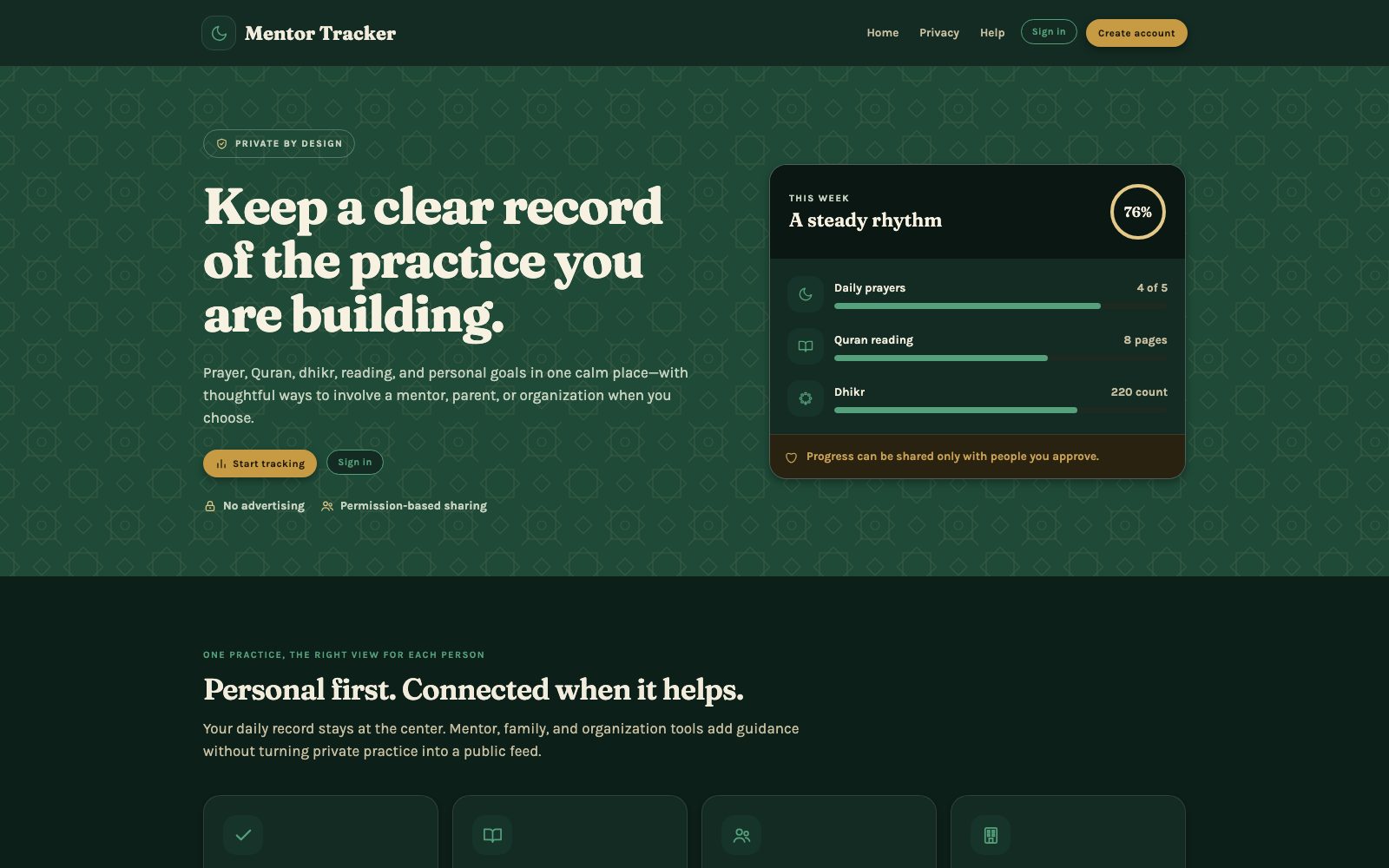
A private-by-design portal for setting goals, reflecting on habits, and sharing progress with a chosen mentor.
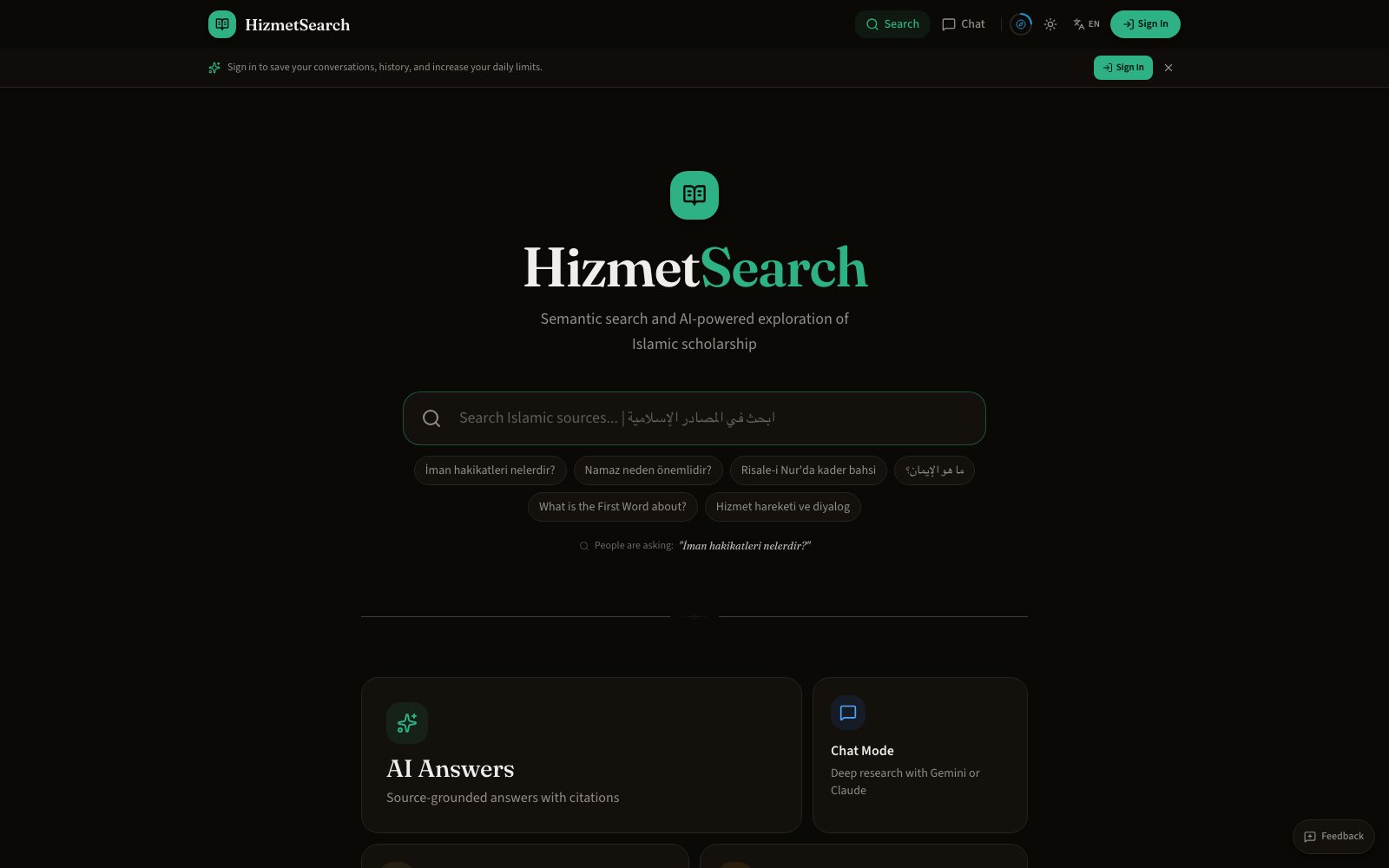
Semantic search across Islamic scholarship: source-grounded answers with verifiable citations in Turkish, Arabic, and English, plus a chat mode for longer research.
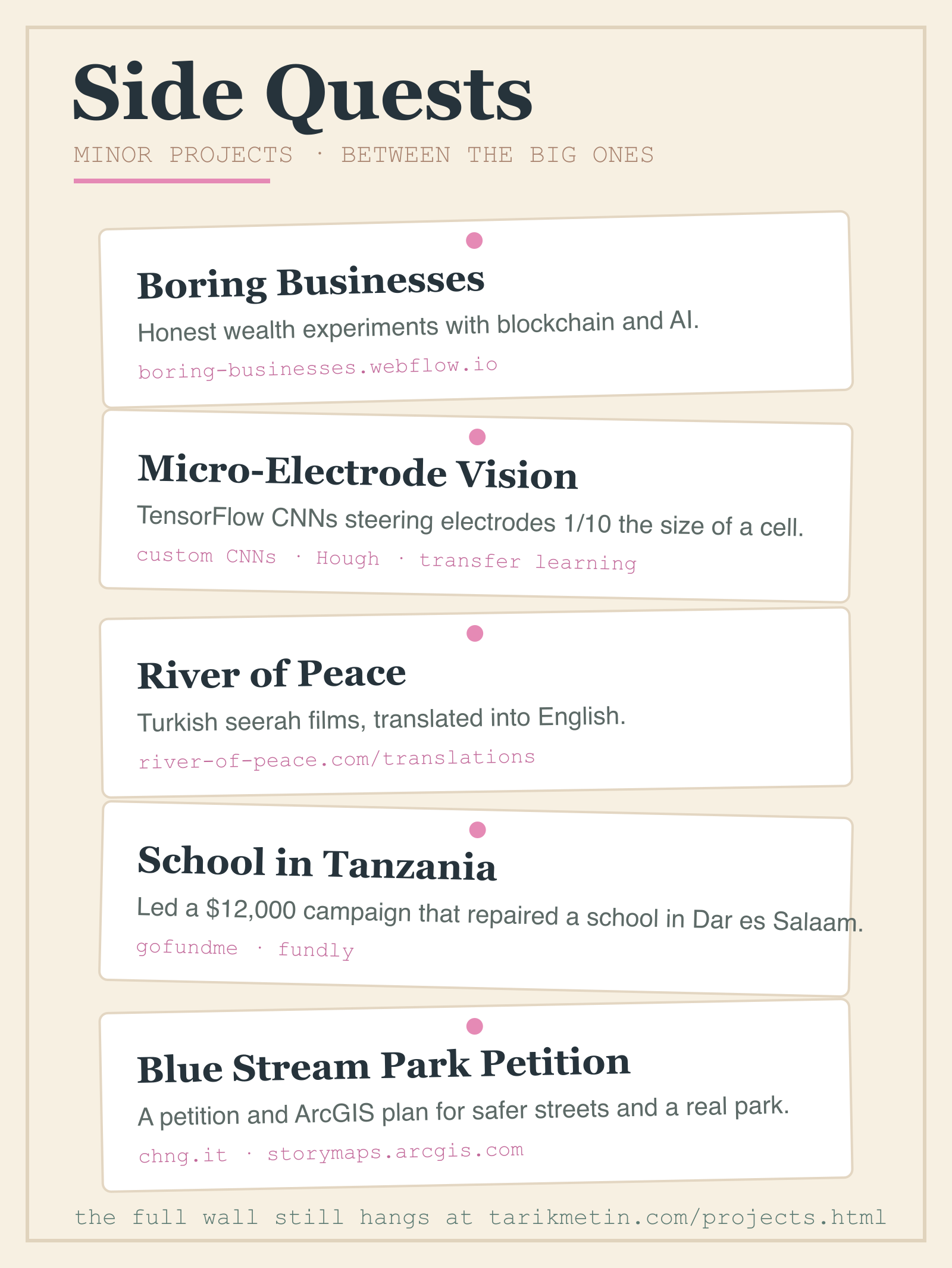
The smaller builds that never earned a whole room: Boring Businesses (blockchain + AI wealth experiments), a TensorFlow vision rig steering micro-electrodes a tenth the size of a cell, English translations for River of Peace's seerah films, a $12,000 campaign that repaired a school in Dar es Salaam, and the petition + ArcGIS plan for a safer park in Blue Stream.
The work here only makes sense over years.
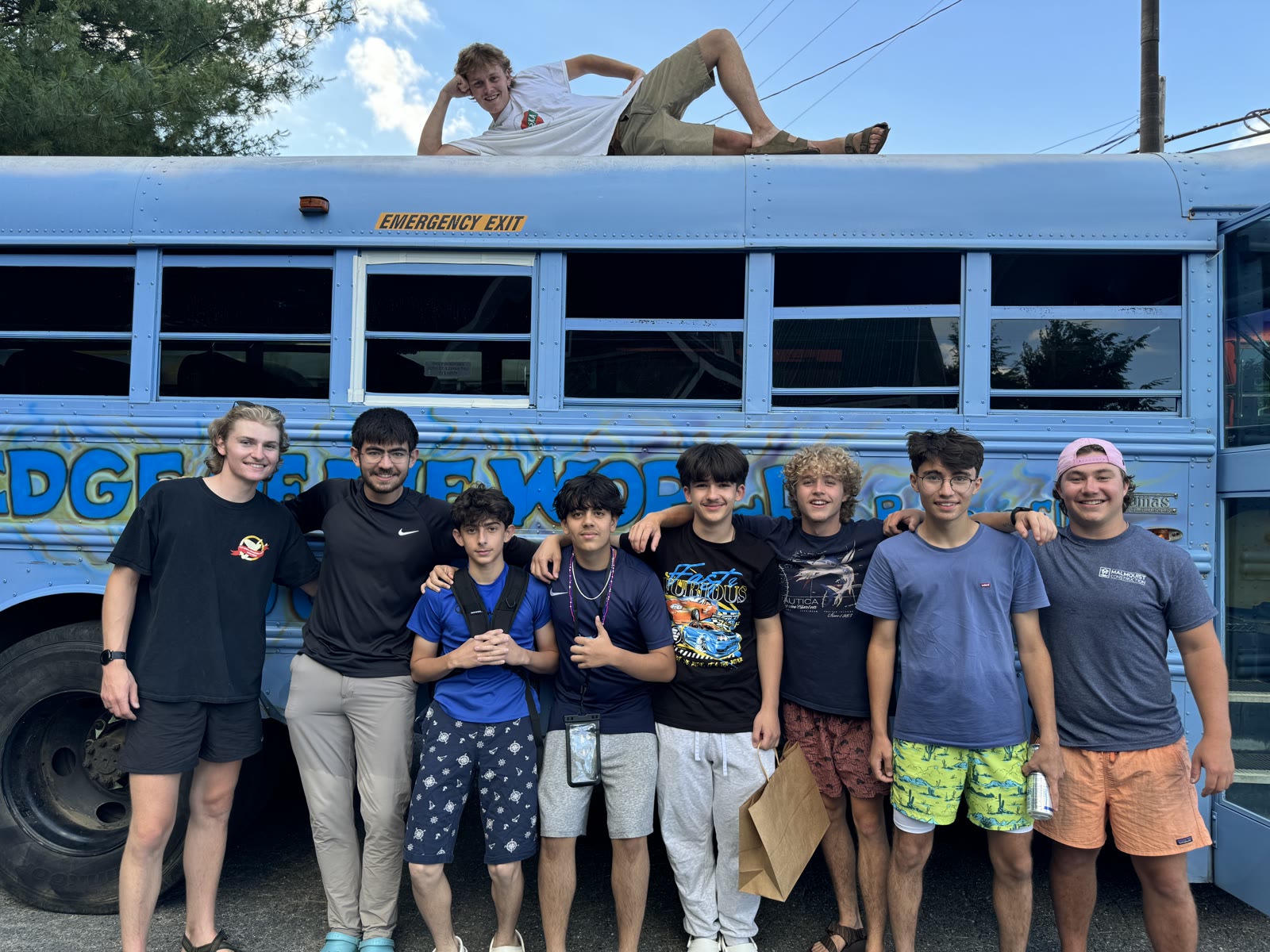
Seven years mentoring 5th-12th graders through MARTI: grade-group tables, a STEM academy teaching cybersecurity and programming, CPR and college-application workshops, campus visits, and trips.
skills · games · ordinary afternoons
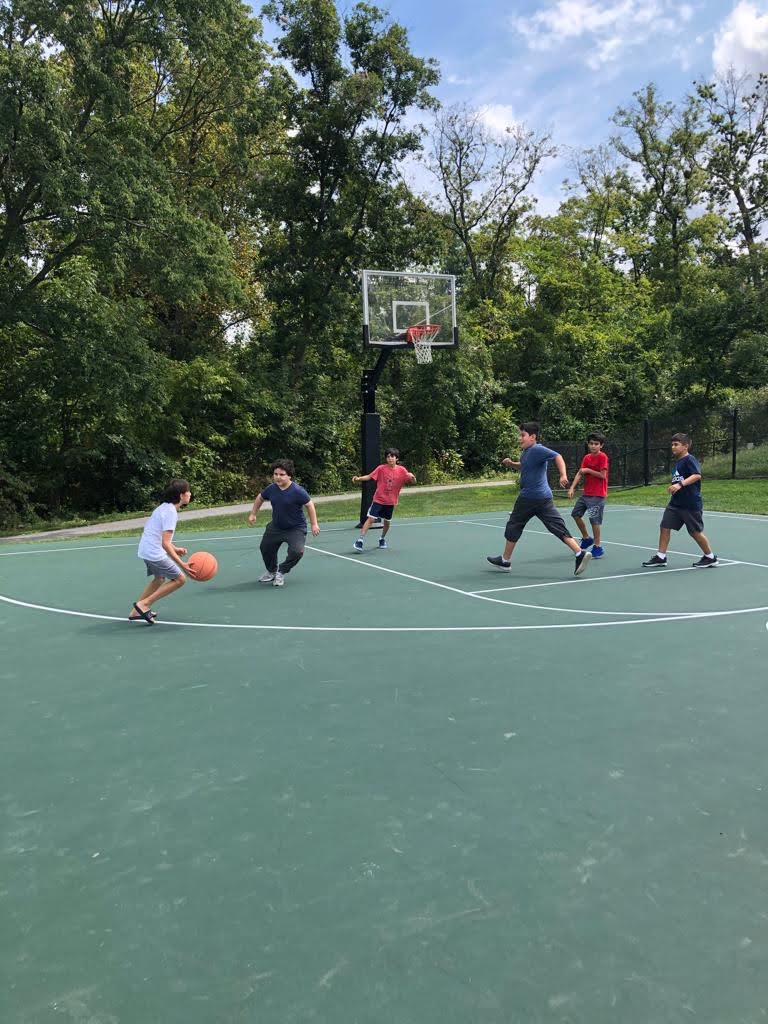
Pickup game on a MARTI youth day. Six mentees, one green court, one mentor behind the camera.
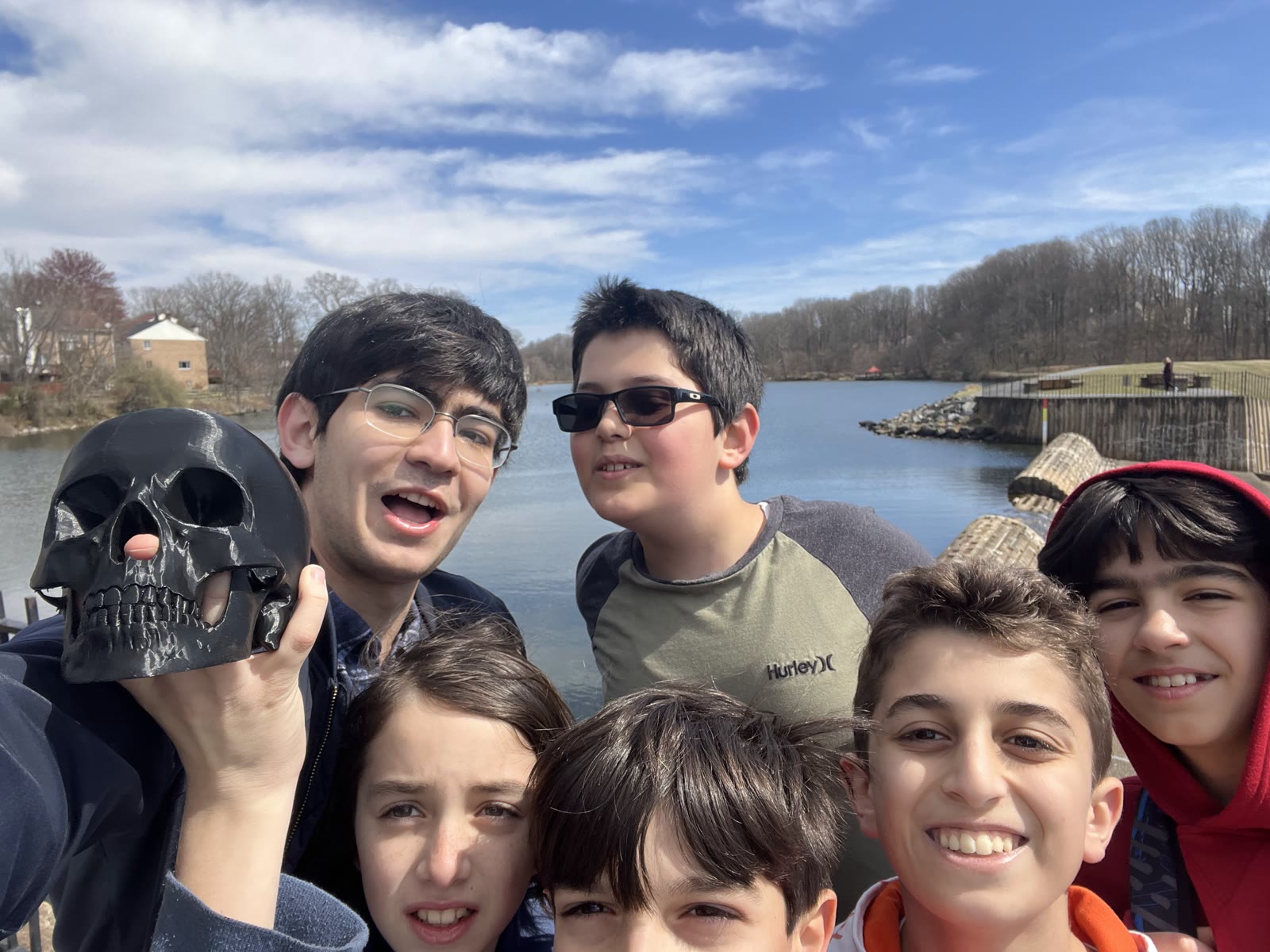
Lakeside selfie with a 3D-printed skull along for show-and-tell. Mentoring and making travel together.
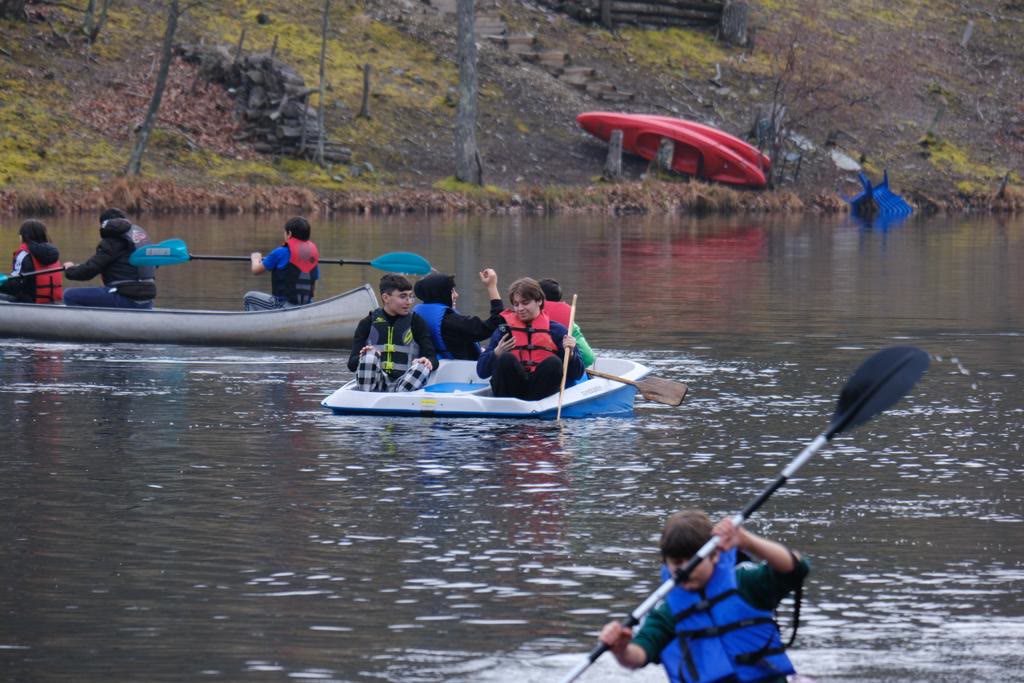
Vests zipped, spray flying. One kayak, one pedal boat, one canoe, early-spring water.
trust grows through shared adventures
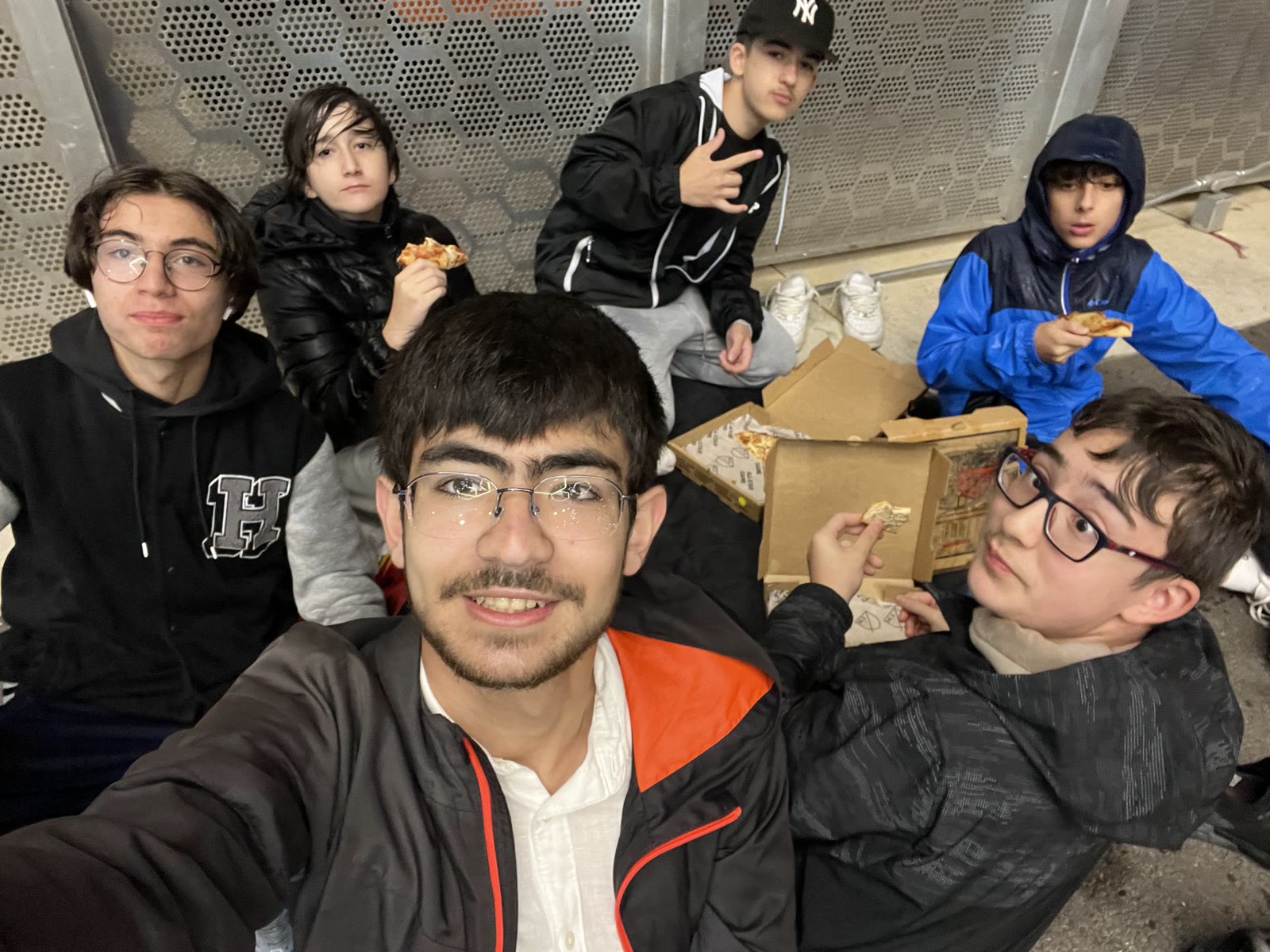
Post-game pizza. Seven years of mentoring 5th-12th graders, and the field trips that keep them coming back.
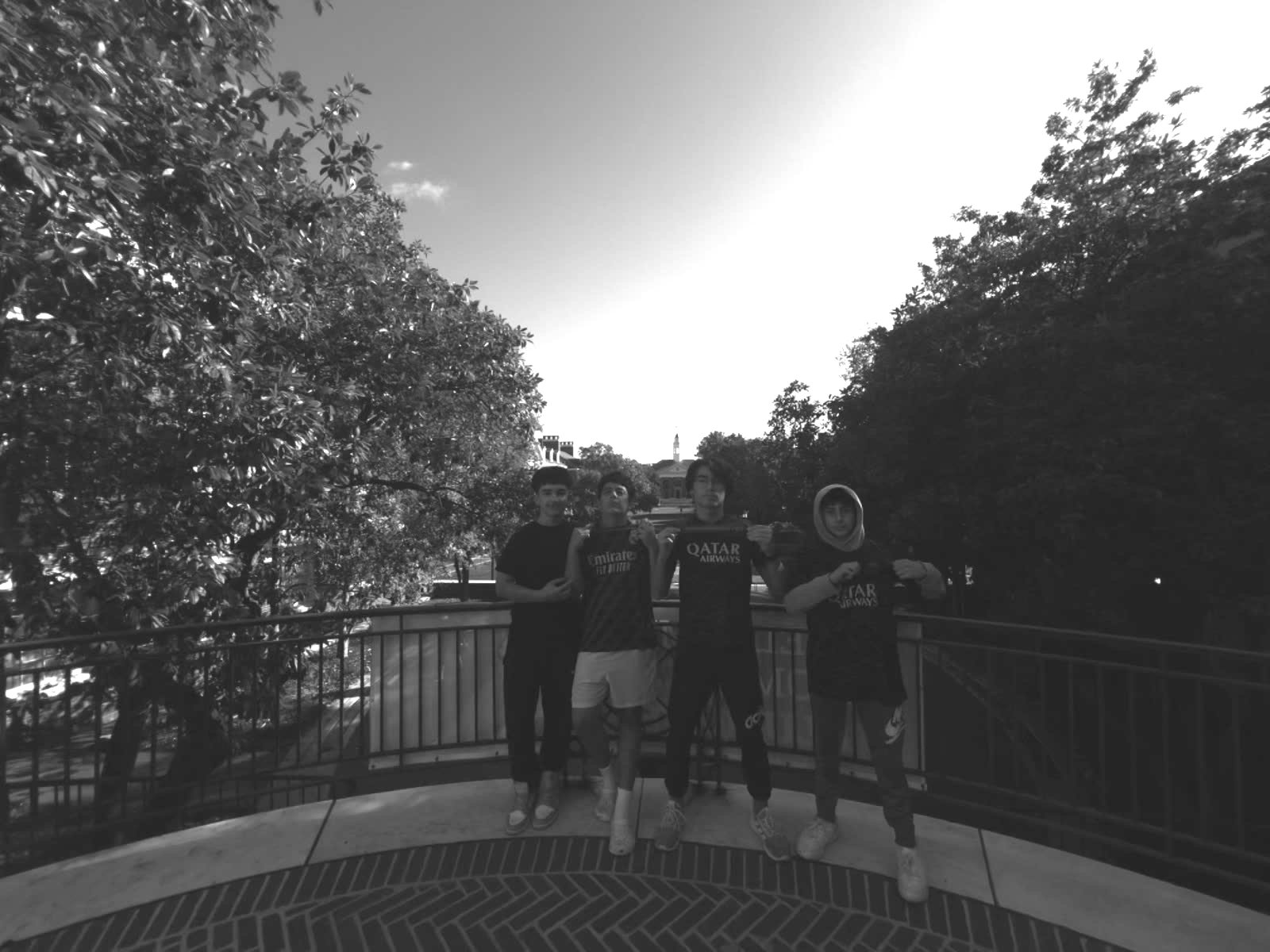
Campus visit in soccer jerseys, with Gilman's clock tower doing the persuading.
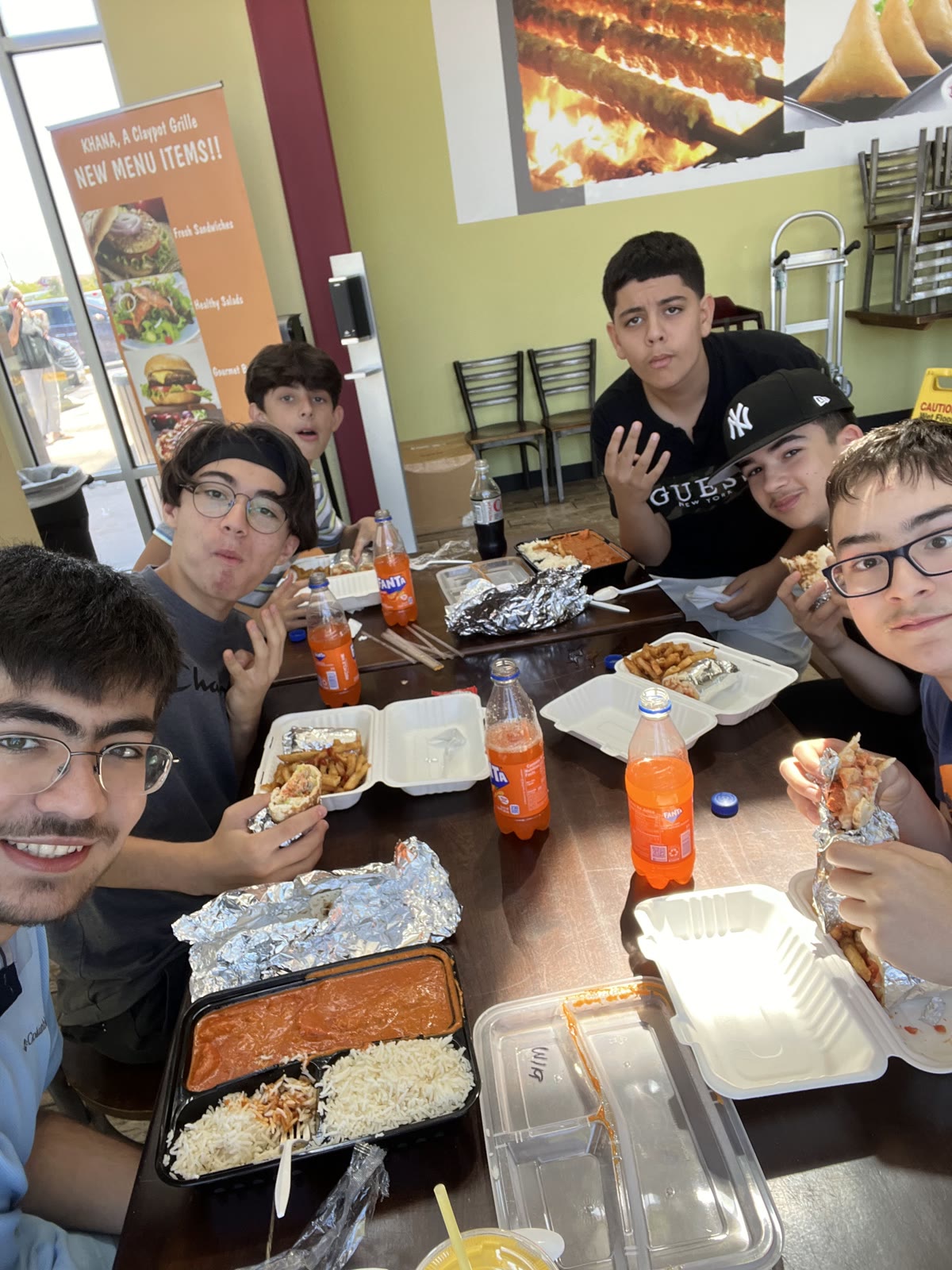
After the outing, at Khana, A Claypot Grille. Foil wraps, curry and rice, orange soda.
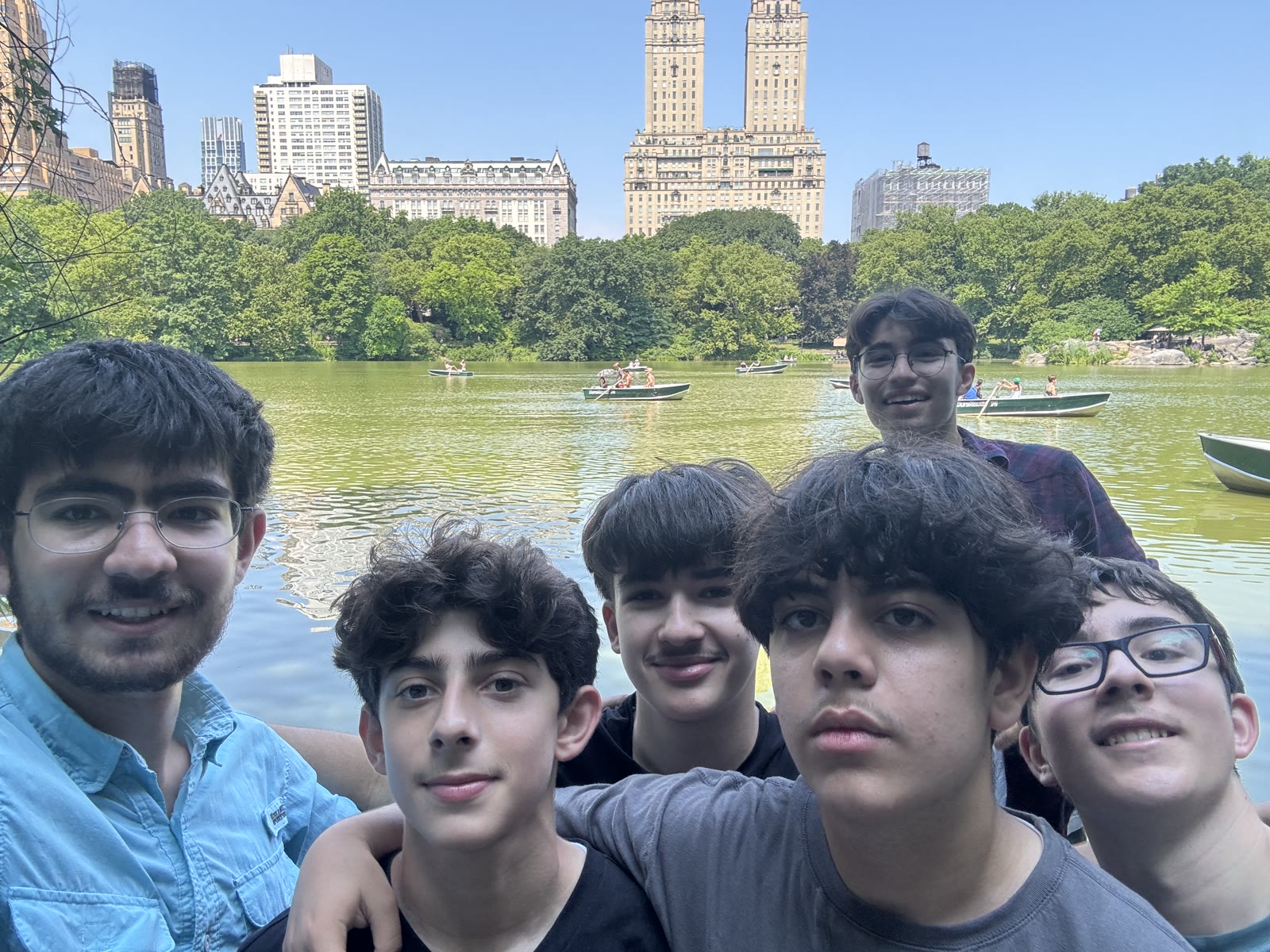
campuses · seminars · larger possibilities
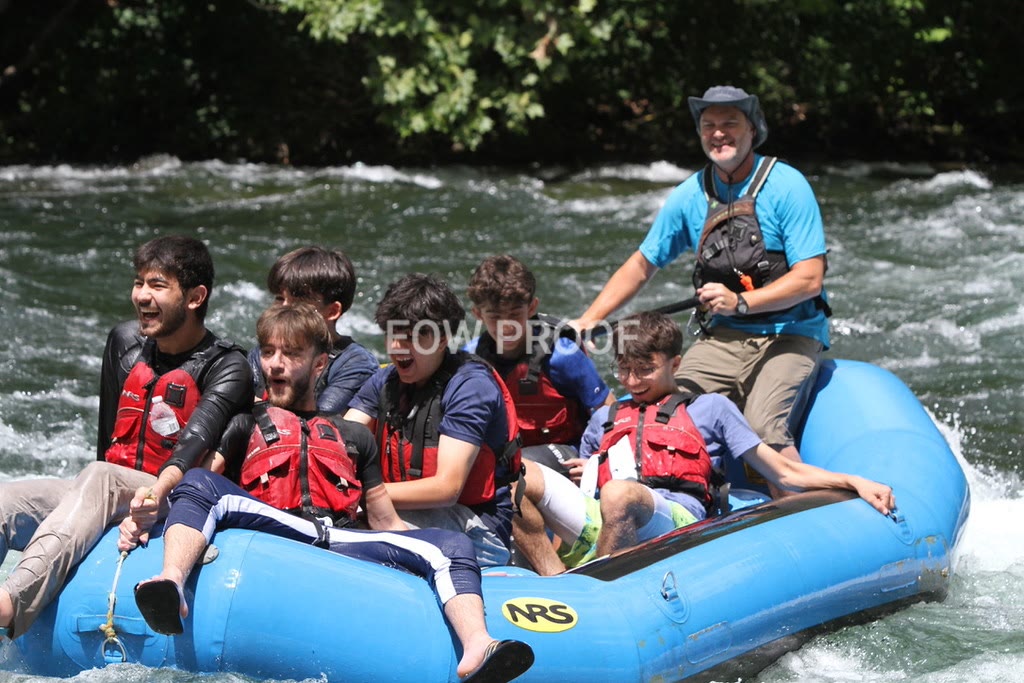
Bow seats on the rapids: six red vests, one unbothered guide, everybody mid-scream.
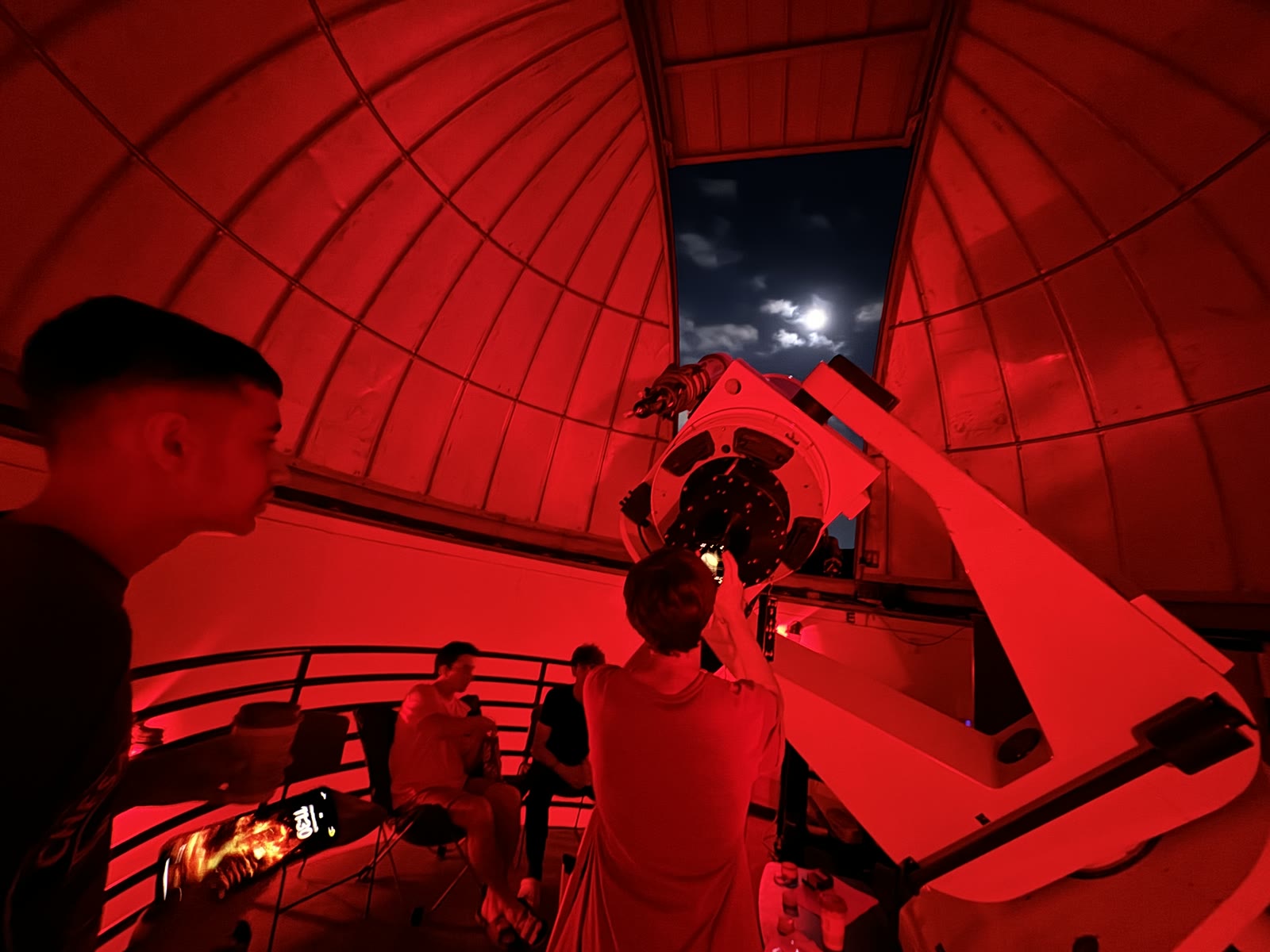
Observatory night: red light to save night vision, the moon in the dome slit, one kid on the eyepiece.
workshops and outings the whole group shared
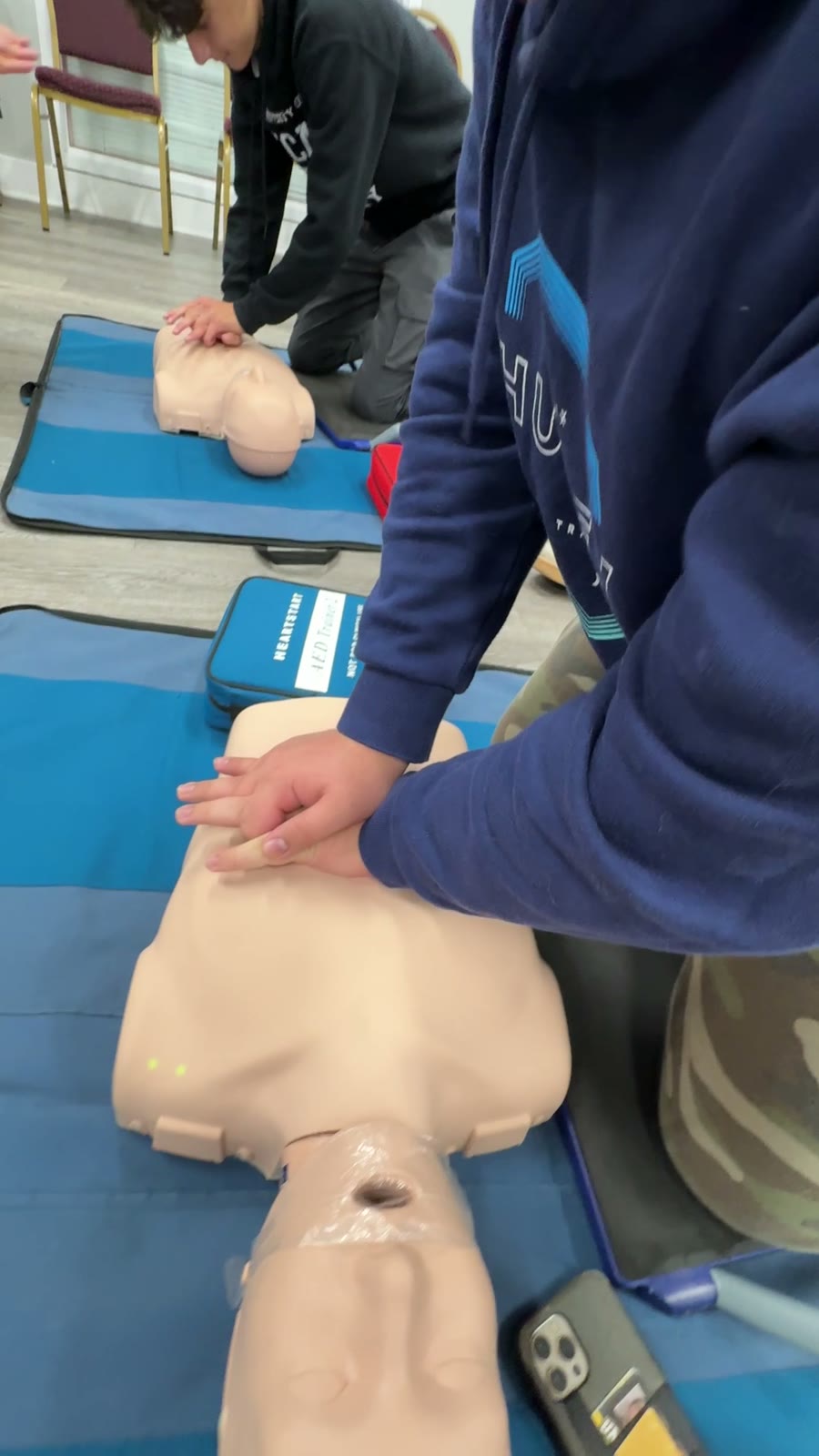
Safety skills day: compressions on the manikins, a HeartStart AED trainer waiting its turn.
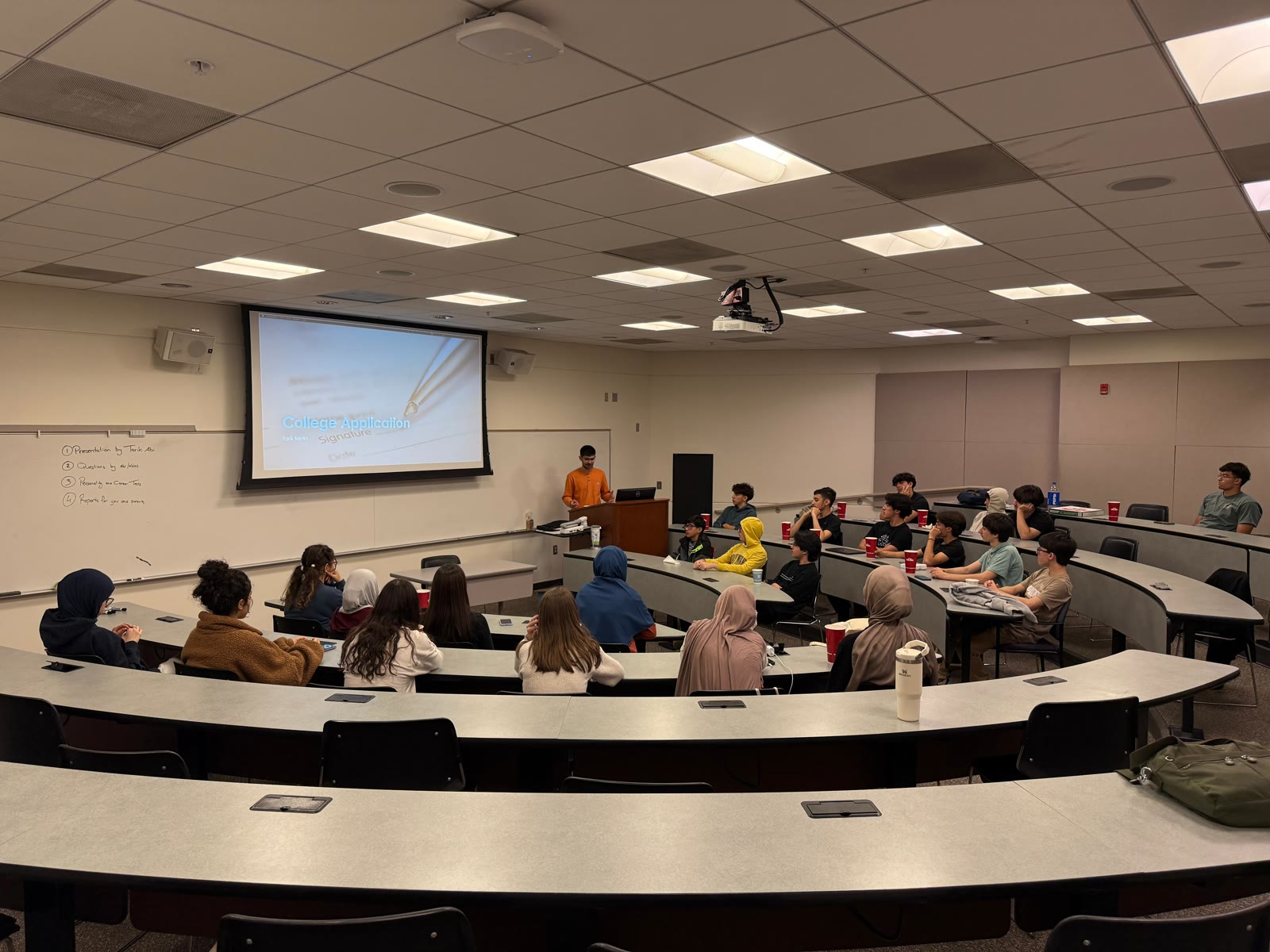
College applications, walked through in order, for the high schoolers who were about to file them.
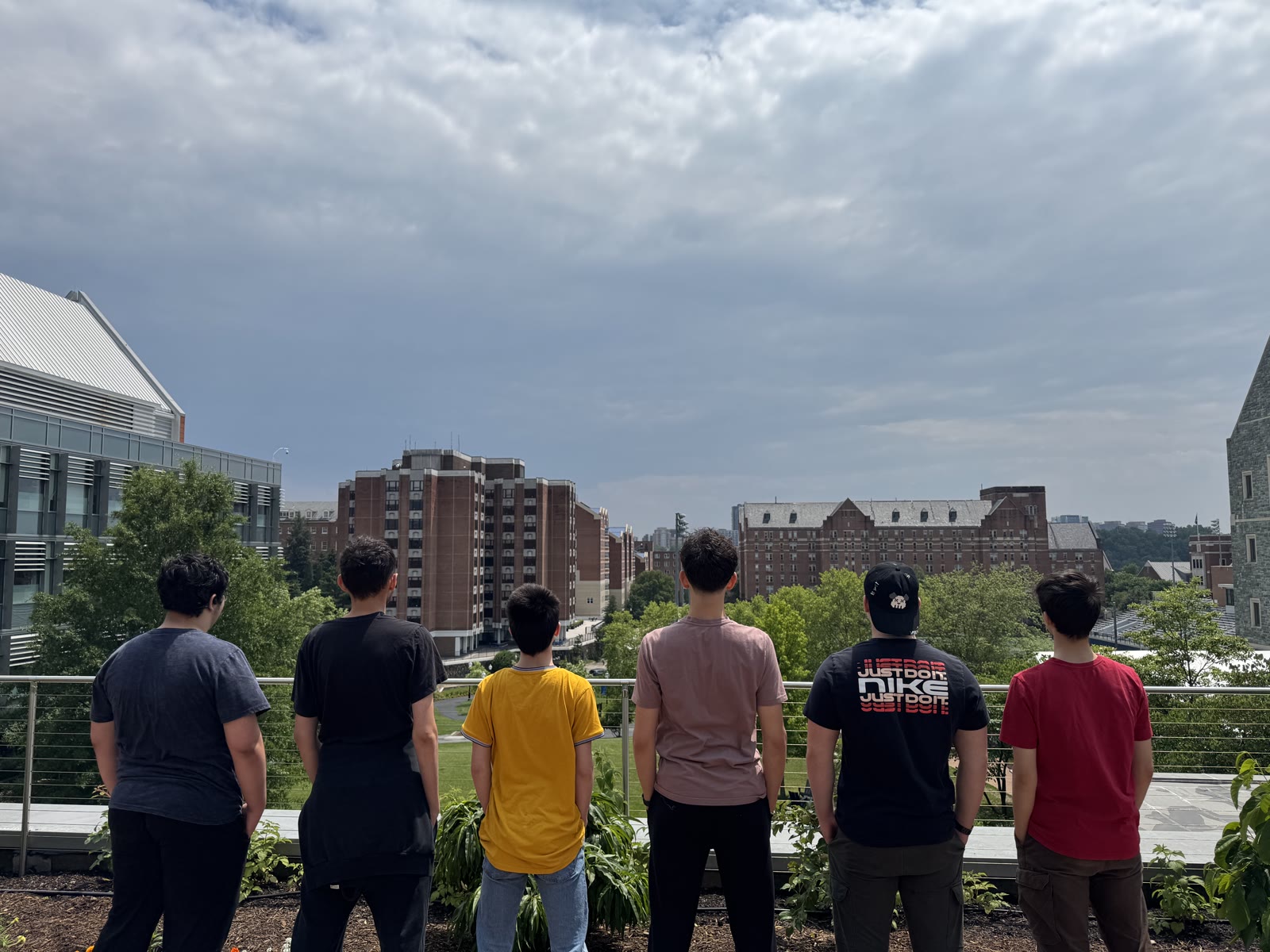
Six mentees at the Georgetown overlook. A college visit is how 'someday' turns into a skyline.
teaching kids to build · robotics, 3D, code
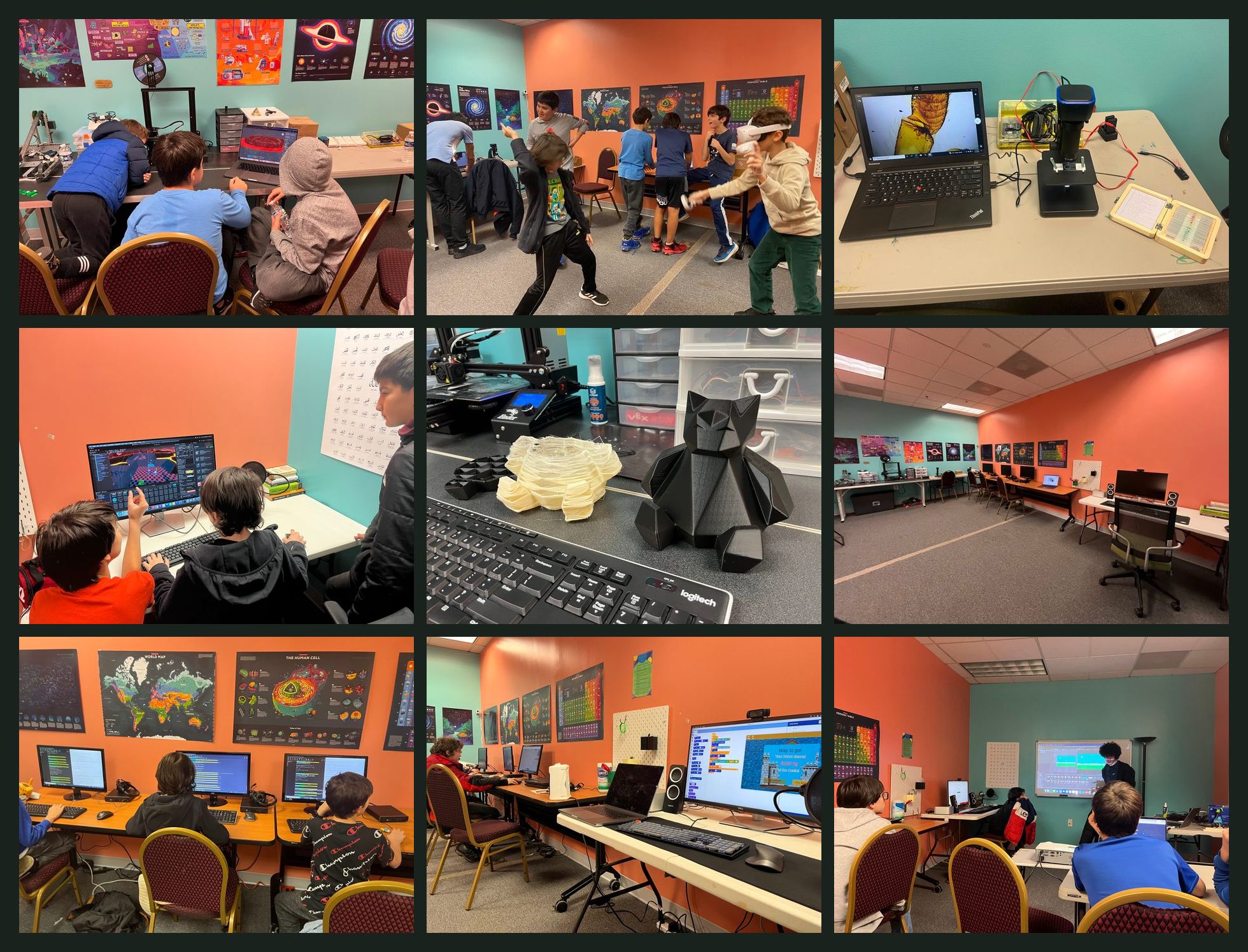
Nine afternoons at STEM Academy: 3D modeling, robotics, a homemade microscope, block coding, and a low-poly cat print. The room where I taught younger students to build.
A house, a meal, or an event can become shared infrastructure.
The House of Nur, a JHU hacker house of eight with a basement robotics lab, an Embodied AI club, and Biryani Wednesdays, next to the interfaith dinners and MARTI outreach that came before it.
shared tables · recurring invitations
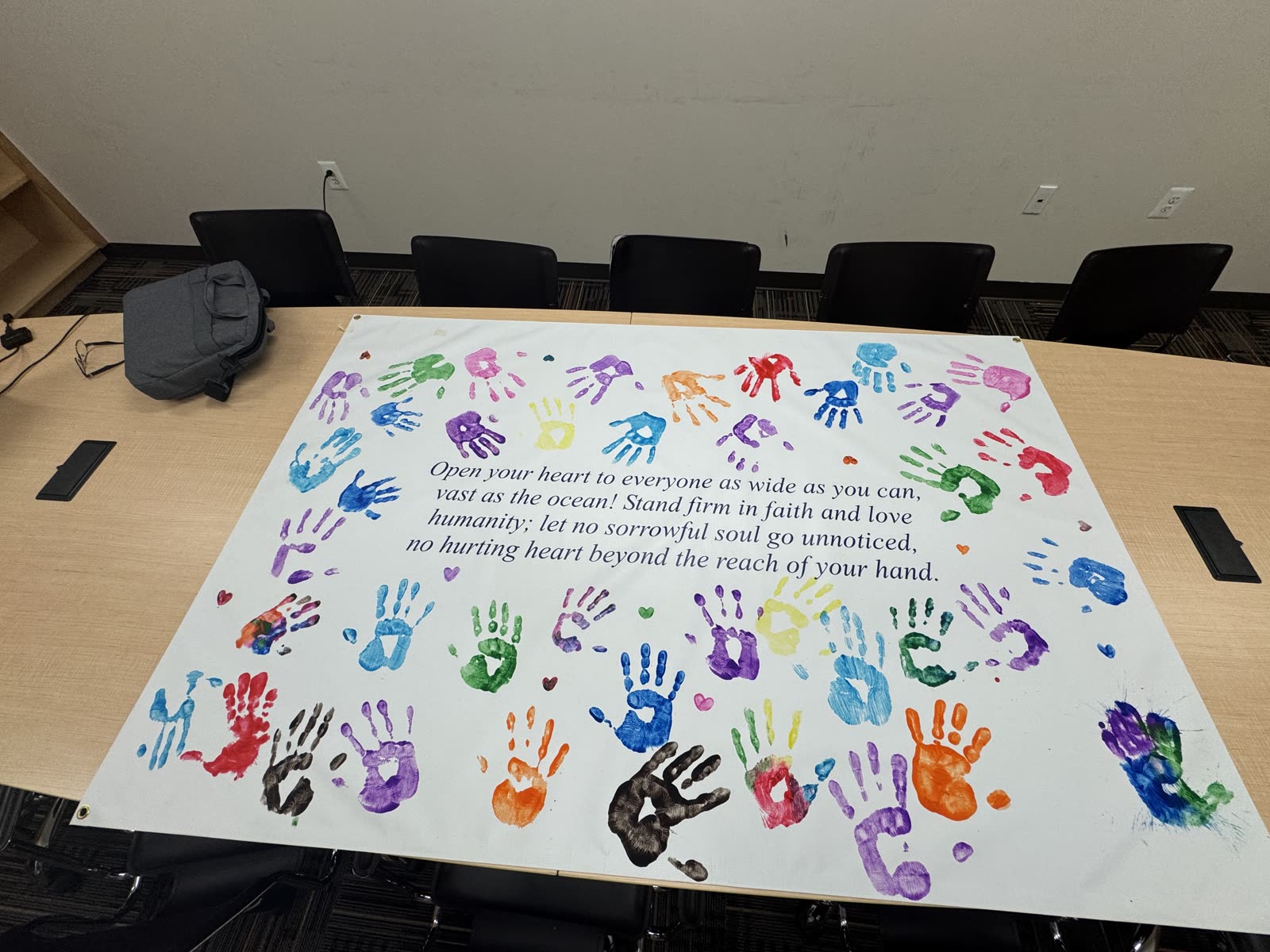
Every hand on this banner belongs to someone who showed up. The gatherings behind it include iftars with JHU Hillel and JHUMA, an iftar at Oseh Shalom, and a program on service in Judaism, Christianity, and Islam that MARTI hosted, with delegates and state senators on the invite list.
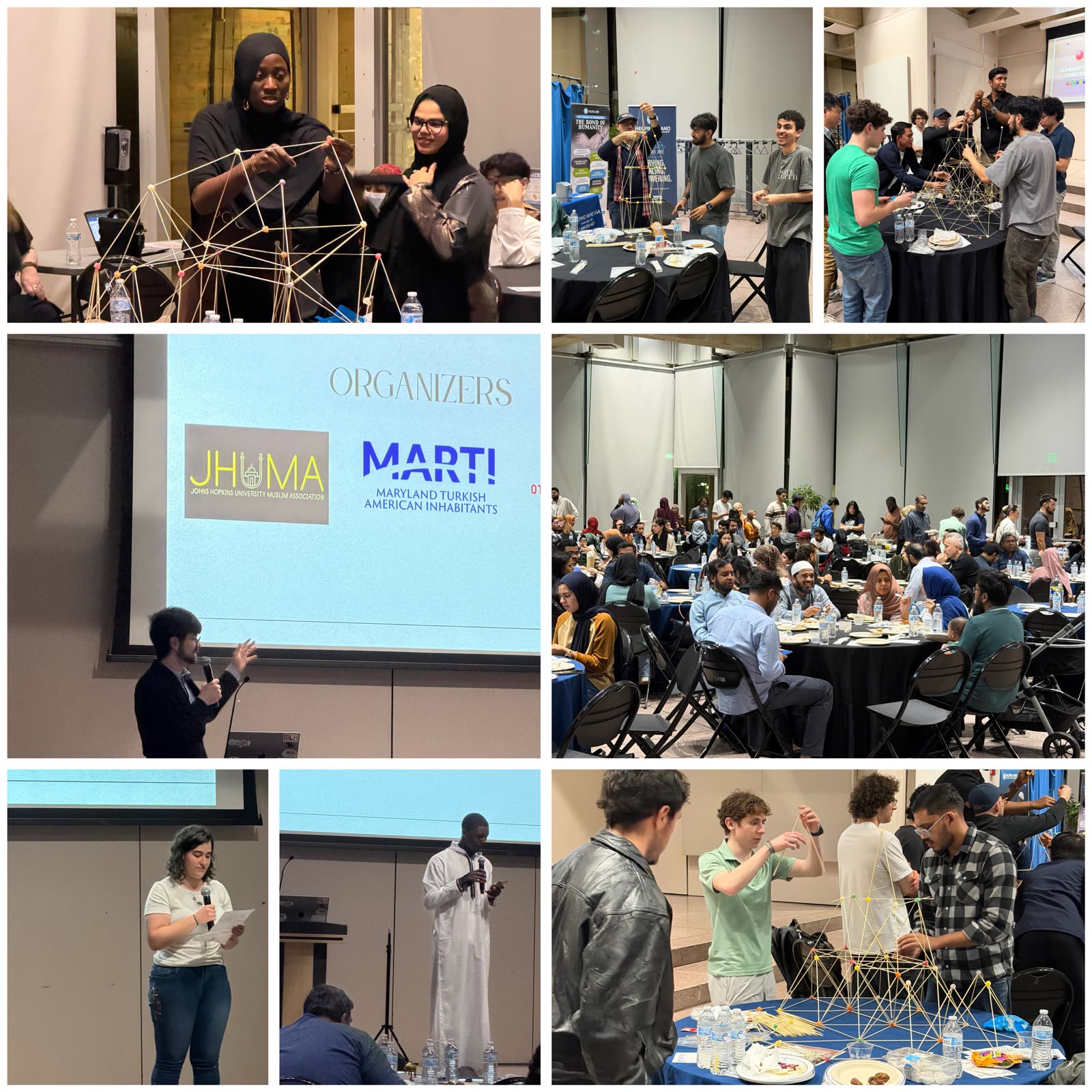
An iftar co-hosted by JHUMA and MARTI, both named on the organizers slide. Speeches at the floor mic, tower-building races between the tables, and a full hall breaking fast together.
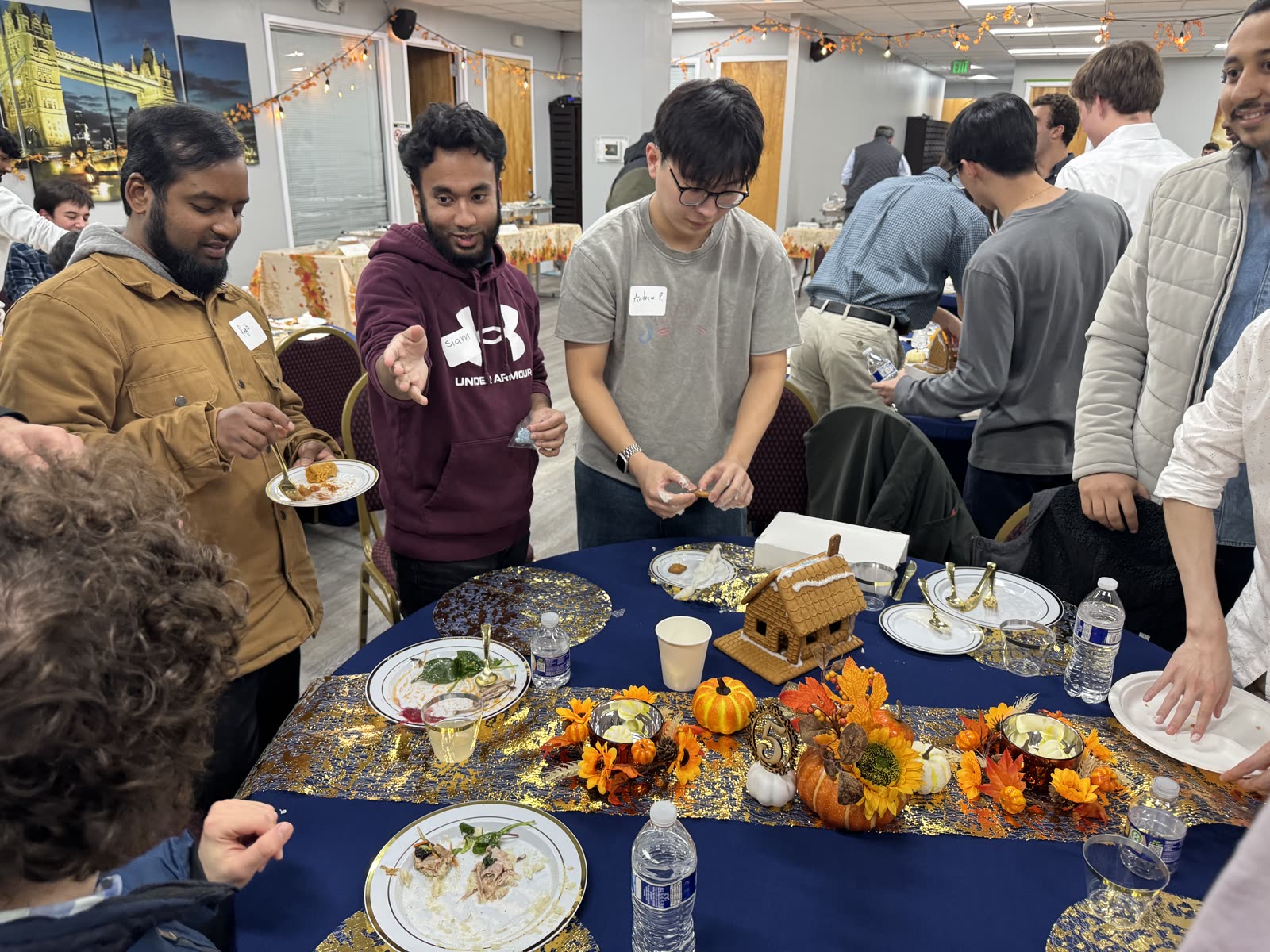
Another kind of shared table. Thanksgiving with a decorated room, a full meal, and an open invitation.
a shared basement lab · embodied AI
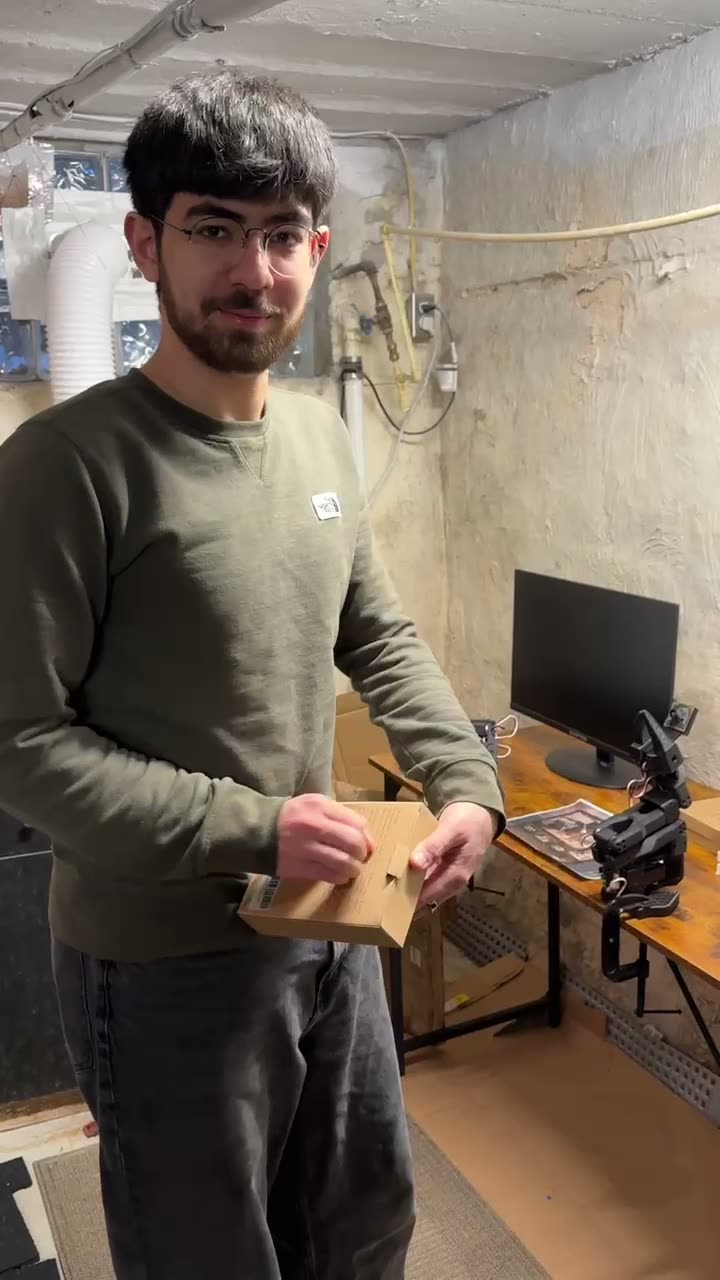
The basement robotics and electronics lab of the House of Nur, the eight-person JHU hacker house. Prototypes, robots, and shared projects live on the same bench.
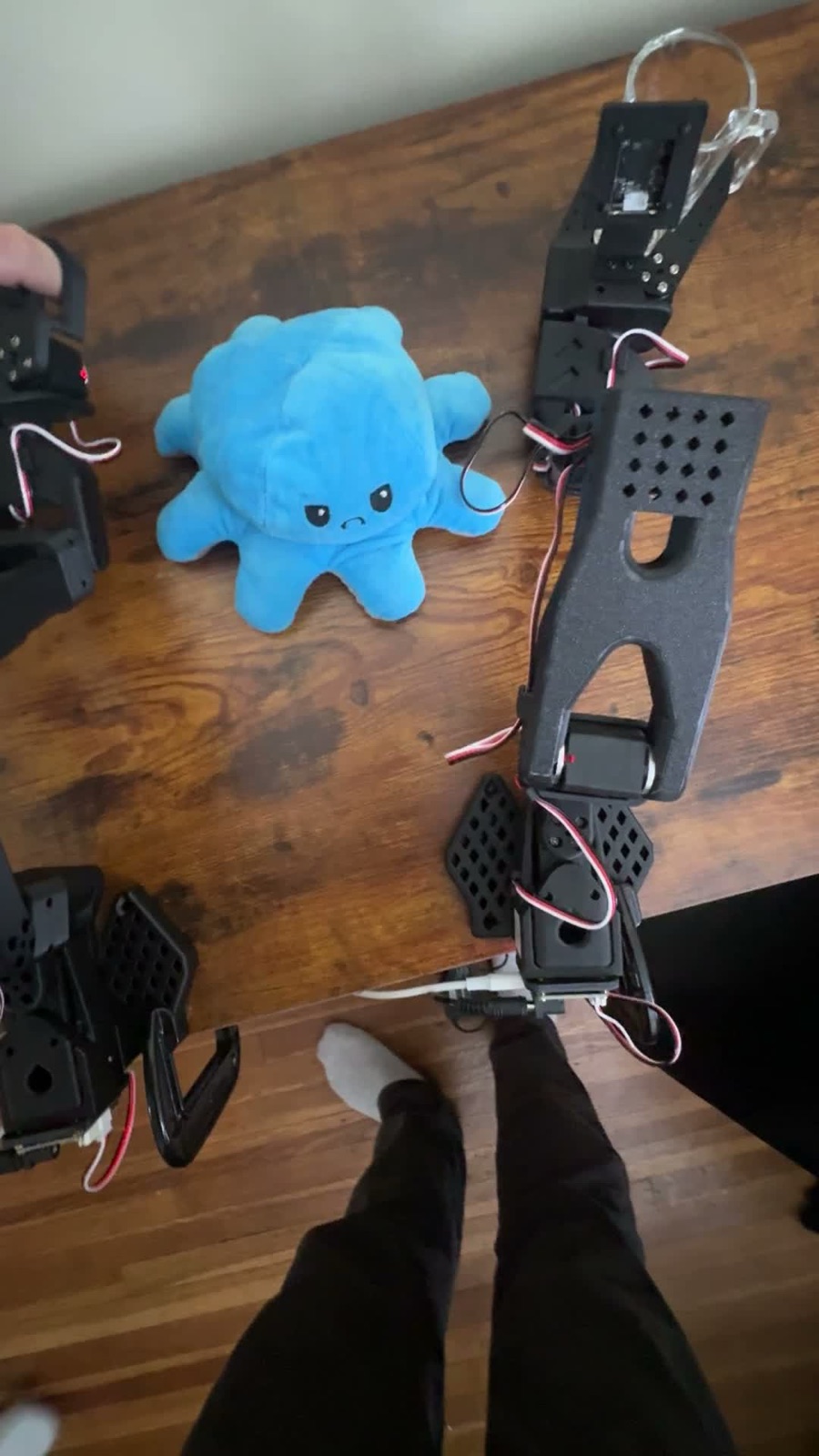
A paired manipulation platform for teleoperation, demonstrations, and embodied-learning experiments, moving here in the basement lab.
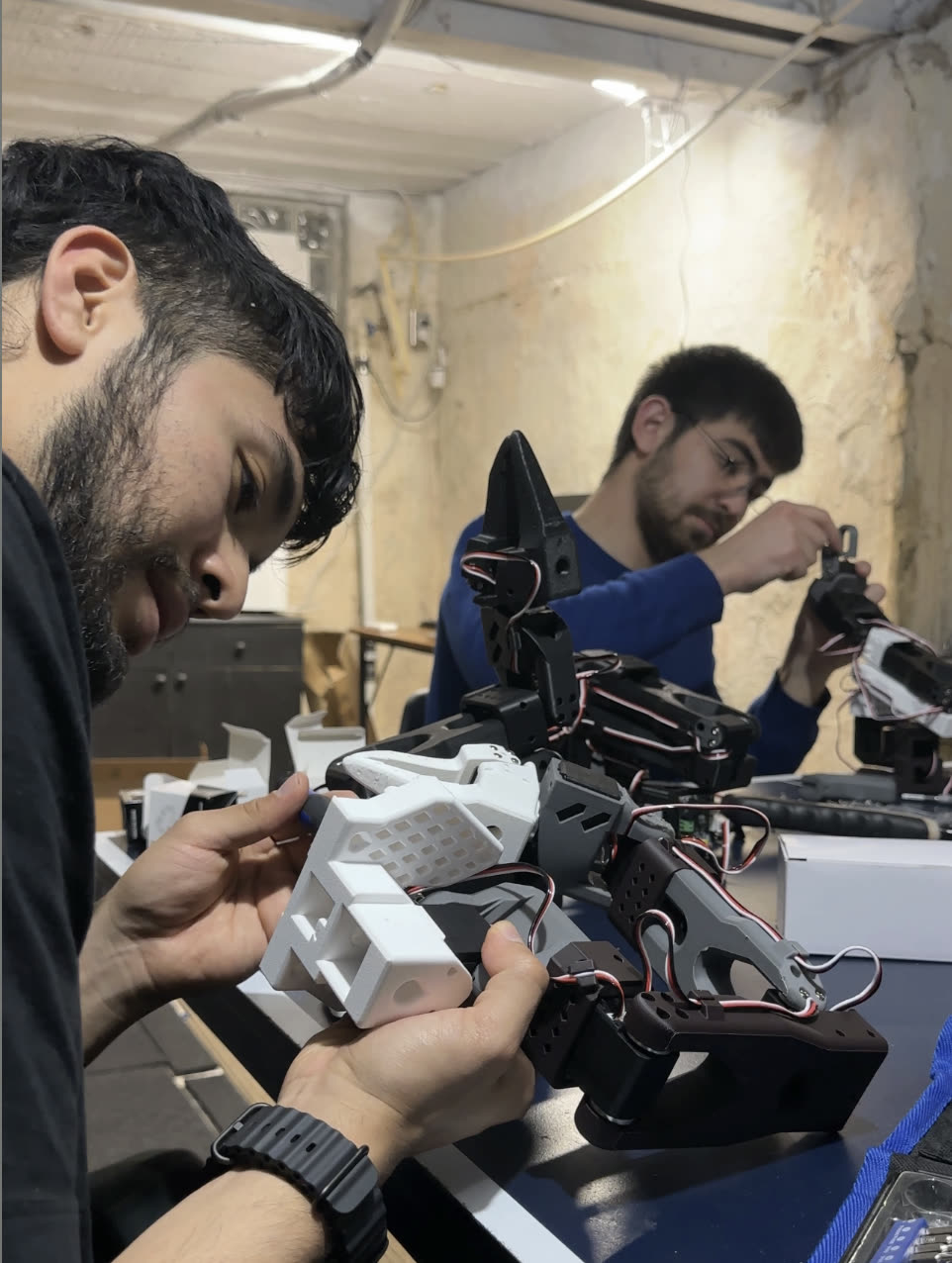
Assembly shots and motion footage from the paired robot-arm platform used for teleoperation and embodied-learning experiments.
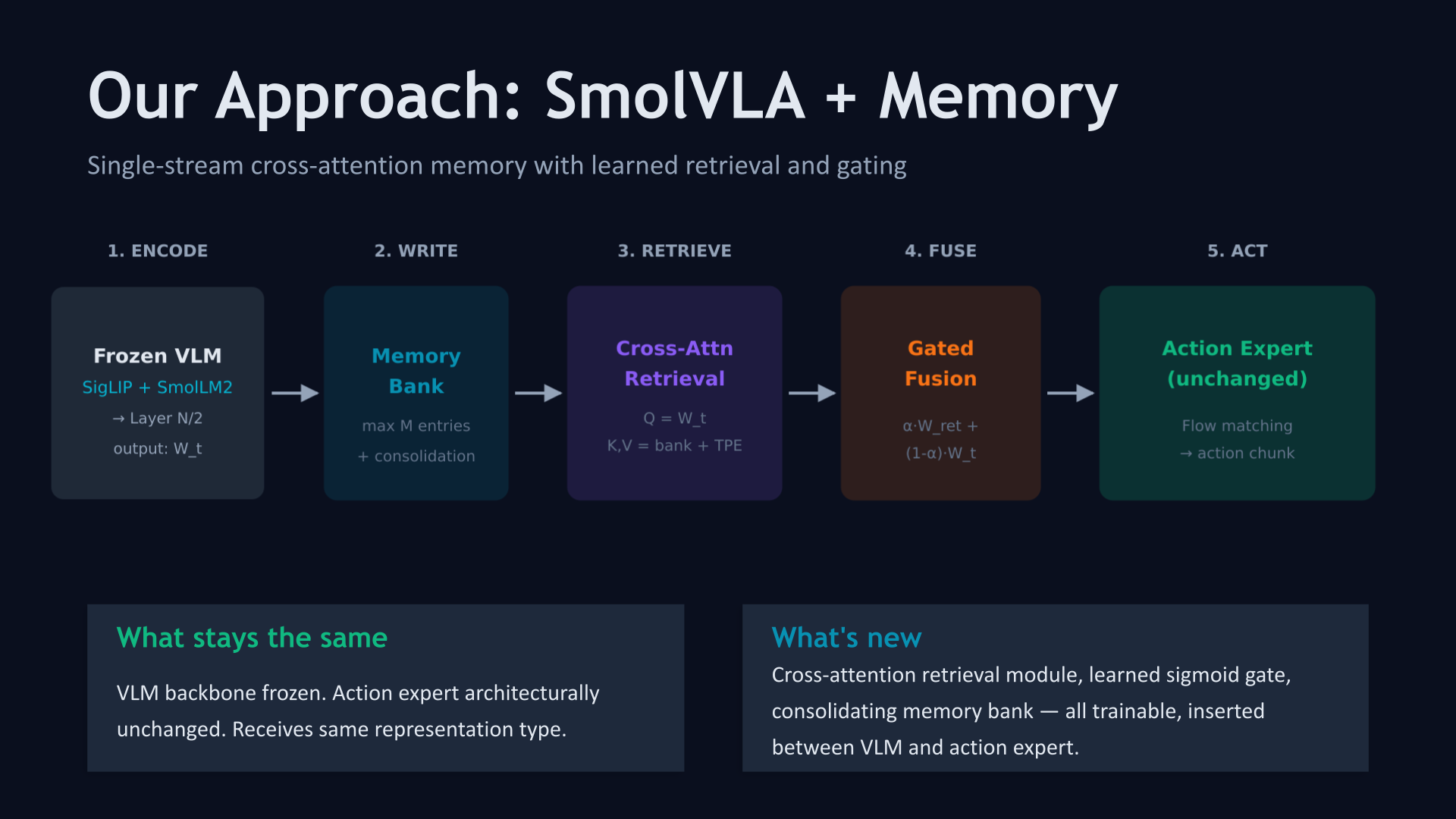
A temporal memory module grafted onto the SmolVLA vision-language-action model, using mid-layer representation caching with learned gated fusion. Long-horizon LIBERO-10 success rose from 72% to 76%, with 88.75% overall on LIBERO against the base paper's 87.3%.
invite · organize · follow through
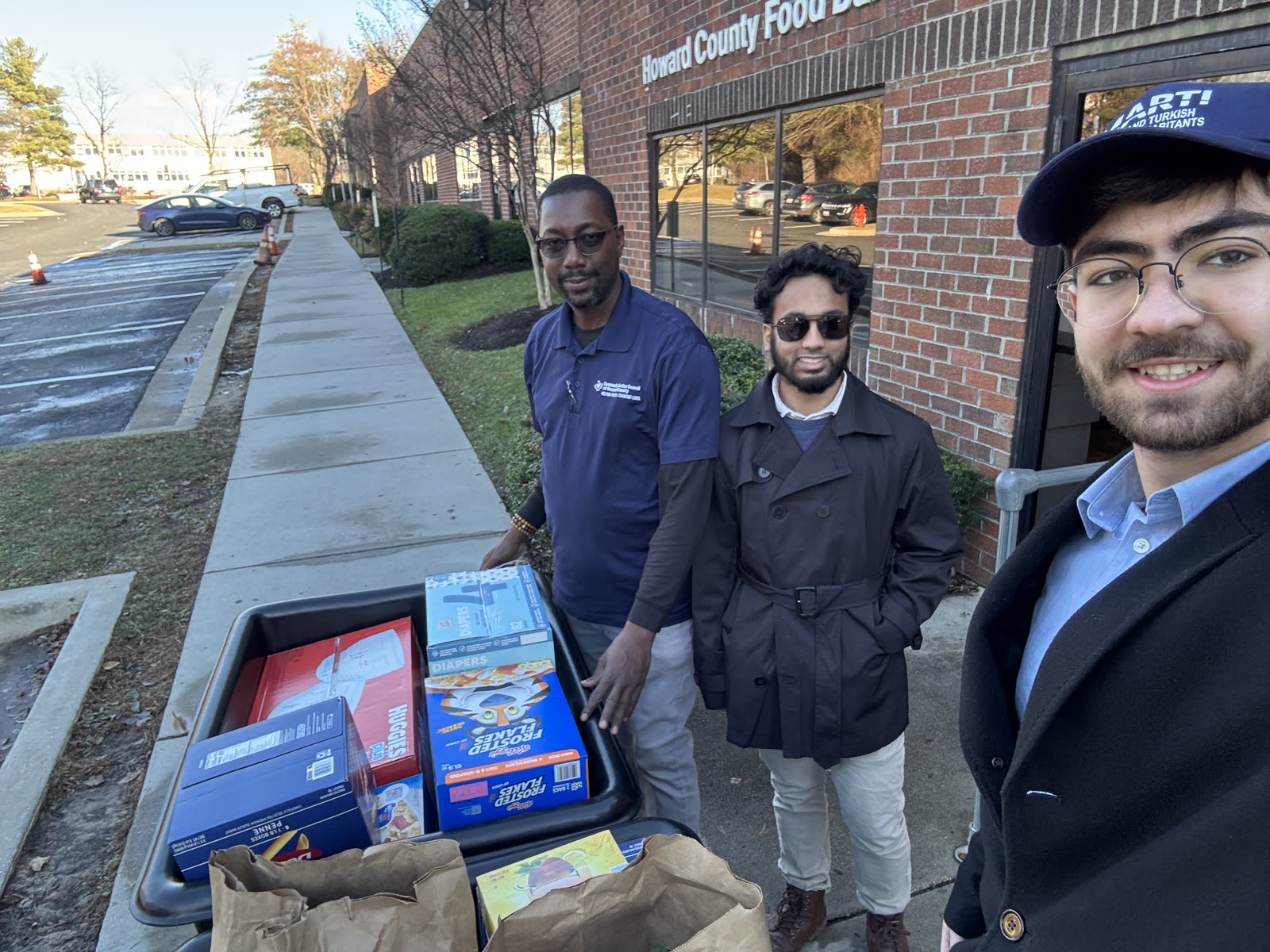
The unglamorous half of community work: donated food to sort and volunteers to coordinate.
Also shown here: The School in Dar es Salaam.
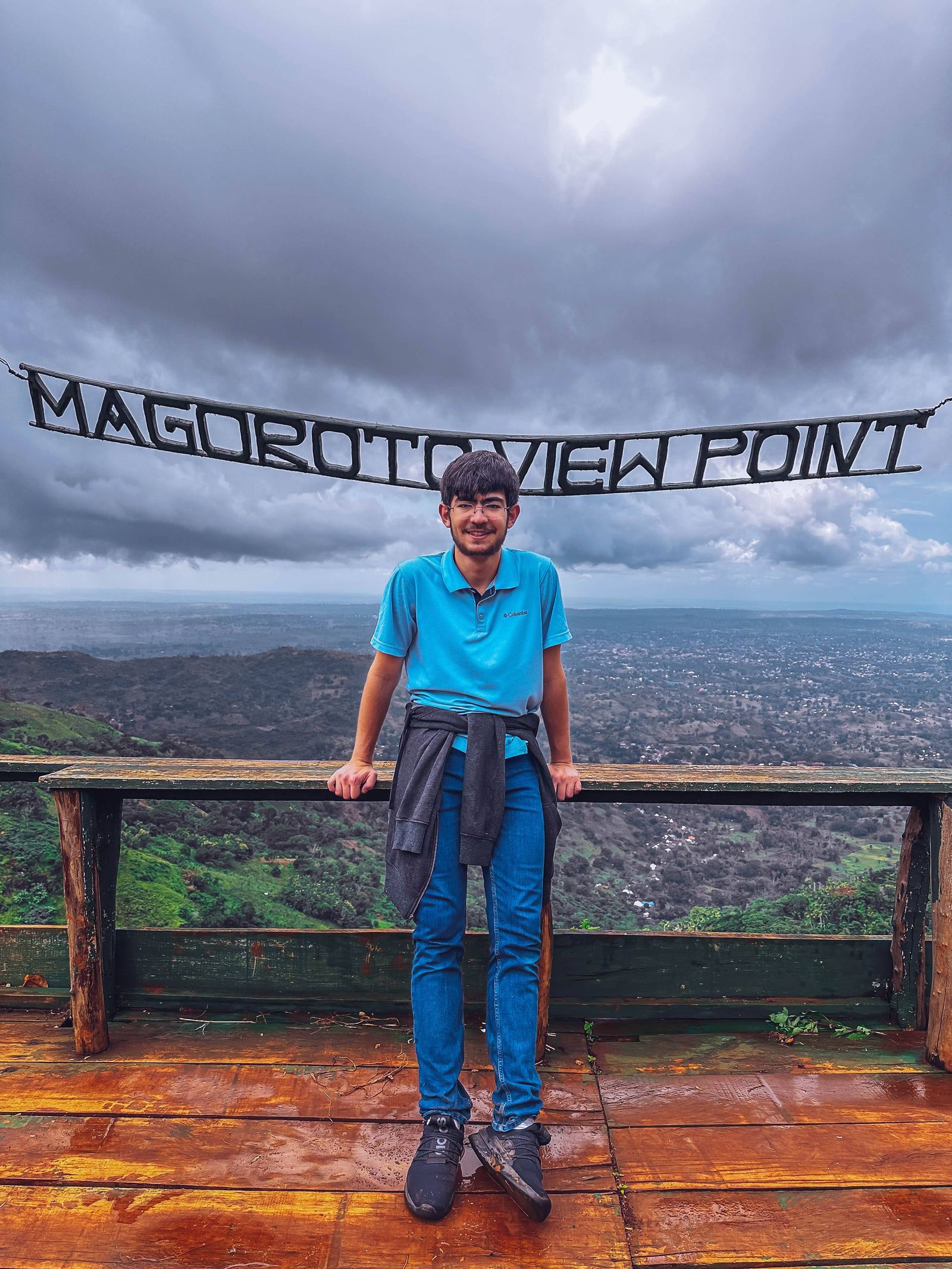
Magoroto View Point, on the Tanzania trip. A hand-cut steel sign, wet boards, and the hills above the coast. The fundraiser is what put him on this side of the world.
The person the projects come from lives up here.
Postcards from Egypt, Rome, the Netherlands, Germany, and Madinah; skis, a telescope, and Arabic flashcards; the publication shelf (CSCW '26, Memory-SmolVLA, SPDF, Constitutional AI); and a screening corner for three YouTube channels.
postcards · skis · a telescope · Arabic flashcards
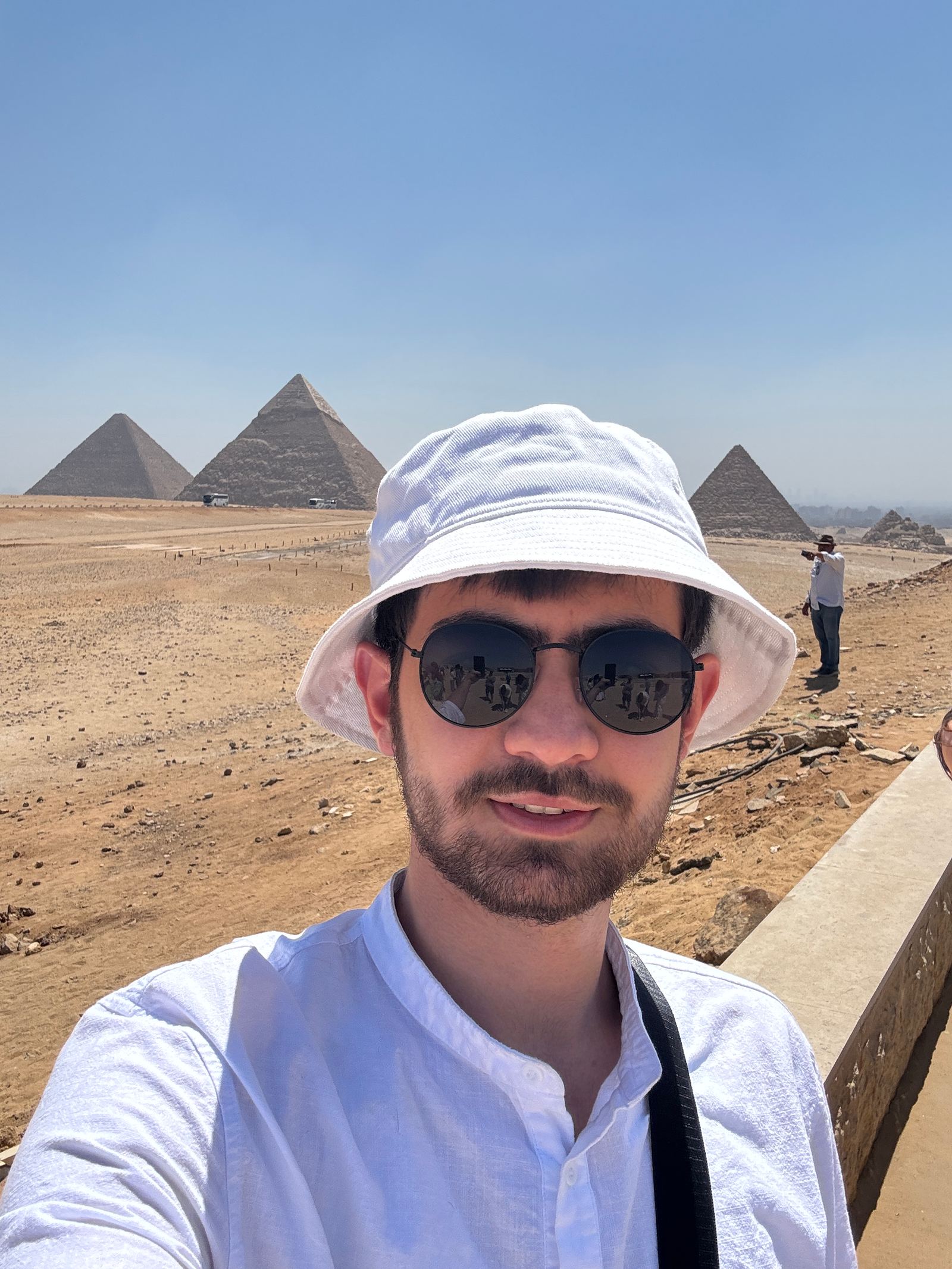
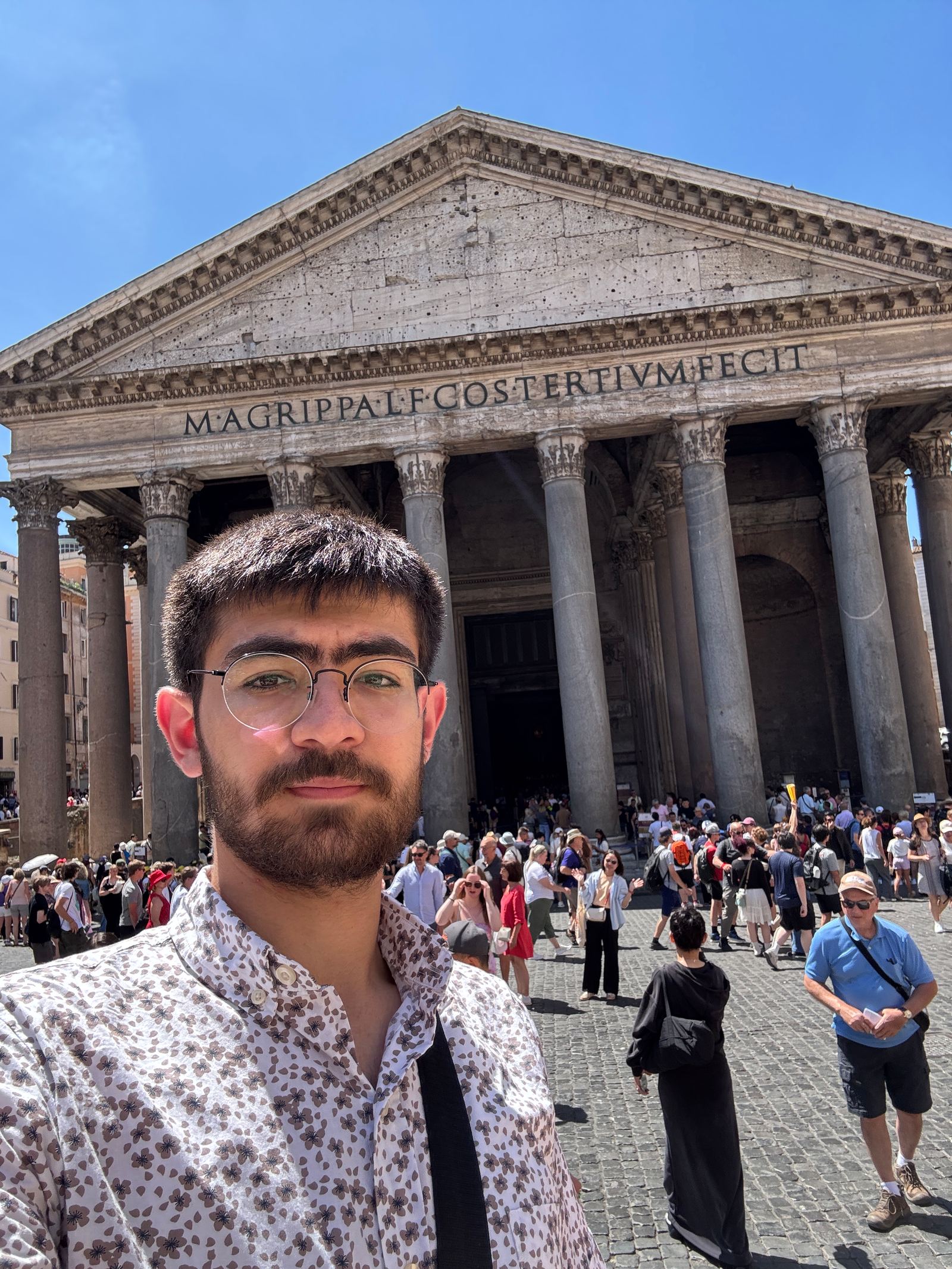
The oldest engineering on the itinerary. Some structures ship without documentation and last five thousand years.
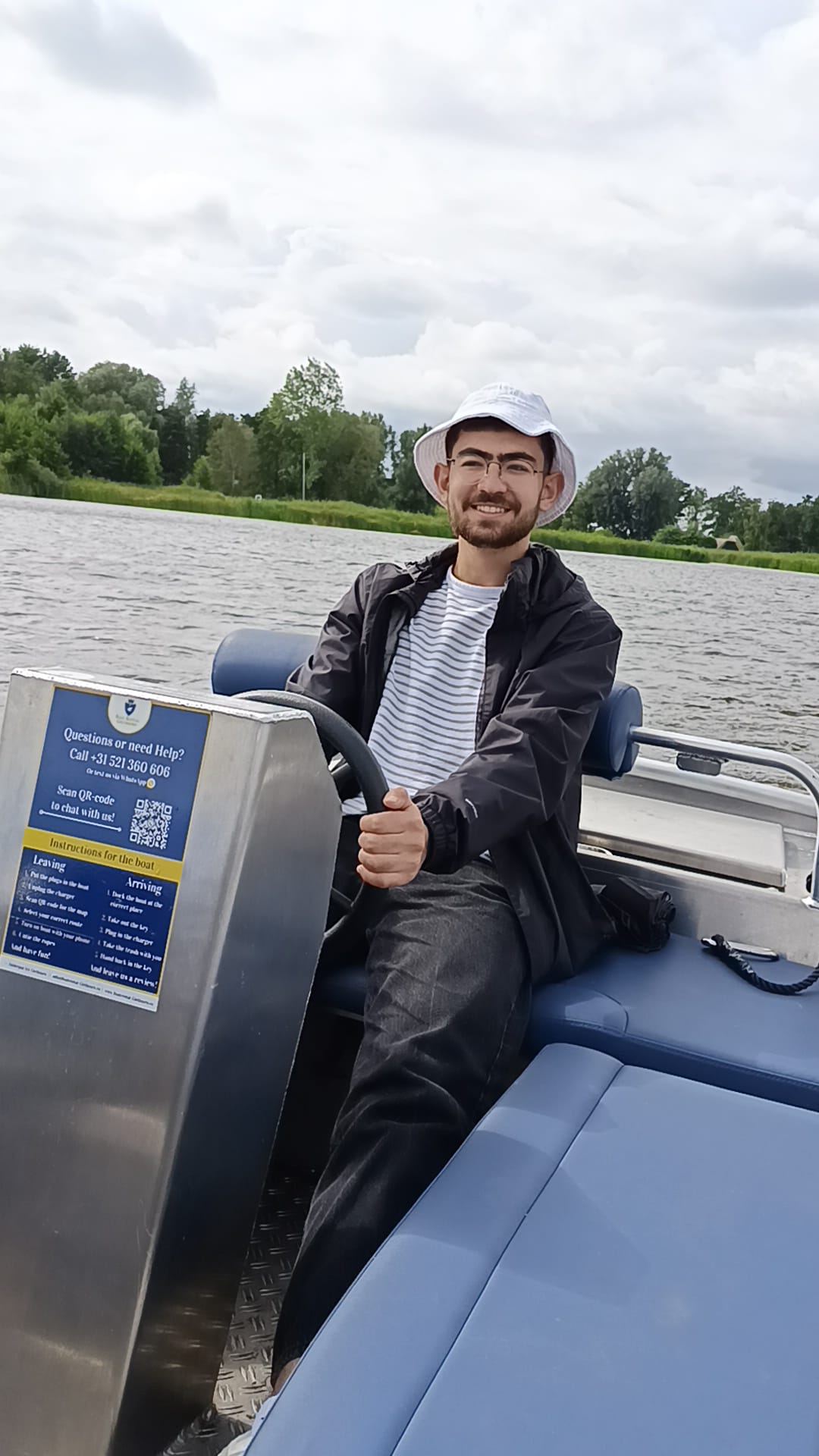
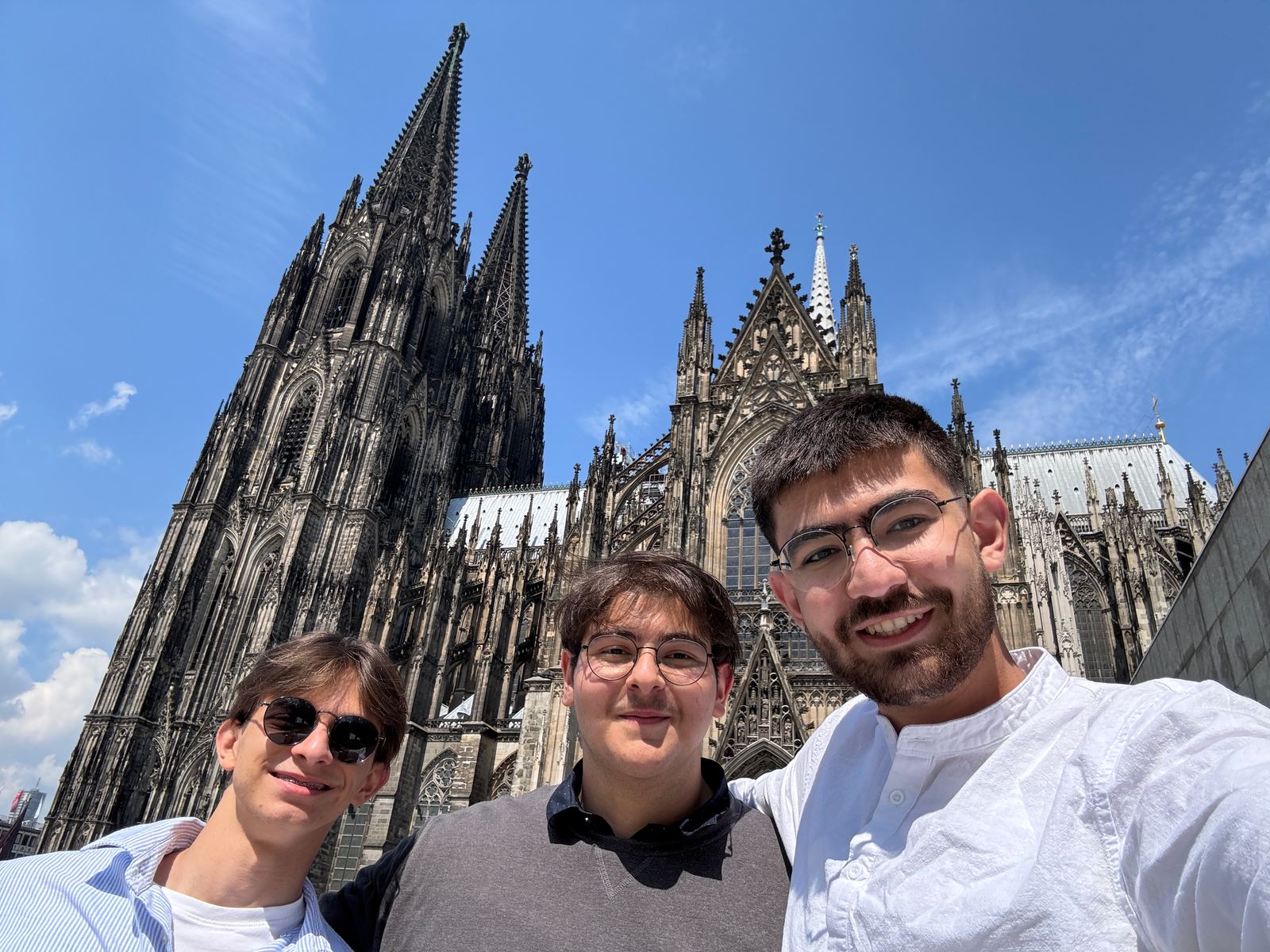
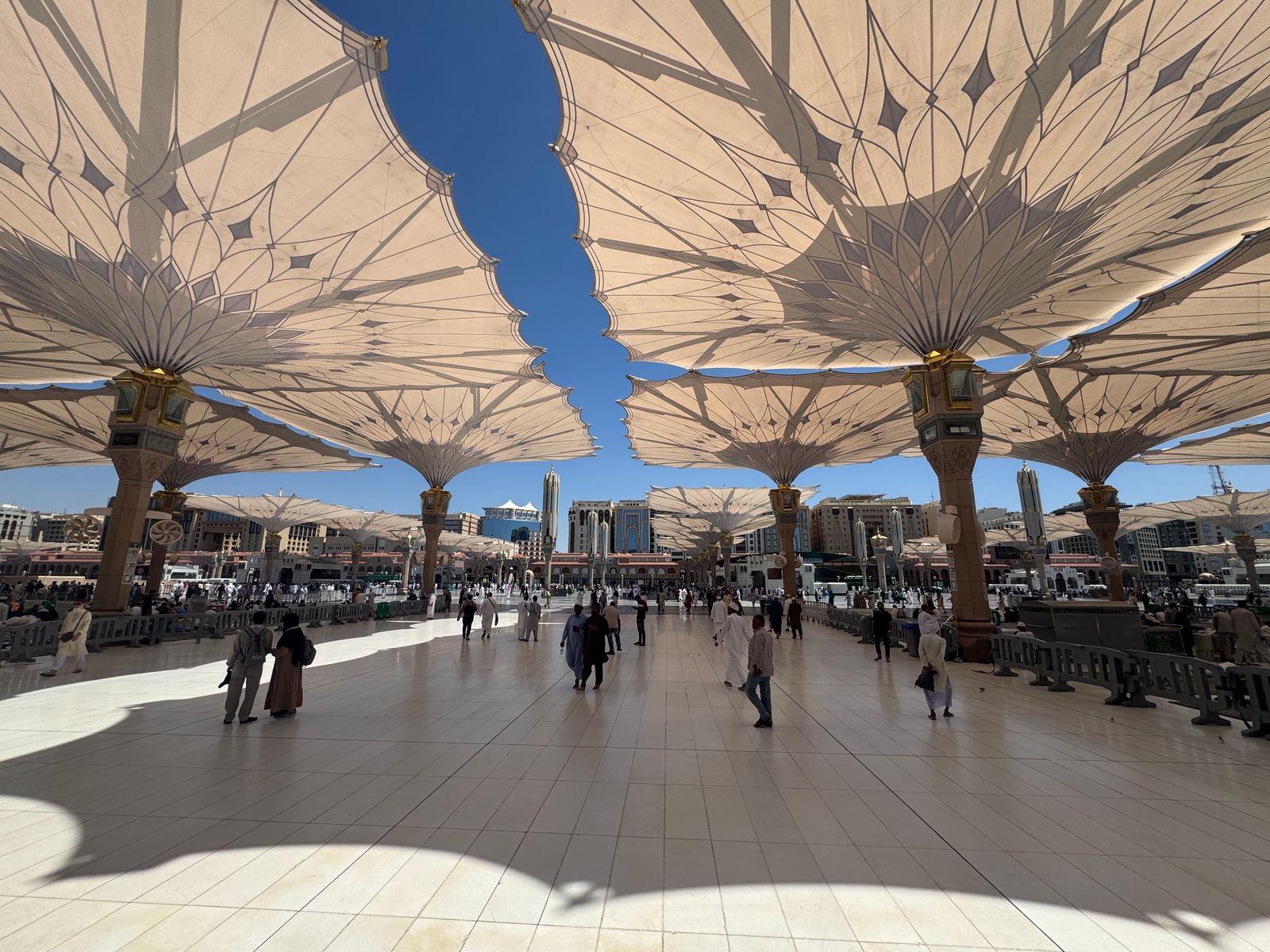
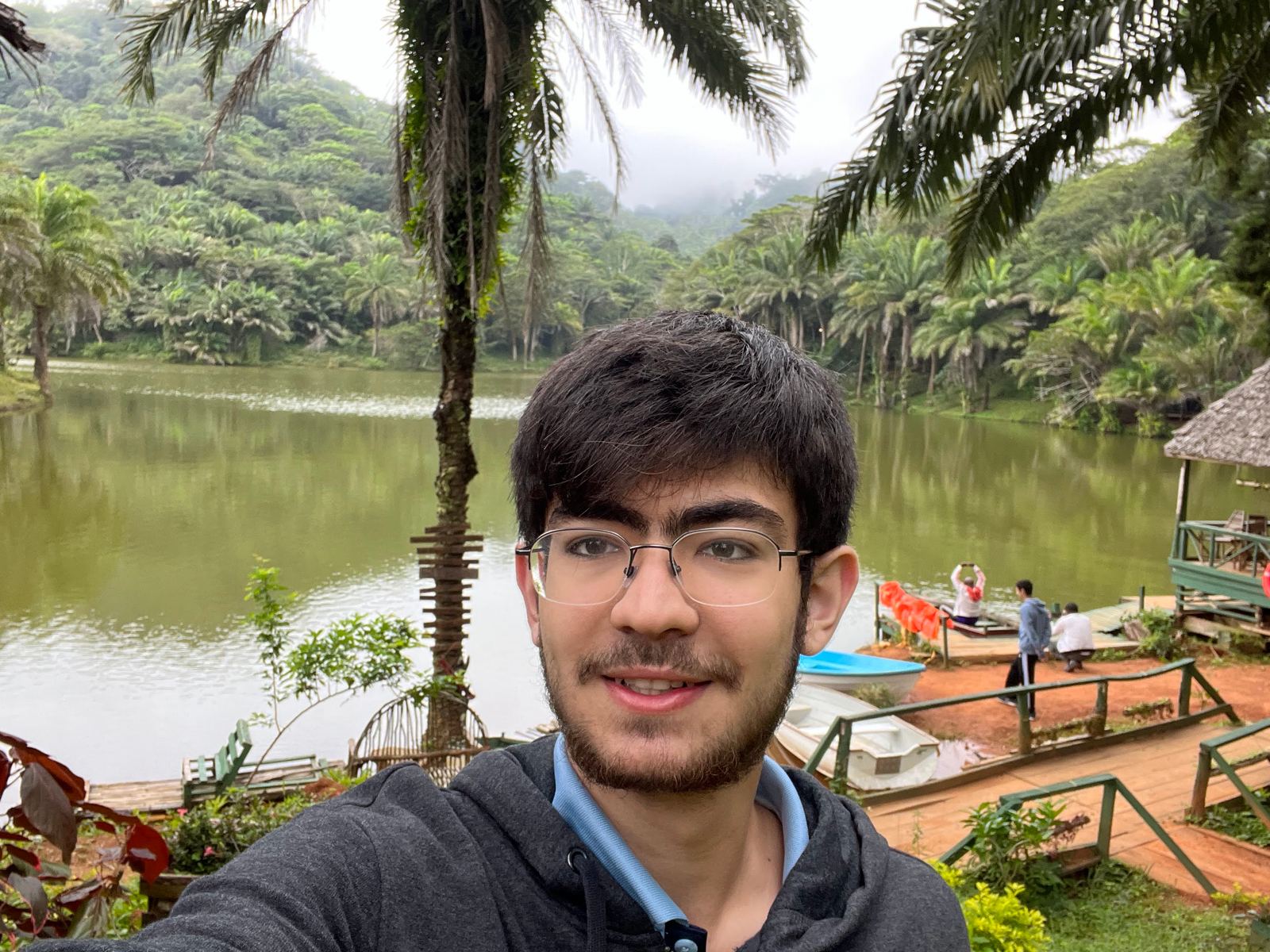
The trip behind the school campaign. A jungle lake on a rest day, between work days in Dar es Salaam.
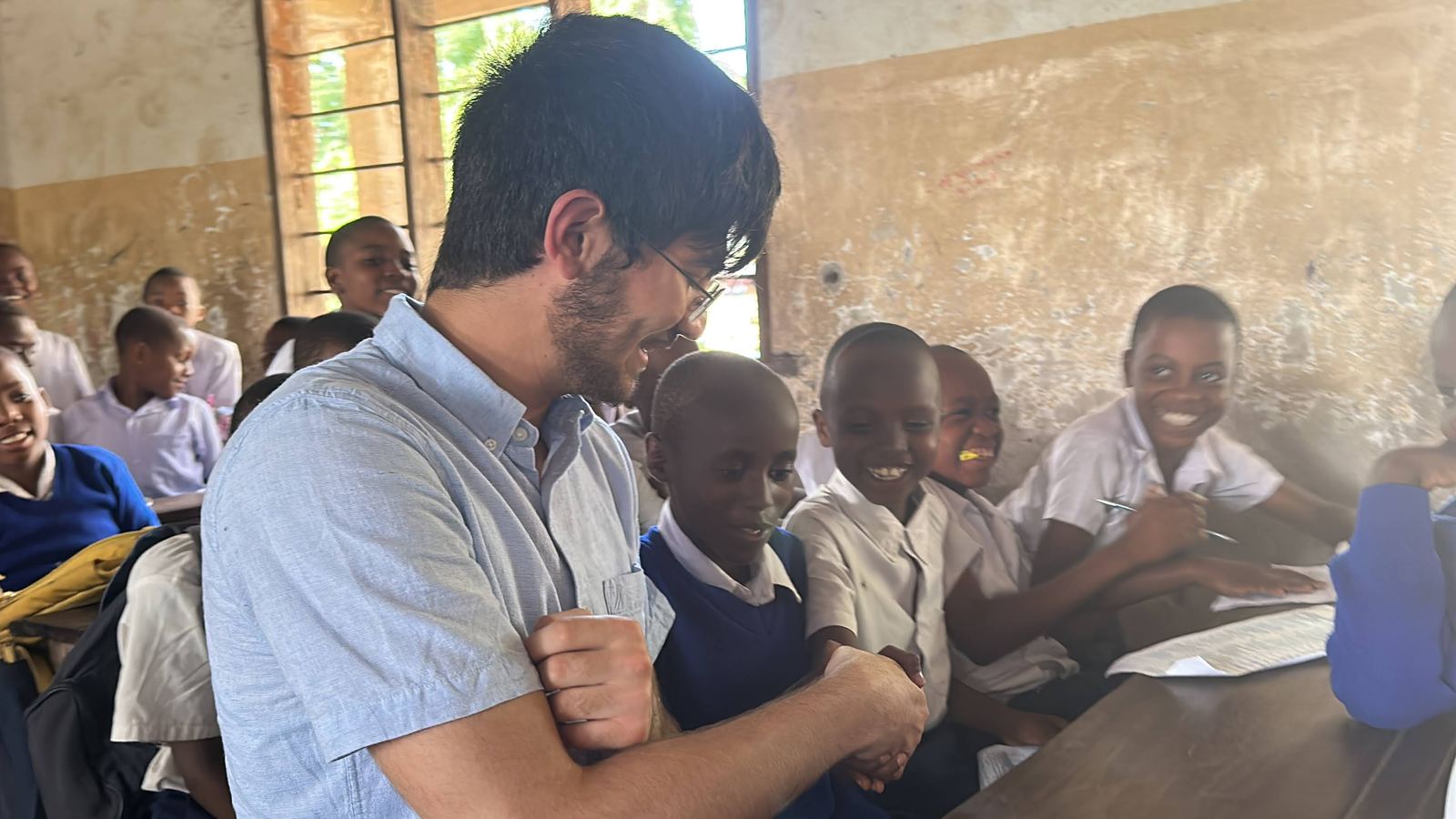
Inside the school the $12,000 campaign repaired. Students in uniform, mid-lesson, the reason the fundraiser existed. The Side Quests board downstairs tells the money side; this is the room it built.
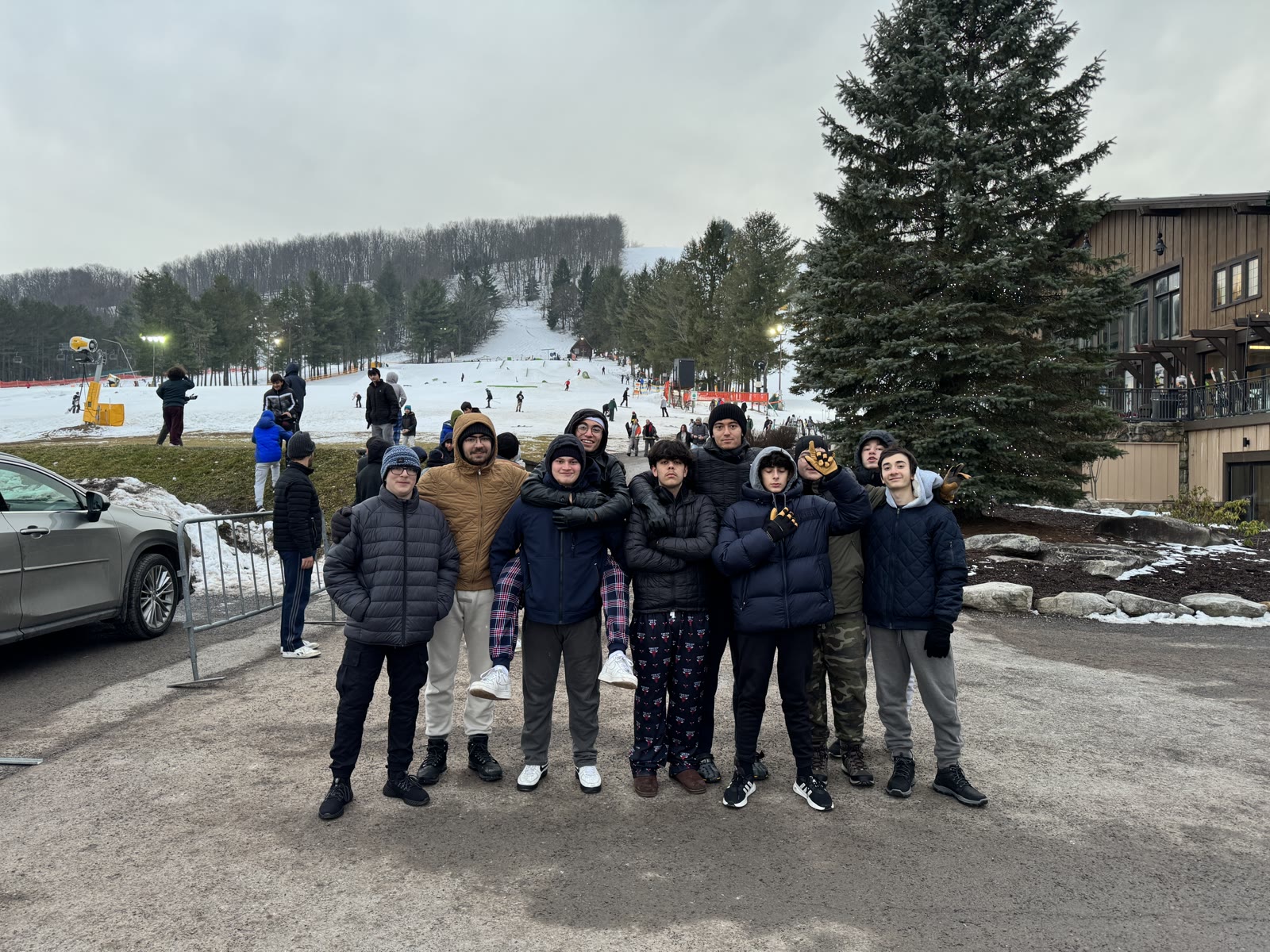
Also shown here: Ski Trip, Space Observatory Visit.
papers · frameworks · early writing
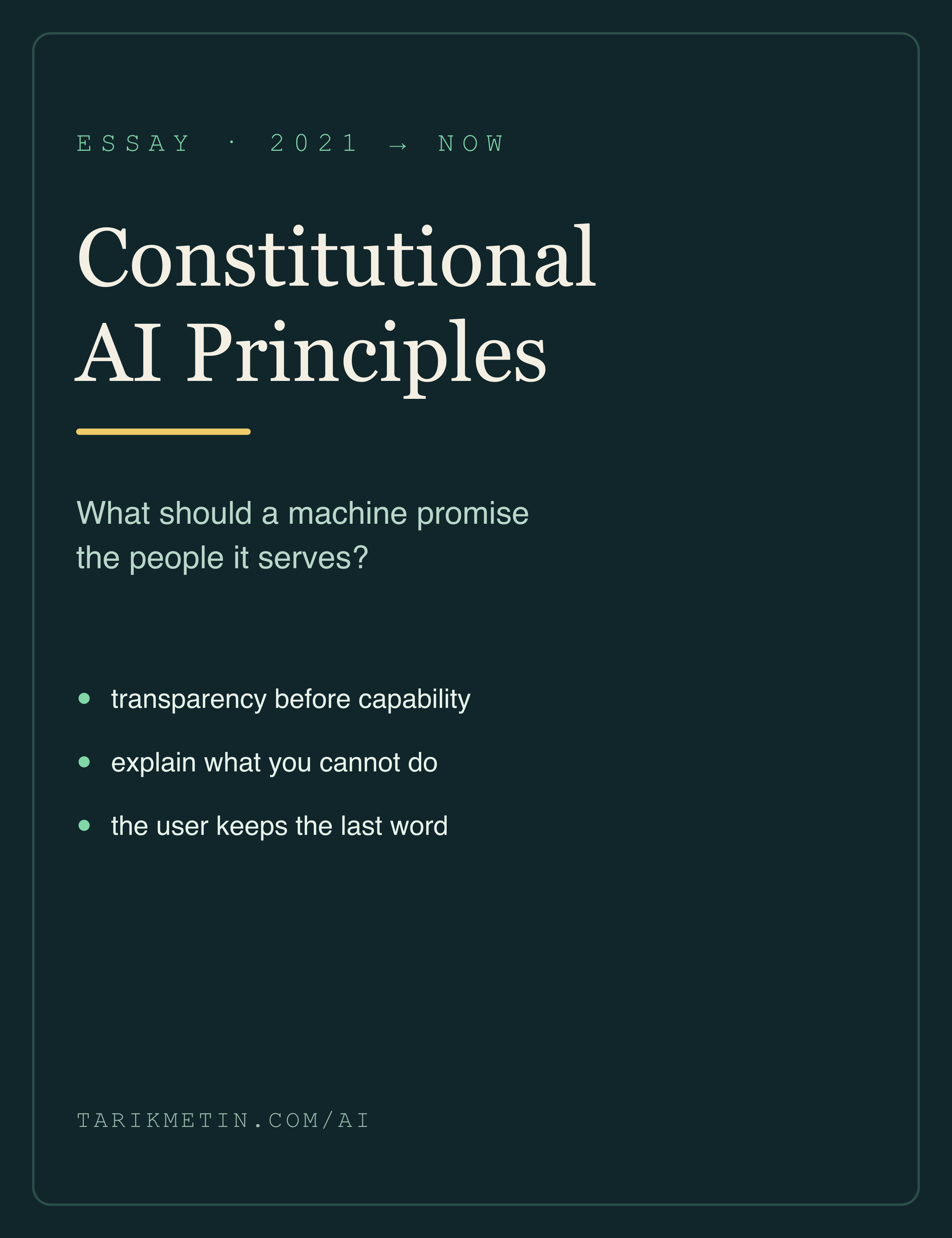
Early writing on what a machine should promise the people it serves: transparency before capability, and the user keeps the last word.
Also shown here: CrossWeave Feed, Memory-SmolVLA, SPDF: Secure Product Development Framework, Artificial Intelligence Today.
three channels · robotics films · reflections
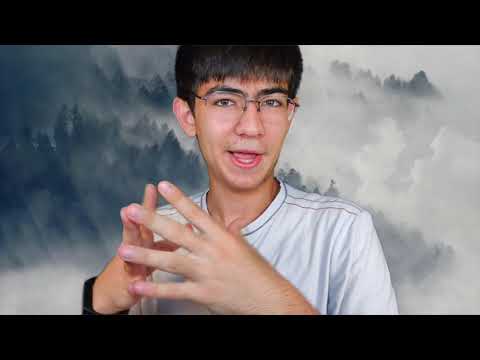
The AI Today research, turned into a video for people who would never read the paper.
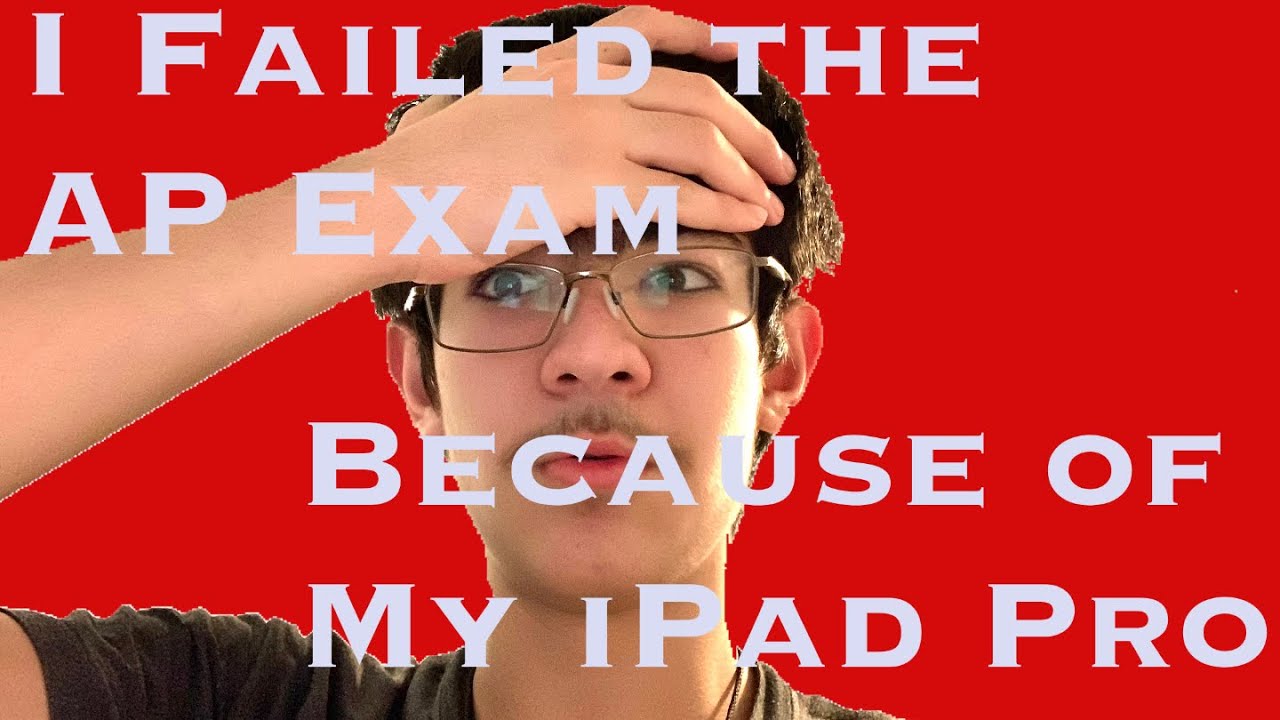
A student's-perspective tech review, and early practice at explaining hardware honestly.
The reflective channel, reading ancient texts and ancient sites side by side.
A short reflection on security: the feeling, not the checklist.
Also shown here: VEX Robotics Team 6460.